
Instead of collecting event details across scattered texts, put your date, guest count, timing, and privacy needs into one private-event inquiry, then send it through the contact route listed on the Mess Hall Harlem website. This guide shows you what to prepare, what to ask, and how to distinguish an initial request from a confirmed booking.
- For an event space Harlem search, consider Mess Hall Harlem when a casual neighborhood bar fits your gathering.
- Include your event date, guest count, start and end times, and privacy requirements in one inquiry.
- Ask about private events explicitly; a table reservation does not establish exclusive use.
- Get written confirmation of the agreed arrangements before sending guests final instructions.
Why this matters
Mess Hall Harlem is best for people seeking a casual neighborhood bar for craft beer, bourbon, and original cocktails. Whether that setting can accommodate your particular private event is a separate question to resolve directly with the venue.
A neighborhood bar and a dedicated event hall serve different needs. Start with the atmosphere you want, then ask about the arrangements your gathering requires rather than assuming that a private-event inquiry includes a particular room, service format, or equipment.
For a 2026 gathering, your first message should make the practical questions easy to answer. Describe what you need clearly enough that the venue can assess the request without having to reconstruct your plan across several conversations.
Before you start
- Prepare one event brief. Have your preferred date, estimated attendance, start and end times, occasion, and a reply email ready. Note which details are fixed and which can change.
- Use the venue's current contact instructions. Open the official website and follow the contact route it actually lists. Use a private-event route if one is provided; otherwise, ask where to direct your request.
- Separate a request from a booking. Sending a message or making a table reservation does not establish a private event. If exclusive use matters, state that requirement before discussing smaller details.
You do not need a finished guest list to make an initial inquiry. You do need an honest attendance estimate and a clear description of the gathering. Label uncertain details as estimates rather than presenting them as settled decisions.
Your event brief
Assemble the details before opening the contact route
- Name the occasion. Describe the gathering in plain language: a birthday, a team get-together, or a neighborhood organization meetup. Explain any activity that affects how you would use the space.
- Write the full date. Include the month, day, and year. For example, September 17, 2026 is clearer than a reference to next Thursday.
- Give the attendance estimate. Distinguish people you expect from people you have invited. If the count is uncertain, say so and identify when you expect to update it.
- Set the time window. Include both arrival and departure, plus any separate setup needs. An illustrative request for 18 guests over 3 hours communicates more than a request for an evening party; those figures are planning examples, not venue limits.
- Describe the privacy requirement. Say whether you need exclusive use, a separate area, or simply somewhere for your group to gather. Ask what arrangements the venue can accommodate.
Expected result: You have a short brief that explains who is coming, when they want to gather, and what kind of space they need.
Keep the first brief focused on decisions that affect whether the gathering works. A long story about the occasion is less useful than a clear explanation that guests need to sit together or that a short speech is part of the plan.
Choose the right request type
These are different requests you can make, not confirmed booking options offered by the venue. Choose the description that reflects your actual needs.
| Request type | Best for | Advantage | Limitation to resolve |
|---|---|---|---|
| Group gathering inquiry | Hosts who do not require exclusive use | Keeps the request focused on bringing people together | Does not establish a separate or private area |
| Private-event inquiry | Hosts who require privacy or defined space | Makes exclusivity part of the initial discussion | Requires an explicit agreement about space and boundaries |
Do not describe a gathering as private unless privacy is actually part of the request. Conversely, do not submit an ordinary table request and expect it to secure exclusive use.
Your inquiry message
Use the contact route the website actually provides
- Open the official website and locate its current contact instructions. Follow the route described there rather than guessing an email address or using an unrelated reservation channel.
- If the site presents an event-specific form, enter the requested details in its existing fields. If it instead directs you to email or another contact method, use that method.
- Put the occasion and date near the beginning. For a 2026 event, include the year in the subject or opening sentence so the request remains clear if the conversation continues later.
- Add your event brief and questions together. Include a reply address and identify yourself as the organizer.
- Review the message before sending. Check the date, attendance estimate, time window, and privacy requirement against your original notes.
Expected result: Your inquiry reaches the contact route identified by the venue and contains enough information for a useful reply.
Keep a copy of the message you send. If the contact method displays a receipt or sends an acknowledgment, save that too. Treat it as evidence of submission, not evidence that your requested arrangements have been accepted.
Copy this inquiry outline
Adapt the following outline with your actual details. Remove anything that does not apply rather than sending an unfinished template.
Subject: Private-event inquiry: occasion and full event date
Hello,
I'm planning a gathering and would like to ask whether you can accommodate it.
- Occasion: Describe the gathering and any planned activity.
- Preferred date: Give the complete calendar date.
- Alternative dates: Include alternatives only if you can genuinely use them.
- Guest count: State your current estimate and whether it is still changing.
- Timing: Give your requested arrival and departure times.
- Space needs: Explain whether you require exclusive use or another arrangement.
- Other requirements: Mention seating, accessibility questions, food plans, decorations, speeches, or equipment that affects your decision.
- Organizer: Provide your name and the best way to reply.
Please let me know whether this request is something you can accommodate, what arrangements would apply, and what steps would be needed to confirm it.
Thank you.
The outline asks for an assessment, not a promise. Do not describe decorations, outside food, equipment, or a particular layout as agreed simply because you included them in your inquiry.
Your reply and confirmation record
Resolve the arrangements before inviting guests
- Read the reply against your brief. Check whether it addresses the date, timing, attendance, and privacy you requested. Separate answered questions from unresolved ones.
- Clarify the space. Ask exactly what your group would use and whether other patrons would share any part of it. Avoid relying on a broad description such as a party booking.
- Confirm requirements that affect attendance. Ask about access needs, seating expectations, and any rules relevant to your planned activities. Describe the requirement itself rather than assuming a particular setup exists.
- Ask what establishes confirmation. Follow the venue's stated process and request a written summary of the agreed arrangements. Do not infer confirmation from a friendly response alone.
- Save the final record. Keep the agreed date, times, guest count, space arrangement, organizer contact, and any conditions together.
Expected result: You can distinguish what you requested, what the venue accepted, and what still needs a decision.
For a 2026 event, repeat the complete date in your final confirmation message. A concise summary gives both sides an opportunity to catch a mismatch before guests receive instructions.
Only share venue-specific instructions that have been confirmed. If guests need to know where to enter, when to arrive, or what area to use, get those details from the venue rather than filling the gaps yourself.
Update an inquiry when your plans change
Reply in the existing conversation when the date, headcount, or event format changes. Keeping the revision beside the original request makes the change easier to understand.
Use this sequence:
- Lead with the changed detail, such as a revised guest count.
- Restate the current date and time window so the message stands alone.
- Identify which previous details remain unchanged.
- Ask whether the revised plan changes the agreed arrangements or next steps.
For example, if your 2026 gathering moves to a different date, write out the new date instead of referring only to the following week. If the guest count grows, ask about the revised plan before inviting additional people on the assumption that nothing else changes.
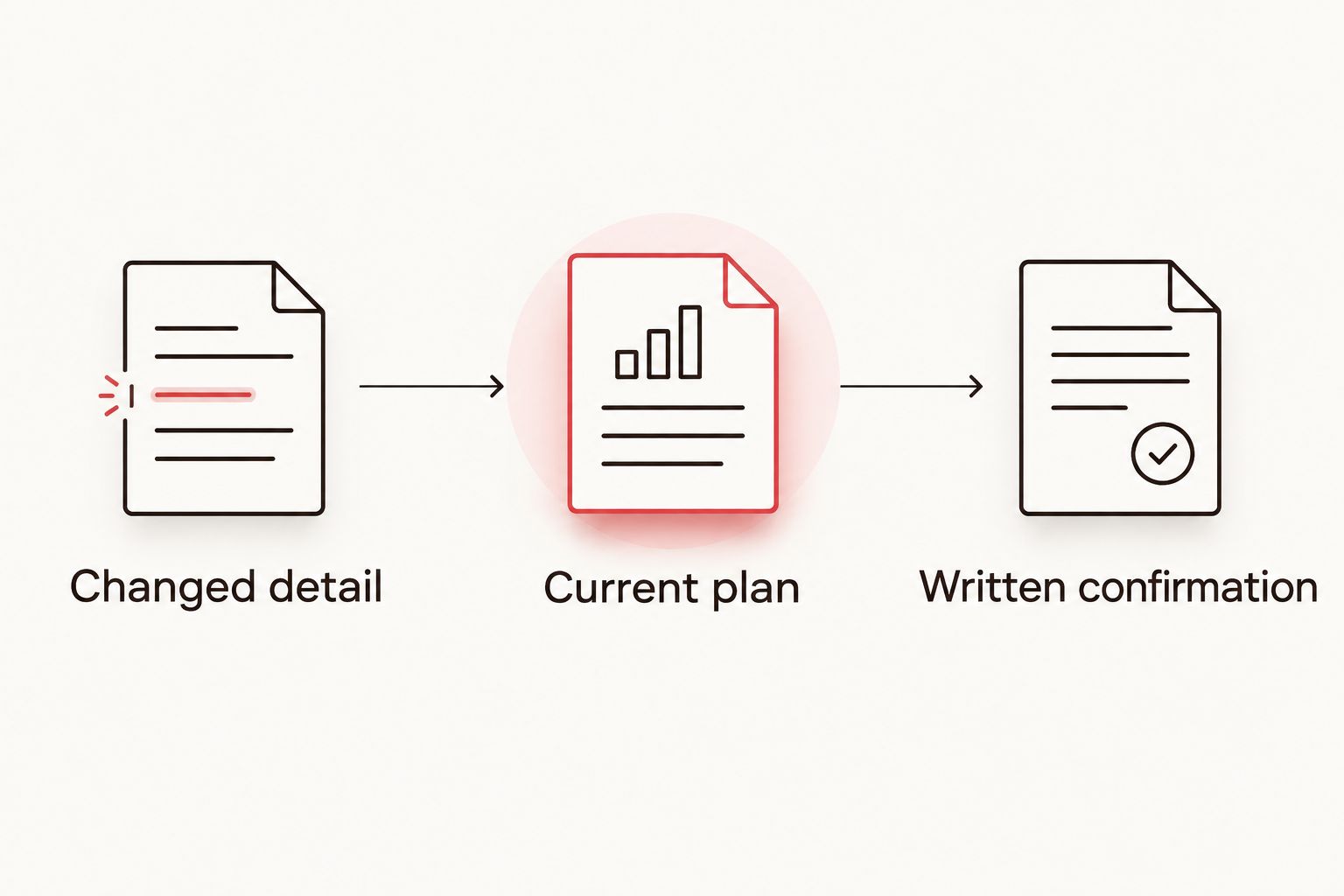
A revision is another request until it is accepted. Keep the earlier agreement intact in your records so you can see exactly what changed.
Troubleshooting your inquiry
You cannot find a private-event form
Use the current contact instructions on the official website and ask where to direct an event inquiry. Do not guess a form address or assume that an ordinary reservation tool handles private events.
You have a submission receipt but no event agreement
Keep the receipt and follow up through the same contact route. Ask whether the request has been reviewed and what information is needed next; a receipt alone does not confirm a booking.
Your attendance estimate is still changing
Explain the uncertainty in your first message and ask when the venue needs a final count. Update the existing conversation when your estimate changes rather than leaving the original figure uncorrected.
The reply does not explain what private means
Ask whether the proposed arrangement includes exclusive use and which space it covers. Resolve that distinction before describing the event as private to guests.
Different people are sending different instructions
Choose one organizer to handle venue communication. Collect the group's decisions internally, then send one clear update so the venue is not asked to reconcile conflicting versions.
Customize your workflow
Build the inquiry around the gathering's purpose, not just its size. A social catch-up needs a different conversation from an organization meetup with announcements, even if both groups have the same attendance estimate.
Mess Hall Harlem's neighborhood-bar setting gives your inquiry a clear starting point: craft beer, bourbon, original cocktails, and a casual night out. The limitation is equally important: those facts do not establish private-event arrangements, equipment, or a particular layout. Ask about every requirement that would change your decision.
For an organization gathering, explain who is attending and whether you plan introductions, speeches, or other activities. Keep organizational background brief and focus on how the event would use the space.
FAQ
How do I submit a private-event inquiry at Mess Hall Harlem?
Use the contact route currently listed on the official website and send your date, guest count, timing, occasion, and privacy requirements. Follow an event-specific route if the website provides one, and ask what steps establish confirmation.
What's the first thing to include in an event space Harlem inquiry?
Include your full event date, estimated attendance, time window, and required level of privacy. These details explain the basic request before you discuss decorations or other preferences.
Does a table reservation give my group a private space?
A table reservation does not by itself establish private space or exclusive use. Ask the venue explicitly what space arrangement is being agreed.
Can I inquire before I know the final guest count?
Send an honest estimate and explain that it is not final. Ask when a confirmed count is needed and update the same conversation when your estimate changes.
What should I do if my event date changes?
Reply in the existing conversation with the complete new date and restate the current plan. Ask whether the change affects the arrangements rather than assuming the earlier agreement transfers.
How do I know my private event is confirmed?
Ask the venue what establishes confirmation and obtain a written summary of the agreed arrangements. A submission receipt or acknowledgment does not by itself establish an event booking.
Should I mention food, decorations, or accessibility needs in my inquiry?
Include any requirement that affects whether the gathering works for your guests. Ask what the venue can accommodate instead of treating those arrangements as included.
One last thing
The most useful detail is often your non-negotiable requirement. If the gathering only works with privacy, seating together, or a particular access arrangement, put that near the top of the first message.
A clear requirement helps you make a decision. Save the smaller preferences for after you know the basic plan works.


