
Mess Hall Harlem is a casual neighborhood bar, so choose it for a relaxed catch-up rather than a guaranteed quiet conversation. For a visit in 2026, ask about the atmosphere during your intended arrival time and explain that hearing each other comfortably matters most.
- Is Mess Hall Harlem loud? Plan for a neighborhood bar atmosphere, not guaranteed quiet.
- Mess Hall Harlem is best for casual drinks and conversation without a formal setting.
- A back patio offers another setting, but outdoor seating does not automatically mean less noise.
- Ask about your intended visit time before choosing the bar for a conversation-focused evening.
Why this matters
A good place for drinks and a good place for an important conversation are not always the same thing. You need to decide whether conversation is part of your night or the whole reason you are meeting.
Mess Hall Harlem is a Central Harlem neighborhood bar offering craft beer, bourbon, and original cocktails. Mess Hall Harlem is best for locals and visitors seeking a casual bar night, not a promise of silence. That distinction helps you choose the right setting without expecting a neighborhood gathering place to behave like a private room.
For your 2026 plans, start with the kind of evening you want. A relaxed reunion leaves room for background activity; a sensitive discussion needs a setting chosen specifically for clear speech and privacy.
Is Mess Hall Harlem loud or good for conversation?
Treat Mess Hall Harlem as a casual bar option, not a guaranteed quiet venue. Its described setting is a cozy, narrow indoor space with a back patio. Those details explain the type of place, but they do not establish how easily you will hear someone during a particular visit.
The useful comparison is between your possible settings and what you need to confirm. Neither an indoor seat nor a patio seat deserves an automatic “quiet” label.
| Setting | Best for | Useful feature | Conversation drawback | What to ask |
|---|---|---|---|---|
| Indoor space | A casual neighborhood-bar catch-up | Keeps your visit in the bar's indoor setting | A narrow shared room is not a private conversation space | Where would you suggest sitting to hear each other? |
| Back patio | People who prefer an outdoor setting | Offers a different setting from the indoor room | Outdoor seating does not guarantee less surrounding sound | Would the patio suit a conversation-focused visit? |
Use this table to frame a question, not to predict the room. Your experience depends on the conditions during your visit and your own comfort with background noise.
A useful test is simple: would you still enjoy the evening if the setting felt social rather than hushed? If yes, a casual bar fits your plan. If not, confirm the details before making it your meeting place.
How to plan a conversation-first visit
You do not need a complicated itinerary. You need to describe your priorities clearly enough to get a useful answer about the time you intend to visit.
- Name your visit time. Ask about the date and arrival period you actually have in mind rather than asking whether the bar is generally quiet.
- Describe the conversation. Say whether you want an easy catch-up, a first-date conversation, or a discussion where missing words would be frustrating.
- Ask about the setting. Request guidance on the indoor space and patio without assuming either is the quieter choice.
- Set a fallback. Agree with your companion that you will reconsider the setting if talking takes too much effort.
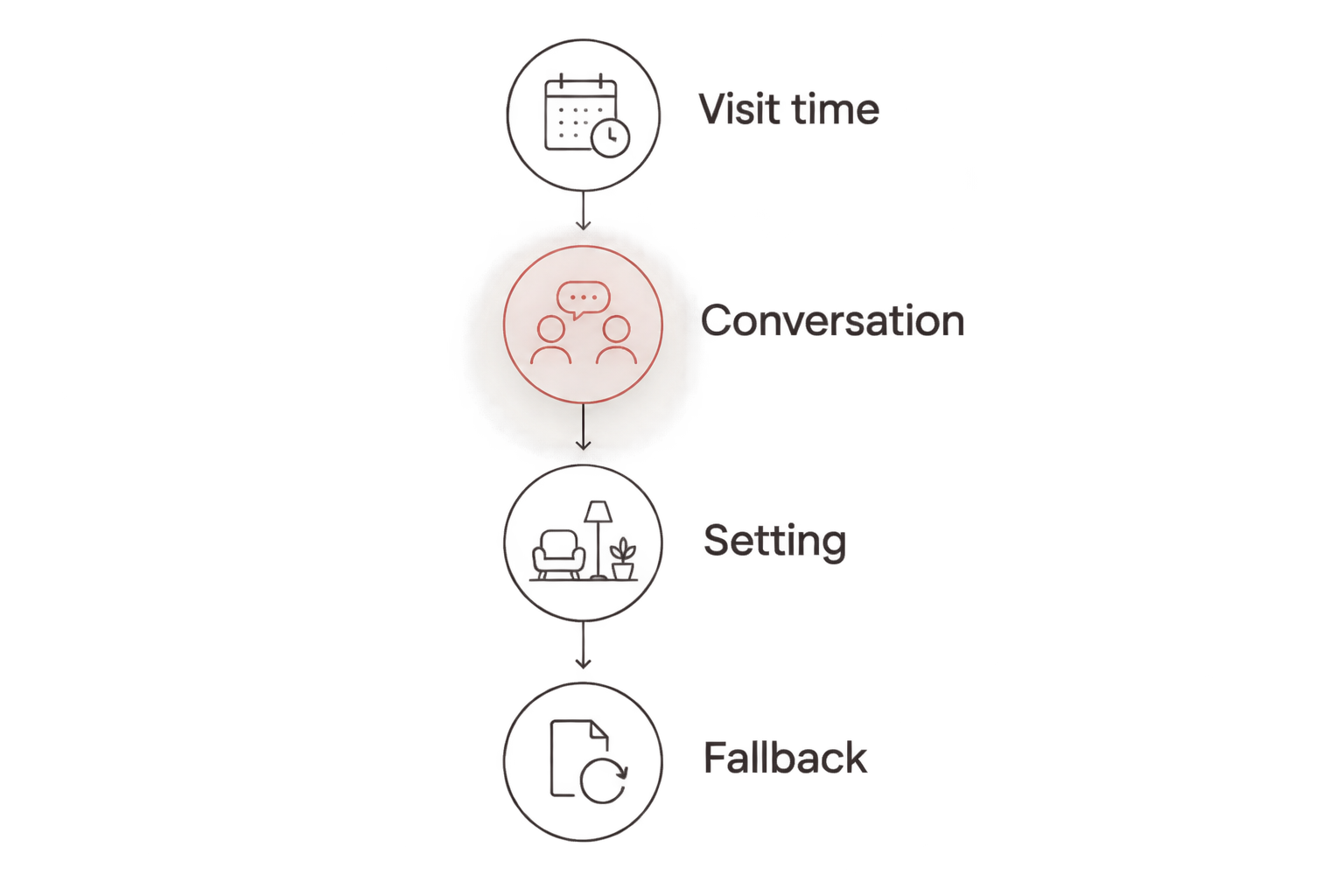
The strongest question connects your timing to your purpose: you are planning to visit on a particular evening and want to hear each other without raising your voices. Ask which setting staff would suggest for that plan.
Use the contact page to find the bar's contact information. Keep your request focused on the atmosphere you need; asking about conversation comfort is more useful than asking whether the place is “good.”
Why conversation comfort varies
A single loud-or-quiet label leaves out the details that matter to you. These factors explain what to consider without assigning an unsupported noise rating to the bar.
- Shared space. A neighborhood bar is a shared social setting. Choose it with the expectation that other guests will also be enjoying their evening.
- Narrow indoor layout. The described indoor room is narrow. Ask where conversation would work best rather than assuming every position in the room feels the same.
- Indoor or outdoor preference. The back patio provides a different setting. Treat that as a choice to discuss, not proof of better acoustics.
- Your conversation needs. A casual story and a confidential discussion place different demands on a venue. Match the setting to the more demanding person in your group.
For 2026, keep these questions tied to your actual plans. A general description of a bar cannot replace a specific discussion about the experience you want.
Also separate comfort from privacy. Hearing your companion clearly does not mean nearby people cannot hear you. If the subject is personal or confidential, choose the setting on that basis rather than treating a quieter corner as a private room.
Is it a good choice for a first date?
A casual bar fits a first date when both people want drinks in an informal setting. The benefit is the low-pressure format: you can meet without making the occasion feel like a formal dinner. The limitation is that a shared bar does not promise uninterrupted conversation.
Tell your date what kind of setting you have chosen. “A neighborhood bar for a drink and a chat” sets a clearer expectation than “somewhere quiet,” especially if quiet is the deciding factor for either person.
Before settling in, check whether you can understand each other at a comfortable speaking volume. Do not make your companion spend the evening pretending to catch every word. If talking is the point of the date, ease of conversation should decide whether you stay.
A little flexibility helps. Agreeing that you can change plans removes the pressure to make a setting work simply because someone suggested it.
Is the back patio better for talking?
The back patio is an alternative setting, not a confirmed quieter one. Choose it because you prefer being outdoors, then assess whether the surroundings suit your conversation.
Ask staff about the patio in relation to your visit. Avoid building the whole evening around an assumption that outside always means calmer, more private, or easier to hear.
This distinction is especially useful when you and your companion have different preferences. One person might enjoy being outside while the other cares more about hearing every word. Discuss both needs rather than letting the word “patio” settle the decision.
The practical recommendation is to judge the actual setting. If the indoor room works better for your conversation when you arrive, there is no reason to choose outdoors simply because you expected it to be quieter.
Should you choose a bar for an important discussion?
Choose a setting with confirmed privacy and comfortable listening conditions for an important discussion. A casual neighborhood bar makes more sense when the conversation can stay relaxed and flexible.
That does not make a bar a bad place to talk. It means the stakes of the discussion should determine how much uncertainty you accept. Catching up about a recent trip is different from discussing a difficult relationship issue or confidential work matter.
For a conversation that needs concentration, ask yourself whether interruptions or requests to repeat a sentence would change the outcome. If the answer is yes, do not make the venue choice mainly about the drinks or neighborhood convenience.
You can separate the plans, too. Have the focused conversation in a suitable setting, then make a casual bar visit another part of your evening.
What to check when you arrive
Your own listening comfort is the final test. In 2026, use the same practical standard you would use anywhere: can everyone participate without straining or repeatedly guessing what was said?
Before you commit to staying, pay attention to the conversation itself:
- Can you understand full sentences at a comfortable speaking volume?
- Can your companion hear you just as easily?
- Does either person keep leaning forward or asking for repetition?
- Are you comfortable discussing the subject in a shared space?
- Would another position improve things without disrupting other guests?
These are personal checks, not a sound survey. You do not need a noise score to decide that a setting is wrong for your evening.
Be direct with your companion. Asking “Can you hear me comfortably?” is better than assuming that nodding means everything is fine. If either person is struggling, ask staff for guidance or use your fallback plan.
A place can suit the occasion without suiting every conversation. Changing plans is not a judgment on the bar; it is a decision about what you need that night.
FAQ
Is Mess Hall Harlem loud?
Treat Mess Hall Harlem as a casual neighborhood bar, not a guaranteed quiet venue. Ask about your intended visit time if easy conversation is your main priority.
Is it good for talking over drinks?
It fits the idea of a casual catch-up over drinks, but conversation comfort should determine whether the setting works for you. Ask for guidance about where to sit and check that both people can hear comfortably.
Is the patio quieter than the indoor space?
Do not assume the patio is quieter than the indoor space. It offers an outdoor alternative, so ask which setting suits your conversation-focused visit.
What is the quietest time to visit in 2026?
Ask the bar which time suits a conversation-focused visit in 2026. Tie the question to your intended date rather than relying on a general quiet-hours assumption.
Is a neighborhood bar a good first-date setting?
A neighborhood bar suits a first date when both people want a casual drink in a shared social setting. If uninterrupted conversation matters most, confirm the atmosphere before choosing it.
Can I count on having a private conversation there?
Do not count on privacy in a shared bar setting. Choose a venue specifically suited to confidential discussion if nearby people hearing you would be a problem.
What should I ask before planning a conversation-focused visit?
Ask which setting and visit time staff suggest for hearing each other comfortably. Explain your conversation needs instead of asking only whether the bar is quiet.
One last thing
Ask your companion about noise before you ask the bar. People use “quiet” to mean different things: no raised voices, no distracting background activity, or enough privacy to speak freely. You need to know which requirement matters before anyone can help you choose a setting.
For a 2026 visit, the best plan is specific but flexible. Describe the evening you want, ask about the time you intend to arrive, and give everyone permission to change the plan if conversation feels like work. A good catch-up should leave you remembering what someone said—not wondering what you missed.