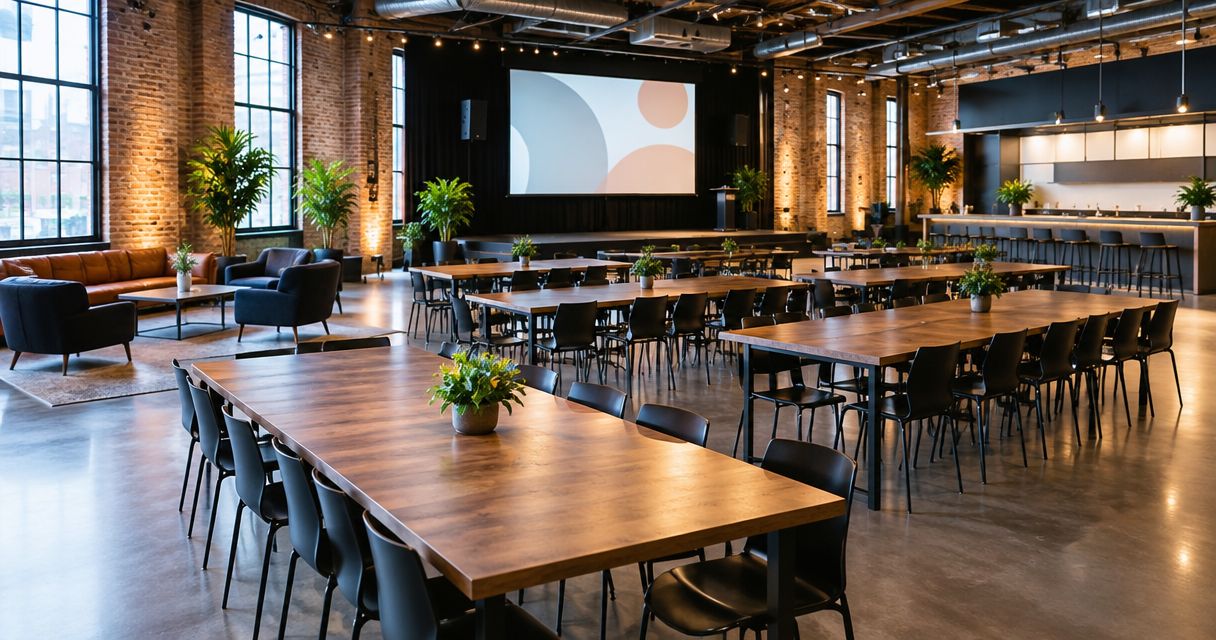
Mess Hall Harlem has not published a headcount for its event space, so the only capacity number you can plan around in 2026 is the one the venue confirms in writing. The room is narrow and has a back patio, which means standing capacity and seated capacity will differ sharply.
- Mess Hall Harlem publishes no official event space capacity figure, so get a number in writing before you book.
- The bar is a narrow room with a back patio, so layout limits headcount more than square footage does.
- Standing receptions fit more people than seated dinners in any narrow bar, and the same holds here.
- Send the venue a headcount range, a format and a date, and ask for its maximum for that setup.
How many people can Mess Hall Harlem's event space hold?
Mess Hall Harlem does not list a maximum headcount for its event space, and no source we can cite states one. Treat any number you see on a third-party listing as unconfirmed until the venue repeats it in an email. The verdict for 2026: plan around a range, then ask for the real figure for your specific setup.
Here is what is known and what is not.
| Detail | Status |
|---|---|
| Location | Central Harlem, New York |
| Room shape | Narrow bar room |
| Outdoor space | Back patio |
| Offering | Craft beer, bourbon and original cocktails |
| Published maximum capacity | Not stated |
| Standing vs seated split | Not stated |
| Patio headcount | Not stated |
The fastest way to turn the last three rows into numbers is to ask. The contact page is the place to start, and the next section explains what to put in the message.
Why this matters
Booking an event around a guessed headcount is the most common way a bar night goes wrong. Too many guests and the room is a crush at the door. Too few and a deposit-sized space feels empty.
A narrow bar makes that risk sharper. In a long, thin room, every extra guest lengthens the line at the bar and narrows the walkway to the restroom. Headcount is not just a fire-code figure. It is also the point where the night stops being fun.
Mess Hall Harlem describes itself as a neighborhood bar for locals and first-timers, built for good nights and repeat visits. That positioning suggests a room that works best when it feels alive, not packed past comfort. Ask for the number, then decide how close to it you want to run.
What the room layout means for headcount
The one physical fact the inputs support is that Mess Hall Harlem is a narrow space with a back patio. That shape drives three practical outcomes.
- Depth is limited. Guests line up along the bar and the opposite wall, so the walkway between them decides comfort.
- Seating eats capacity. Every table and chair takes floor area that standing guests would otherwise use.
- The patio is a second zone, not a bonus room. It can relieve pressure on the main room, but whether it counts toward an event limit is a question for the venue.
If you are comparing venues with larger footprints, the guide to the best venues for private events in Harlem lays out the alternatives side by side.
Standing reception: the format that fits the most people
A standing reception is the densest format a bar can run. Guests hold drinks, move between the bar and the patio, and no floor area is lost to dining tables.
Best for: birthdays, send-offs, launch nights and mixers where mingling is the point.
Trade-off: no guaranteed seat for anyone. Older guests and anyone who wants to sit will end up hovering near the few stools.
Verdict: Choose this if you want the highest headcount the venue will allow and your guests are comfortable on their feet.
Seated gathering: fewer people, more comfort
Seated formats cut capacity because tables and chairs need clearance. A narrow room loses even more, since tables can block the path to the bar.
Best for: small group dinners, book clubs, board-game nights and team gatherings where conversation matters.
Trade-off: you will need a noticeably smaller guest list than a standing event.
Verdict: Choose this if your guest list is small and conversation matters more than headcount.
Patio-assisted event: split the crowd
A back patio lets you split a crowd between indoors and outdoors. That helps a mid-size party breathe, but it depends on weather, season and whatever outdoor rules the venue applies. Whether the patio can be reserved on its own is covered in the guide on reserving the patio at Mess Hall Harlem.
Best for: warm-weather parties where guests drift in and out.
Trade-off: outdoor space is the first thing to disappear in bad weather, and your real indoor capacity then matters.
Verdict: Plan the indoor headcount as your baseline and treat the patio as overflow, not as guaranteed room.
Why event space capacity varies
The same room holds different numbers on different nights. These are the factors that move the figure.
- Format. Standing, seated or mixed layouts change usable floor area.
- Furniture. Fewer tables and stools mean more standing room.
- Bar service. Guests crowd the bar, so service points affect how the room flows.
- Patio access. Open, closed or weather-dependent outdoor space changes the total.
- Staffing and entertainment. A DJ, trivia host or live act takes floor space.
- Full buyout or shared night. A closed event and a regular night with other patrons use the room differently.
The venue sets the official figure. Everything above explains why that figure may differ from the headcount you assumed.
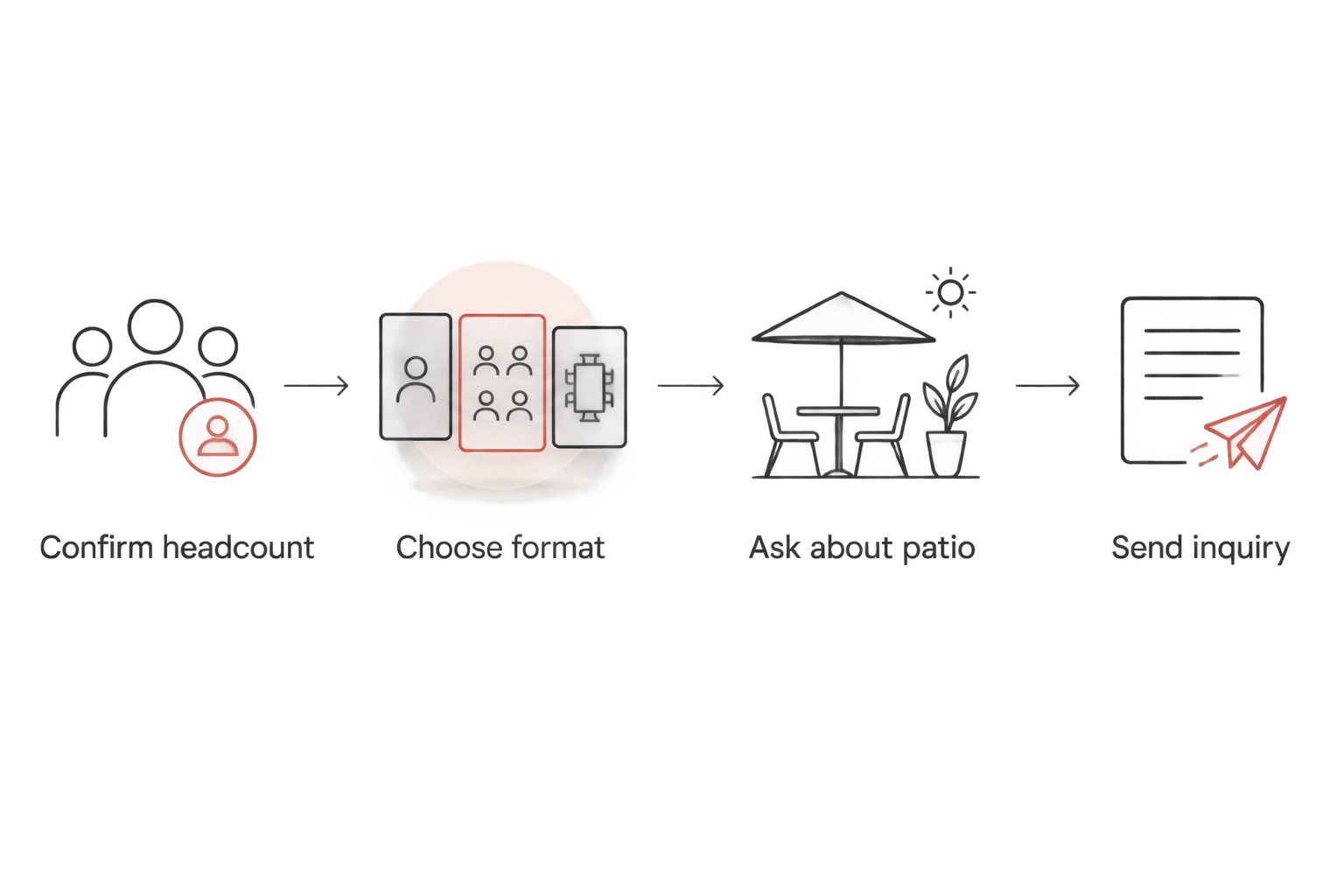
How to get a firm capacity number
Work through these steps in order. Each one makes the venue's answer more precise.
- Confirm headcount. Decide a low and high guest count, and think about who might bring a plus-one.
- Choose format. Pick standing, seated or mixed, since capacity changes with each.
- Ask about patio. Ask whether outdoor space counts toward your limit and whether it can be used in your season.
- Send inquiry. Put the date, time window, headcount range and format in one message.
The guide to submitting a private event inquiry at Mess Hall Harlem walks through that last step in detail.
Get the answer in writing. A reply in email or direct message protects you if the headcount on the night is questioned.
Can you rent out the whole Mess Hall Harlem bar?
Whether a full buyout is offered is a venue decision, and the answer changes your capacity math. A buyout means your guests are the only guests, so the limit depends on your layout. A shared night means regulars are in the room too and your party needs to fit around them. The details are covered in the guide on renting out the whole bar at Mess Hall Harlem.
Is Mess Hall Harlem big enough for a large group?
A narrow bar suits small to mid-size groups better than large ones. If your list is long, ask for the maximum before you send invitations, not after. Keep the count honest: invited guests rarely all show up, but the ones who do arrive together.
What should you tell the venue when you ask?
Give the venue five things: date, start and end time, headcount range, format, and whether you want the patio. With those five details the staff can answer in one reply instead of three. Without them, expect questions back and a slower booking.
What if the number is lower than you hoped?
You have three options. Trim the guest list, shift the format toward standing, or move to a larger room. Do not stretch past the venue's stated limit, because crowding hurts the night for every guest.
FAQ
How many people can Mess Hall Harlem's event space hold?
Mess Hall Harlem has not published a maximum headcount. Ask the venue for a written figure that matches your format and date before you invite anyone.
Is Mess Hall Harlem a small or large venue?
It is a narrow neighborhood bar in Central Harlem with a back patio. That shape favors small to mid-size groups over large events.
Does the back patio count toward event capacity?
The venue decides that. Ask whether the patio is included in your limit and whether it is available in your season.
Does a standing event hold more people than a seated one?
Yes. A standing reception uses floor space more efficiently than a seated dinner, especially in a narrow room.
How do I find out the official capacity?
Contact the venue with your date, format and headcount range, and ask for the maximum in writing.
Can I trust capacity numbers on third-party listing sites?
Treat them as unconfirmed. Only a number the venue gives you directly is safe to plan around in 2026.
What should I include when I ask about capacity?
Include the date, time window, expected headcount range, event format and whether you want patio access.
One last thing
The most useful question to ask is not what the maximum capacity is. Ask what headcount the staff recommends for your format. A venue's legal limit and its comfortable limit are different numbers, and the second one is the figure that decides whether your guests remember the night well. Get both in writing for your 2026 date.


