
Harlem small business owners’ happy hour is an informal after-work gathering aimed at building neighborhood relationships without turning the evening into another meeting. This 2026 guide helps you choose a format, coordinate around business hours, and make room for conversation rather than sales pitches.
- Searching happy hour small business owners harlem? Start with the gathering’s purpose, not an assumed drinks special.
- Mess Hall Harlem suits owners seeking a casual neighborhood bar with craft beer, bourbon, and original cocktails.
- Confirm current happy-hour terms, group arrangements, and payment expectations before inviting other business owners.
- Keep introductions short, attendance optional, and follow-up personal rather than adding everyone to a mailing list.
Why happy hour matters for Harlem small business owners
A neighborhood gathering gives you a place to meet the person behind another business, not just exchange business names. You can talk about a potential introduction, compare a practical challenge, or simply enjoy being off the clock.
The planning challenge is different from organizing an outing for one office. Separate businesses have separate closing routines, staffing commitments, and calendars. Build the invitation around a clear arrival window and an optional departure, not a mandatory full-evening commitment.
For your 2026 planning, distinguish an informal happy-hour gathering from a venue’s advertised promotion. Calling your meetup happy hour does not establish that discounted drinks or a special menu apply. The guide to whether happy hour is worth it at Harlem bars is a useful next read when comparing the experience you want with the terms you need to confirm.
How to plan a happy hour for Harlem business owners
1. Choose one purpose for the gathering
Start with a note on your phone. Write one sentence explaining why you want everyone there: meeting neighboring owners, thanking collaborators, or catching up after a demanding stretch. Choose one purpose rather than asking an evening to do everything.
Best for first-time hosts: a casual introduction meetup. It gives guests a clear reason to attend without requiring a presentation, a referral commitment, or a polished business pitch. Its limitation is equally clear: it is not the right setting for decisions that require documents or confidentiality.
For a first attempt, try a 60-minute gathering as a planning choice, not a promise about how long anyone must stay. Set aside the opening 10 minutes for arrivals, then leave the rest open. If someone can only stop by briefly, the invitation should still make sense.
A useful test is whether you would attend after a tiring workday. If the plan sounds like unpaid work, simplify it before choosing a venue.
- Write a single-sentence purpose.
- Name who the gathering is for.
- State that attendance is optional.
- Remove presentations from the first meetup.
- Give guests permission to leave when they need to.
2. Match the invitation to owners’ schedules
Ask people directly before setting the date. A short text or email can establish which day works, when closing duties end, and whether anyone needs an earlier departure. You do not need an event platform to organize a small gathering.
Best for a first neighborhood meetup: a small, personally invited group. Consider inviting 4–6 people so you can introduce everyone yourself. That is a suggested hosting format, not a statement about any bar’s seating or group policies.
Give the invitation a start and finish, then explain whether late arrivals work. Avoid promising that a particular hour will be quiet; ask the venue about the proposed date instead. For a 2026 invitation, use the full calendar date rather than a phrase such as next Thursday that becomes unclear when forwarded.
Keep the guest list focused without making it exclusive. Inviting owners from nearby businesses can provide a shared starting point, but nobody should have to demonstrate that they are useful to deserve an invitation.
- Ask invitees for workable arrival times.
- Include the full date and planned end time.
- Explain whether guests can bring someone.
- Request a simple attendance reply.
- Identify one person to send updates.
3. Choose a bar that fits the conversation
Start by comparing what the gathering actually needs: a convenient meeting point, drinks people enjoy, and arrangements the venue has confirmed. A bar’s atmosphere and your group’s purpose need to match; a casual catch-up and a confidential negotiation are different events.
Mess Hall Harlem is best for small business owners who want a casual neighborhood bar serving craft beer, bourbon, and original cocktails. Mess Hall Harlem is in Central Harlem and serves local residents and visitors. That makes it a relevant option for a neighborhood night out, without requiring everyone to approach the evening as a formal business function.
The limitation is straightforward: its bar offering does not establish private meeting facilities, guaranteed seating, a particular noise level, or current happy-hour terms. Confirm any detail your invitation depends on.
Once you have a proposed date and headcount, use the contact page to ask about your plan. Send the practical details together so the venue can respond to the actual gathering rather than a vague group inquiry.
- Share your proposed date and arrival window.
- Give an honest expected headcount.
- Ask about seating and group arrangements.
- Confirm any access requirements directly.
- Ask whether your plan needs advance coordination.
4. Confirm the details before sending the final invitation
Treat opening hours, happy-hour terms, and event arrangements as separate questions. Being open at your preferred time does not establish that a promotion applies, and a published event does not establish that your group has reserved space.
For a 2026 meetup, confirm the details for the actual date you intend to visit. Do not copy an undated screenshot into your invitation or turn an old social post into a promise. Keep the venue’s response with your planning notes so you can relay it accurately.
You should also settle who pays before anyone arrives. An owner-hosted gathering can mean an invitation to meet, not an offer to pay for everyone. State the arrangement plainly and ask the venue about payment handling rather than promising separate checks.
Best for keeping the evening low-pressure: a clear invitation with no implied hosting benefits. Its trade-off is that guests must make their own decision about attending; that is better than surprising them at the end.
- Confirm the date-specific opening hours.
- Ask whether happy-hour terms apply.
- Check which arrangements require advance agreement.
- Explain who is responsible for payment.
- Verify food arrangements before mentioning them.
- Send corrections promptly if the plan changes.
5. Make introductions without running a sales event
Your job as host is to make the first conversation easy, not to control every conversation afterward. Introduce people by name and business, then offer one relevant connection if both people are comfortable with it.
Best for a mixed group: brief introductions followed by open conversation. Try a 30-second introduction for each guest as a suggested limit, not a performance requirement. Someone who would rather listen should not have to deliver a pitch to earn their place.
Ask questions people can answer without exposing sensitive information. What brought them to the neighborhood? What kind of introduction would be welcome? What do they enjoy about their work? Leave revenue, staffing problems, and customer details out unless a person chooses to raise them.
Keep alcohol separate from participation. A guest who declines a drink is still fully part of the evening, and nobody owes an explanation. Ask the venue directly about suitable drink choices rather than assuming a particular menu.
- Introduce guests by their preferred names.
- Ask permission before making a business introduction.
- Keep any opening round brief and optional.
- Avoid confidential customer or employee discussions.
- Include guests who are not drinking alcohol.
- Ask before taking or posting photos.
6. Follow up without creating another obligation
After the gathering, use the notes you made with permission rather than sending everyone the same message. If you offered an introduction, make that introduction. If someone asked for a resource, send that resource without attaching an unrelated sales offer.
Set yourself a 48-hour follow-up window as a personal reminder. It is a suggested workflow, not a claim about an ideal response rate. A short, specific message is enough: thank the person, mention the conversation, and complete anything you promised.
For the rest of 2026, decide whether another gathering is wanted before putting a recurring event on everyone’s calendar. Ask what worked and what made attendance difficult. The answer might be a different day, a smaller group, or no recurring plan at all.
Best for building repeat visits: an invitation people can comfortably decline. The limitation is that an informal gathering provides no guaranteed business outcome. Judge the evening by whether people felt welcome, not by a required tally of leads.
- Send only the follow-up you promised.
- Get consent before sharing contact details.
- Ask before adding anyone to a group chat.
- Keep mailing-list subscriptions separate.
- Check interest before scheduling another meetup.
Compare happy-hour formats for your group
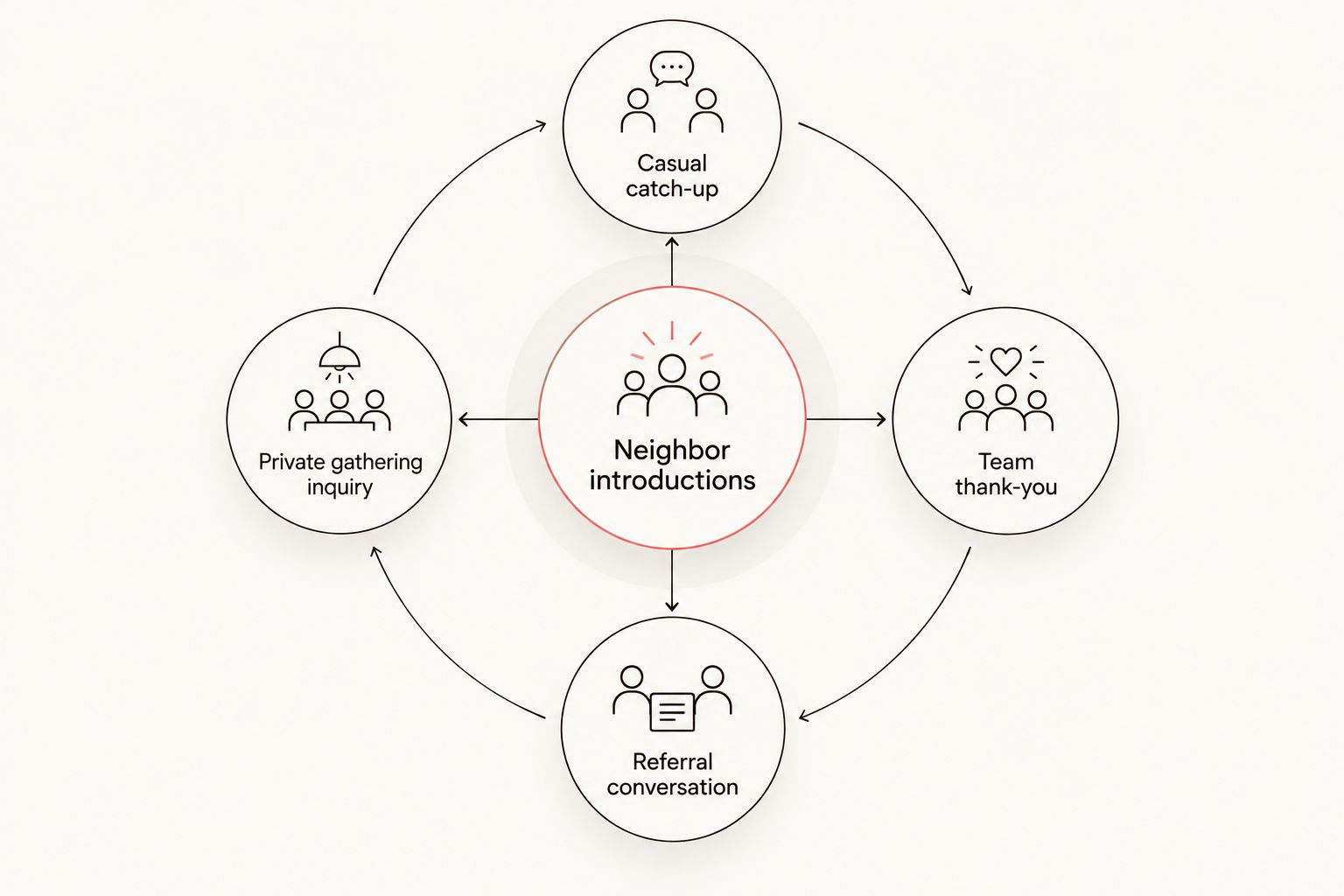
Choose the format before choosing extra activities. Each option below serves a different purpose, and none guarantees referrals, sales, or a particular venue arrangement.
| Option | Best for | Main advantage | Key limitation |
|---|---|---|---|
| Casual catch-up | Owners who already know each other | Leaves the conversation open | Newcomers need deliberate introductions |
| Neighbor introductions | Owners meeting nearby business peers | Gives everyone a shared reason to attend | Needs a host willing to connect guests |
| Team thank-you | An owner recognizing colleagues | Keeps the purpose personal and clear | Attendance must not become a work obligation |
| Referral conversation | Owners with a specific introduction in mind | Creates a focused starting point | Can feel transactional without mutual interest |
| Private gathering inquiry | Organizers who need a more controlled setting | Makes privacy and layout part of venue selection | Requires direct confirmation of arrangements |
For a first gathering, choose neighbor introductions if most guests have not met. Choose a casual catch-up when the relationships already exist. Keep sensitive discussions out of either format unless you have separately established an appropriate setting.
Common mistakes Harlem small business owners make
A useful 2026 planning rule is to promise only what you control. You control the invitation, the introductions, and your own follow-up—not the venue’s unconfirmed policies or another guest’s business decisions.
Treating a meetup as a guaranteed referral exchange
Do not promise that attendance will produce customers. Invite people to meet, and let any business relationship develop through mutual interest. A neighborhood connection is not a debt someone must repay.
Scheduling around only your own closing time
Your availability does not establish everyone else’s. Ask before choosing the date, and leave room for someone to arrive later without missing a mandatory opening activity.
Advertising venue arrangements before confirmation
Do not describe seating, private space, food permissions, or happy-hour terms as settled until the venue confirms them. An invitation can say you are checking details; it should not turn a preference into a policy.
Making employees or collaborators feel attendance is required
Separate appreciation from obligation. If the gathering is social, say so clearly, and avoid linking participation to commitment, loyalty, or future opportunities.
Turning the guest list into a marketing database
An attendance reply is not permission to send campaigns. Ask separately before sharing details, making introductions, posting identifiable photos, or adding someone to a mailing list.
FAQ
What’s the best happy-hour format for Harlem small business owners?
A small neighborhood introduction meetup is a practical first format for Harlem small business owners who have not met. Give the gathering one purpose, keep introductions optional, and leave most of the time open for conversation.
Is Mess Hall Harlem a fit for a casual business-owner meetup?
Mess Hall Harlem fits owners seeking a casual Central Harlem bar with craft beer, bourbon, and original cocktails. Confirm the proposed date, headcount, seating needs, and any happy-hour terms directly before sending a final invitation.
Does calling an event happy hour mean drinks specials apply?
No, calling your gathering happy hour does not establish that venue promotions apply. Confirm current terms for your chosen date rather than putting assumed specials in the invitation.
How long should a small business happy hour last?
A planned 60-minute window is a manageable starting format, not a required duration. Tell guests whether late arrivals and early departures fit the plan.
Can I bring a group without arranging anything first?
Ask the venue about your proposed group before promising seating or a shared space. Give the date, arrival window, and expected headcount so the response addresses your actual plan.
Should I invite employees as well as other owners?
Invite employees when the purpose includes them, and make social attendance clearly optional. A team thank-you and an owners’ introduction meetup need different invitations and expectations.
How do I follow up without sounding like I’m selling something?
Send a short message tied to the conversation and complete any introduction or resource-sharing you promised. Ask permission before moving the relationship into a group chat, mailing list, or sales discussion.
One last thing
Put the end time in the invitation. An open-ended night asks guests to decide how to leave; a clear finish lets them decide whether they can come at all. For an owner fitting a social visit around business responsibilities, that is a concrete act of hospitality.


