Happy hour is worth it at Harlem bars in 2026 when the drinks you actually want, your arrival time, and the setting fit your plans—not simply because an offer exists. Check the current terms before leaving, and count transportation, tax, and gratuity in your decision rather than treating the advertised offer as the whole night out.
- Is happy hour worth it Harlem? Yes, when the current offer fits your drink choice, timing, and plans.
- Mess Hall Harlem suits a casual neighborhood-bar visit for craft beer, bourbon, and original cocktails; confirm happy-hour terms separately.
- Choose a convenient Harlem bar over an offer that requires a rushed trip or an unwanted order.
- Confirm eligible drinks and ordering times before inviting friends or coworkers.
Why this matters
A good happy hour should make an evening easier to enjoy, not turn it into a deadline. You want a place that works for the people coming, an order you would choose anyway, and enough clarity that nobody arrives expecting something different.
Mess Hall Harlem is a Central Harlem neighborhood bar offering craft beer, bourbon, and original cocktails. That tells you what kind of visit to consider; it does not establish a current happy-hour schedule or which drinks an offer includes.
For a 2026 outing, separate those questions. First decide whether the bar fits your night, then check whether its current happy-hour terms add anything useful. A suitable bar without a matching offer beats an unsuitable bar chosen only for the offer.
Is happy hour worth it at Harlem bars in 2026?
Yes—when you would still want the drink and the visit without the happy-hour label. The strongest reason to go is that an offer fits an evening you already want, rather than persuading you to travel farther, rush your friends, or order something you do not enjoy.
Use this comparison to decide which plan fits. These are planning options, not claims about any bar's current promotions.
| Plan | Best for | Main advantage | Main drawback | Recommendation |
|---|---|---|---|---|
| Visit during a confirmed happy hour | People whose preferred drinks and arrival time match the terms | The offer supports an existing plan | Timing and eligible drinks constrain your choice | Choose when the details fit |
| Visit outside happy hour | People prioritizing a particular bar or meeting time | Your schedule drives the visit | A happy-hour offer does not apply outside its terms | Choose when flexibility matters more |
| Pick a closer neighborhood bar | People making a short, casual stop | Less travel to coordinate | You still need to check the drinks and setting | Choose for convenience |
| Skip the offer-led outing | People who would be rushing or ordering reluctantly | Avoids an evening built around the wrong reason | You give up that particular plan | Skip when the offer is doing all the convincing |
The table's deciding factor is fit, not a universal ranking. A nearby stop after work and a planned evening across Harlem are different outings; neither needs to imitate the other to be worthwhile.
How to decide before you leave
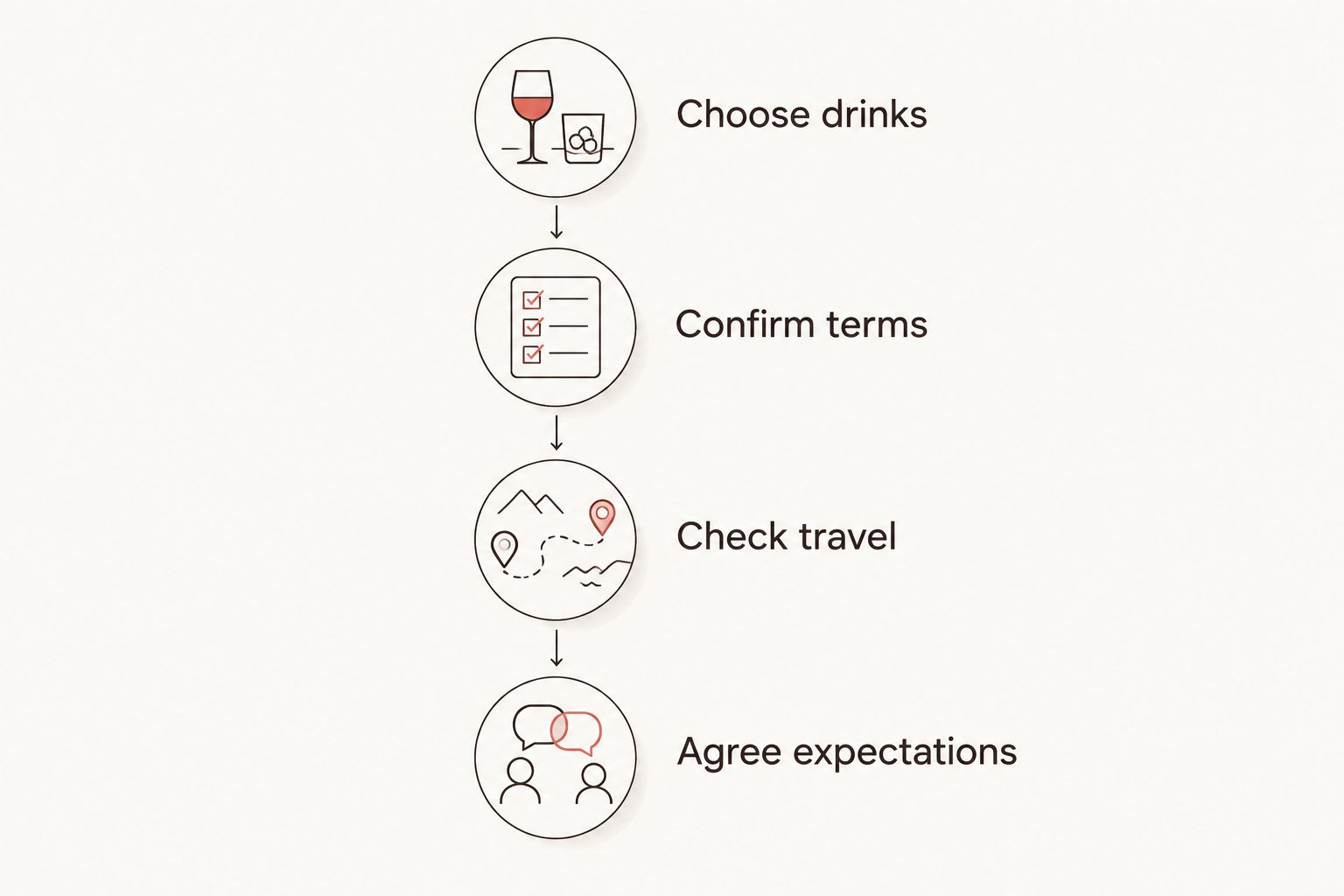
Use these 4 steps before you set a meeting time. They turn a vague promise of happy hour into a plan your group can actually follow.
1. Choose drinks
Start with what you enjoy: craft beer, bourbon, cocktails, or another preference. Then ask whether the current offer covers that choice, rather than assuming a bar's full selection is included.
An offer is not useful if it steers you toward an unwanted order. If you prefer bourbon but the confirmed terms cover something else, judge the visit on the bourbon and the bar—not on a promotion you will not use.
2. Confirm terms
Ask which days apply, when eligible orders must be placed, and whether there are exclusions. Treat opening hours and happy-hour hours as separate details; knowing when a bar opens does not answer when an offer applies.
For a 2026 visit, use information that explicitly applies to your intended day. An undated screenshot or a friend's memory is a reason to ask a question, not a reason to promise the same terms to everyone coming.
3. Check travel
Choose 1 meeting point and work backward from an arrival time everyone can manage. Account for the journey both to the bar and home, especially if the visit is only a brief stop between other plans.
Do not build the outing around arriving at the last possible moment. If the plan only works when every connection and every departure goes perfectly, choose a different meeting time rather than making the whole group race.
4. Agree expectations
Tell friends whether this is a quick catch-up, an open-ended evening, or a stop before another commitment. Share confirmed terms as terms, not as a broad promise that everything on the menu is included.
For a group, agree on how you will handle ordering and settling the bill. That conversation is separate from any venue policy; it keeps your own plans clear without making assumptions about how the bar operates.
Why happy-hour value varies
The same offer can suit one outing and work badly for another. Use these factors to evaluate your own plans without assuming that all Harlem bars share a schedule, menu, or atmosphere.
- Drink preference: An eligible drink matters only if it is something you want. Check the specific order, not just the broad category.
- Arrival time: A confirmed offer still needs to overlap with when you can realistically order. Your workday and travel plans belong in that calculation.
- Travel commitment: Include the outward journey and the trip home. A special trip deserves a stronger reason than an offer alone.
- Purpose of the visit: A solo stop, a date, and a coworker gathering need different kinds of coordination. Choose for the occasion rather than treating them as interchangeable.
- Total spending: Consider transportation, anything else you order, tax, and gratuity. Do not judge the evening from one advertised component.
- Group expectations: Make sure everyone understands what is confirmed. Avoid asking friends to commit to details you have not checked yourself.
Give convenience and drink preference more weight than the happy-hour label. You can adjust a plan before leaving; once everyone is on the way, changing venues becomes another task to coordinate.
Is happy hour better for a quick drink or a longer evening?
Happy hour fits a quick drink when the timing works without a rush. For a longer evening, judge the bar as somewhere you want to spend time after the offer ends—not merely somewhere to place an eligible order.
Before a short stop, ask 3 questions: Is the drink I want included? Can I arrive comfortably? Does this location suit my next destination? If any answer is no, revise the plan instead of squeezing the rest of your day around it.
For a longer visit, talk about what happens after the initial stop. You do not need to promise another round or another venue; simply avoid making a time-limited offer sound like the terms for the entire evening.
Best for a quick stop: a confirmed, convenient plan
The advantage is a clear purpose: meet, enjoy the drink you wanted, and leave when your schedule requires. The drawback is that a tight arrival window leaves little room for changes.
Choose this plan when the visit fits naturally between your other commitments. Skip it when reaching the bar becomes the main event and you only wanted a brief catch-up.
Best for a longer evening: a bar you want to visit anyway
The advantage is that the outing still makes sense without the offer. The drawback is that your eventual orders and plans extend beyond the reason that first caught your attention.
Choose the setting and company first. Let happy hour be a useful part of the evening rather than the explanation for every decision afterward.
Is happy hour worth a special trip across Harlem?
Happy hour is worth a special trip when you also want the bar itself, its drinks, or the company meeting there. An offer alone is a weak reason to take a journey you otherwise would not choose.
Make 2 checks before committing: confirm the current terms and confirm that your travel plan leaves room to enjoy the visit. These checks do not guarantee a particular experience; they remove avoidable uncertainty from the decision.
For 2026 plans with friends arriving from different places, choose the meeting location together. A convenient trip for the organizer is not automatically convenient for everyone else, and a late arrival should not become a disagreement about what was promised.
Where a neighborhood bar fits
Mess Hall Harlem is best for locals and first-timers seeking a casual Central Harlem bar for craft beer, bourbon, and original cocktails. That is a reason to consider the bar independently of a promotion.
The clear fit is a neighborhood-bar visit built around those drinks. The limitation for a happy-hour-led decision is equally clear: the bar's description does not establish current promotional terms, so confirm those before building your schedule around them.
Use the contact page to ask about the day you intend to visit. Keep the question specific: which hours apply, which drinks qualify, and whether any conditions affect your intended order. That is more useful than asking only whether there is a happy hour.
If the confirmed details do not match your plans, you can still choose the bar for a casual night out. Just make that decision on its own merits rather than presenting an unverified offer as the reason to go.
FAQ
Is happy hour worth it at Harlem bars in 2026?
Yes, happy hour is worth it when the confirmed terms fit your preferred drinks, arrival time, and reason for visiting. Include transportation, tax, and gratuity when deciding whether the overall outing makes sense.
How do I know whether a Harlem happy-hour offer is current?
Confirm the offer directly for the day you plan to visit. Ask about eligible drinks, ordering hours, and exclusions rather than relying on an undated menu or screenshot.
Does every drink qualify during happy hour?
Do not assume every drink qualifies during happy hour. Ask whether your intended order is included before deciding that the offer suits you.
Is happy hour a good idea for a first date?
Happy hour is a good first-date plan when both people can arrive comfortably and want the setting. Avoid making the date depend on rushing to place an order before a deadline.
Should I choose a nearby bar or travel for happy hour?
Choose a nearby bar when the alternative trip exists only because of an offer. Travel farther when the bar, drinks, or people meeting there are reasons you value independently.
Is Mess Hall Harlem a good fit for a casual drink?
Mess Hall Harlem is a neighborhood bar in Central Harlem offering craft beer, bourbon, and original cocktails for a casual night out. Confirm current happy-hour terms separately before planning around an offer.
What should I tell friends before organizing a work happy hour?
Share the meeting time, location, and any directly confirmed offer terms. Explain whether you are planning a quick stop or a longer visit, and agree on how your group will handle the bill.
One last thing
Try removing the words happy hour from your invitation. If you still want to go for the drinks, the company, and the location, you have a sound reason for the outing; if the invitation stops making sense, reconsider it.
For your next Harlem night out in 2026, start with the visit you want and check the terms afterward. Happy hour should support a good plan, not rescue a bad one.


