
For a group of 15 or more, contact Mess Hall Harlem before planning to walk in without a reservation; do not treat an unconfirmed visit as an arrangement to host everyone together. Getting your group through the door and keeping everyone seated together are different needs. For your 2026 gathering, use the contact page to explain your plans and ask what arrangement the bar can confirm.
- For mess hall harlem group size 15 questions, contact Mess Hall Harlem before committing your group to a walk-in.
- Specify 15 or more guests, your date, arrival time, and whether everyone needs seats together.
- Treat a group inquiry as a question, not a confirmed reservation or permission for a private event.
- Share confirmed arrangements with guests before sending the final invitation.
Why this matters
A casual night out still needs a clear plan when you are coordinating 15 guests. Your friends need to know whether they are joining an informal meetup or an organized gathering with agreed seating and timing. Those are different invitations.
Mess Hall Harlem is best for locals and visitors seeking a casual neighborhood bar serving craft beer, bourbon, and original cocktails. That describes the setting, not a group-booking promise. Choose the atmosphere because it suits your night, then confirm the practical details separately.
For a 2026 birthday, coworker meetup, or reunion, start with the part you cannot compromise on. If everyone must sit together, say that before asking whether you can simply come by.
Can Mess Hall Harlem host groups of 15+ without a reservation?
Do not rely on an unconfirmed walk-in for 15 or more guests. Ask the bar directly about your particular gathering, and distinguish permission to visit from an agreement to accommodate the group in the way you need.
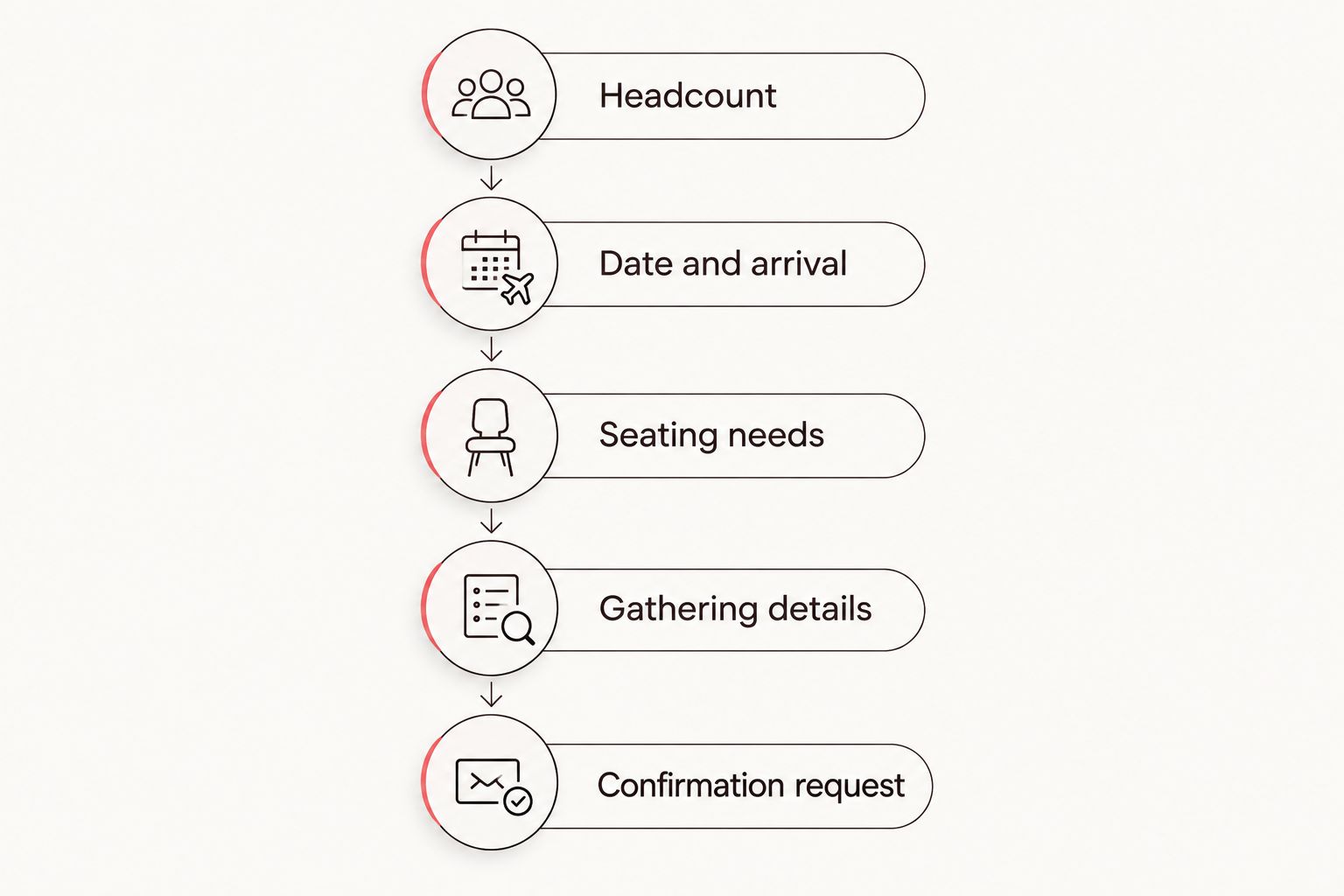
Use this sequence before you send a firm invitation:
- Set the headcount. Give the expected number of guests and explain whether additional people are still deciding. Do not describe a gathering of 15 as just a few friends.
- State the timing. Include the date and intended arrival time. Explain whether people will arrive together or join throughout the evening.
- Explain seating needs. Say whether everyone needs a seat together or whether your group is comfortable with a less structured meetup.
- Request confirmation. Ask what the bar can agree to for that specific plan. Read the response for conditions rather than treating any reply as a booking.
- Update guests. Send the confirmed details, including anything that remains undecided, before people organize their trip.
These steps are a planning process, not the bar's reservation procedure. They help you ask a useful question without assuming a booking method, seating arrangement, or event service.
A useful response should resolve your actual concern. If you asked about bringing 15 guests but still do not know whether your group can stay together, follow up on that point before calling the plan settled.
Which approach fits your group?
Choose how to organize the gathering based on what your guests need, not just how informal you want the invitation to sound. An advance inquiry adds coordination, but it also gives you a chance to explain requirements that an unannounced arrival does not communicate.
| Approach | Best for | Main benefit | Main limitation |
|---|---|---|---|
| Unconfirmed walk-in plan | Organizers comfortable changing plans | Requires no advance agreement | Gives you no confirmed group arrangement to communicate |
| Advance group inquiry | Organizers coordinating 15 or more guests | Lets you explain headcount, timing, and seating needs | An inquiry is not confirmation |
| Event-format inquiry | Gatherings needing dedicated space or a structured occasion | Makes the event requirements explicit | Do not assume the requested format is offered or accepted |
For a group that needs to remain together, make an advance inquiry rather than relying on a walk-in plan. The trade-off is straightforward: you spend more effort organizing before the night, instead of leaving the central question unresolved until arrival.
Keep the distinction between asking and booking clear. Sending a message, receiving an acknowledgment, and receiving confirmation of a specific arrangement are not interchangeable.
Groups of 15 guests: state the full plan
For 15 guests, the headcount is only the beginning of a useful inquiry. Explain what the gathering looks like in practice: friends dropping by, coworkers meeting after work, or a birthday group expecting to spend the evening together.
The same number of people can have very different requirements. A group that needs shared seating should not use the same description as a group comfortable meeting informally and adjusting its plans.
Write down your nonnegotiable requirement before contacting the bar. That keeps the conversation focused and makes the response easier to interpret. If your requirement is not addressed, ask about it directly rather than filling the gap with an assumption.
For your 2026 invitation, use language that matches the actual agreement. Do not announce reserved seating, a private area, or a hosted event unless the bar has explicitly confirmed that detail.
Groups above 15 guests: communicate the expected total
If your group exceeds 15 guests, give the expected total rather than using “15+” as the entire description. The plus sign tells the bar that the number is uncertain; it does not explain the size of the gathering you are trying to organize.
Separate confirmed guests from undecided guests in your message. If the headcount changes after you receive a response, send an update and ask whether the same arrangement still applies.
Do not expand the invitation on the strength of a reply about a smaller group. Confirmation should match the gathering you actually intend to bring. This is especially important when guests can forward an invitation or bring someone along.
Ask invitees to check with the organizer before adding people. That is your coordination rule, not a venue policy, and it keeps the information you give the bar accurate.
Why the right group arrangement varies
The useful question is not simply whether a neighborhood bar welcomes groups. It is whether the arrangement discussed matches your gathering. Include these factors in your inquiry:
- Headcount. State the expected total, including any uncertainty about additional guests. Update the bar when that total changes.
- Arrival pattern. Explain whether everyone intends to arrive together or whether guests will join at different times. Do not assume either pattern creates a confirmed arrangement.
- Seating expectations. Distinguish wanting to socialize together from needing a seat for every guest. If shared seating is essential, say so plainly.
- Type of gathering. Identify a birthday, work meetup, or other organized occasion when that context affects your requirements.
- Space expectations. Explain whether you are asking about an ordinary visit or a dedicated area. Do not describe the gathering as private without explicit confirmation.
These are details to discuss, not published acceptance criteria. None replaces a direct answer about your particular date and plan.
For 2026 planning, keep the discussion attached to the actual occasion. A response about one gathering should not become a general rule for every future visit.
What should you include in your first message?
Send 1 written message with the essential details rather than scattering the plan across separate inquiries. Keep it short enough to read easily, but specific enough that the bar does not have to guess what hosting your group would involve.
Headcount
State that you expect 15 guests, or provide the larger total. If you are still collecting replies, explain which guests are confirmed and which remain undecided.
Date and arrival
Include the full date and intended arrival time. Explain whether there is a fixed start or an informal arrival window, and mention any firm departure deadline your group has.
Seating needs
Say whether everyone needs to sit together. If your guests have access requirements, ask about those directly rather than assuming a particular entrance, route, or seating setup.
Gathering details
Describe the occasion and any extra requests. Outside food, cake, decorations, and use of a particular area are separate questions; a reply about headcount does not answer them.
Confirmation request
End by asking what arrangement the bar can confirm and whether you need to take another step. Your goal is a clear answer, not simply a message exchange.
Keep a copy of the response with your planning notes. When you update guests, use the agreed details rather than a broader interpretation of them.
How should you coordinate guests after contacting the bar?
Choose 1 organizer to handle the conversation and pass along updates. This is a practical recommendation for your group, not a requirement attributed to the venue. It gives guests a clear person to ask when plans change.
Send an invitation that separates confirmed details from requests still being discussed. If seating has not been agreed, do not describe the gathering as a seated event. If a dedicated area has not been confirmed, do not promise one.
Before the day, review the headcount against the plan you discussed. Tell the bar about material changes instead of assuming the original response covers a larger group or a different arrival time.
On the day of your 2026 gathering, remind guests of the agreed plan and ask them to direct changes through the organizer. Keep a backup meeting plan for your own group if the night cannot proceed as intended; do not present that backup as something the bar has arranged.
Does a group of 15 need everyone seated together?
15 guests do not all need the same kind of gathering; your seating requirement should drive the inquiry. If shared seating is essential, ask for explicit confirmation before inviting people on that basis.
If you are comfortable with a more informal meetup, describe that preference without assuming it guarantees entry or a particular area. Flexibility is a planning choice, not permission from the venue.
Can more than 15 people join after the initial inquiry?
More than 15 guests should be discussed using the updated total. Do not treat an answer about your original headcount as approval for an expanded gathering.
Ask guests to tell the organizer before bringing additional people. Then check the revised plan with the bar rather than leaving the change to arrival.
Is a group visit the same as a private event?
15 guests attending together does not establish a private event. A dedicated area, exclusive use, or a structured event arrangement needs its own explicit discussion.
Keep your request precise. Ask about the format you want without presenting any event option as a service that has already been agreed.
FAQ
Can I walk into Mess Hall Harlem with 15 friends without booking?
Contact the bar before relying on a walk-in plan for 15 friends. Do not promise your guests a group arrangement without explicit confirmation.
Does sending a group inquiry count as making a reservation?
No. Sending an inquiry asks a question; treat the gathering as confirmed only when the bar explicitly agrees to the relevant details.
What should I say when asking about a group of 15?
Give your expected headcount, date, arrival time, and seating needs. Explain the occasion and ask what arrangement the bar can confirm.
Can our group assume everyone will sit together?
Do not assume shared seating. State that requirement in your inquiry and ask for a direct answer before inviting guests on that basis.
What if more people join after I contact the bar?
Send the updated headcount and ask whether the discussed arrangement still applies. Do not extend a response about a smaller group to a larger gathering.
Does a group confirmation also cover birthday cake or decorations?
Do not treat group confirmation as permission for cake, outside food, or decorations. Ask about each extra request separately.
Should one person organize the group conversation?
Yes—choose one organizer to handle questions and share confirmed details. This is a coordination recommendation, not a stated venue requirement.
One last thing
The most useful question is not just “Can we bring 15 people?” It is “Can we bring 15 people on this date, at this time, with these seating needs?” That wording gives the bar something concrete to answer and gives you a plan you can explain to your friends.
Confirm the gathering you actually want, not just the headcount. A good neighborhood night starts with people knowing what to expect, without promises the organizer cannot keep.


