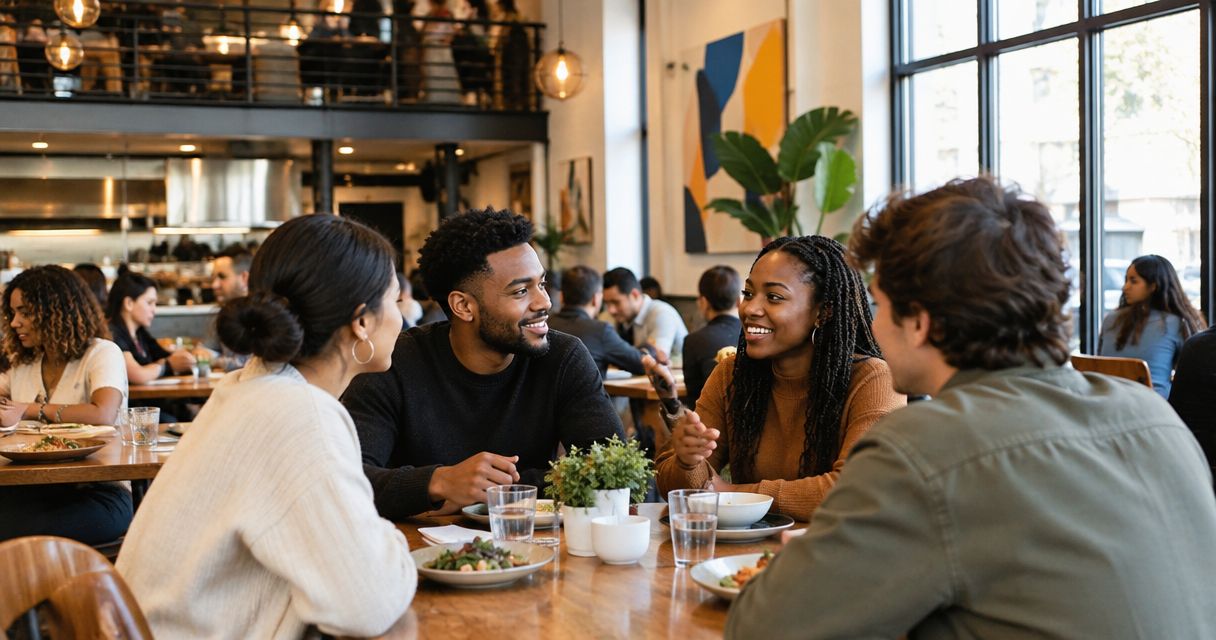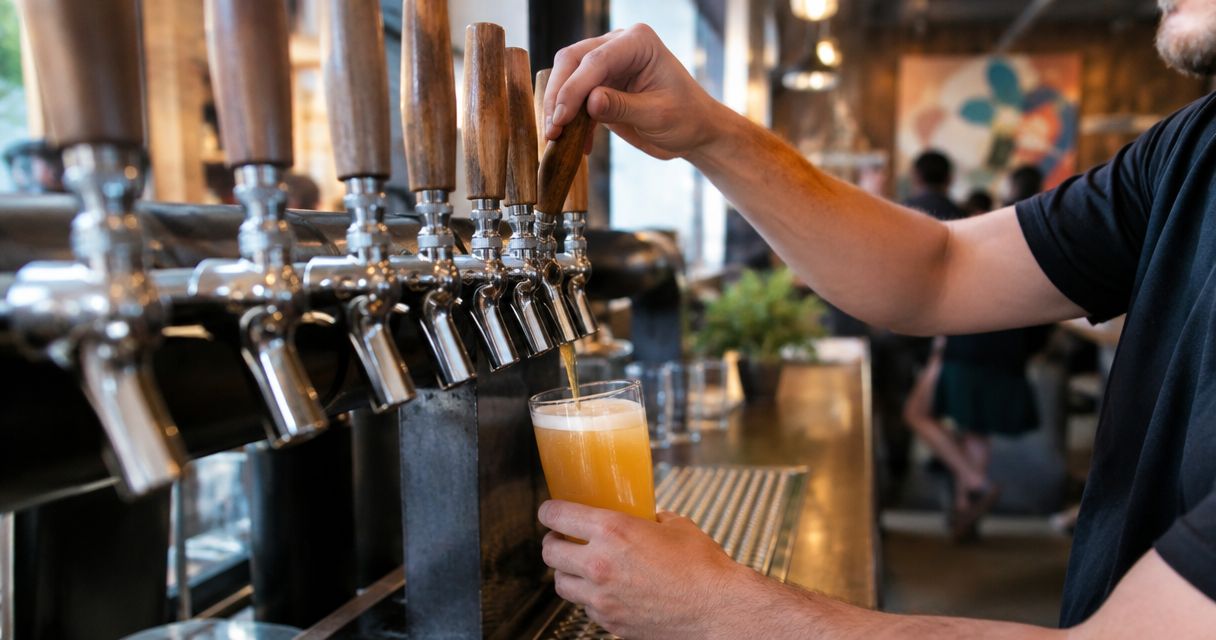
Do not treat a large-group walk-in at Mess Hall Harlem as a confirmed group booking. Ask the bar directly whether your party can arrive without a reservation, and make seating together, your arrival time, and any patio request part of that conversation before you invite everyone.
- Mess Hall Harlem suits casual neighborhood drinks; confirm large-group arrangements directly before making a firm plan.
- Searching mess hall harlem walk in groups? Ask about your actual headcount rather than assuming a group-size cutoff.
- Being admitted together, sitting together, and having a reserved area are different requests.
- Craft beer, bourbon, and original cocktails describe the bar—not its group reservation policy.
Why this matters
A casual night out still needs a clear meeting plan when several people are involved. Your friends need to know whether you are suggesting a place to try or inviting them to an arrangement the bar has accepted.
Mess Hall Harlem is a Central Harlem neighborhood bar serving craft beer, bourbon, and original cocktails. That makes it relevant to a relaxed drinks gathering, but the description does not establish a reservation policy, a group-size limit, or a promise that everyone can sit together.
For a 2026 gathering, confirm the arrangement before you describe it as booked. A clear answer from the bar is more useful than assuming that a neighborhood setting means any group can arrive unannounced.
Can large groups walk in without a reservation at Mess Hall Harlem?
Ask the bar directly about your specific group before relying on a walk-in plan. The answer needs to cover your date, headcount, arrival pattern, and whether sitting together is essential—not just whether the bar accepts walk-in visitors in general.
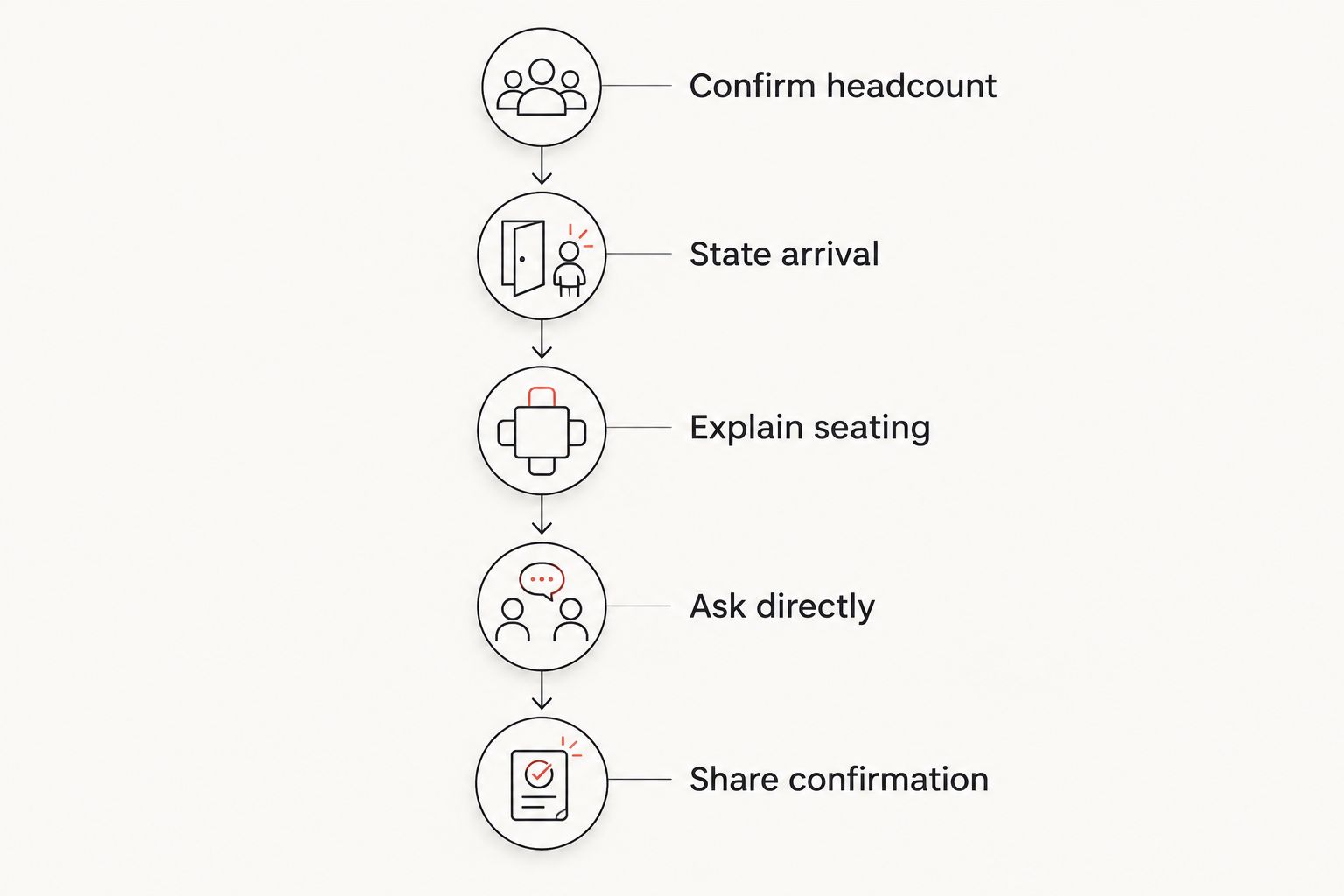
Use the following sequence to turn a loose invitation into a plan your guests can understand. These are planning steps, not the bar’s published booking rules.
1. Confirm headcount
Get a realistic count before making the inquiry. Distinguish people who have committed from people who are still deciding, and tell the bar if the final count remains unsettled.
Do not ask only whether a “large group” can come. That phrase leaves the most useful detail unanswered: how many people you are actually organizing. Give your current count and ask whether a change would require another conversation.
2. State arrival
Give the intended date and arrival time. Explain whether everyone plans to arrive together or whether friends will join throughout the evening.
An answer about one arrival plan is not confirmation of a different one. If the schedule changes, check again rather than assuming the original answer covers a later arrival or a substantially different gathering.
3. Explain seating
Say whether your group needs to sit together. A casual standing meetup, a seated birthday gathering, and a request for a particular area are different plans.
Do not use “we can come in” as shorthand for “we have seats together.” Ask the seating question separately, and tell your guests exactly what was confirmed instead of filling in the gaps yourself.
4. Ask directly
Ask whether your party can walk in without a reservation and whether any advance arrangement is required. If you want a designated area, ask about that explicitly rather than assuming a general group inquiry includes it.
Keep the message factual: occasion, date, arrival time, headcount, and seating needs. You do not need an elaborate pitch; you need an answer to the plan you actually intend to follow.
5. Share confirmation
Send your guests the confirmed details in one clear message. Include the meeting time, whether anything has been reserved, and any instructions the bar has given you.
If the answer is not yet settled, say so. “We are checking the group plan” is more accurate than announcing a reservation before you have one, and it prevents friends from making travel plans around an assumption.
Choose the approach that matches your gathering
The useful comparison is between ways to organize your visit—not between invented booking tiers. Decide how much certainty your gathering needs before you choose the wording of your invitation.
| Planning approach | Best for | Main benefit | Main limitation |
|---|---|---|---|
| Flexible walk-in plan | Friends comfortable changing plans | Keeps the gathering informal | Does not establish seating or a reserved area |
| Direct group inquiry | Organizers who need a clear answer before inviting guests | Puts headcount, timing, and seating into the conversation | An inquiry alone is not confirmation |
| Specific-space inquiry | Gatherings that depend on a particular area | Makes the essential requirement explicit | The request is not accepted unless the bar confirms it |
Choose a direct group inquiry when being together is the point of the evening. A flexible walk-in plan only matches your needs when the people attending understand that the arrangement is not confirmed.
For your 2026 invitation, describe the approach accurately. Avoid calling an informal meetup a reservation, and do not present a requested space as an accepted arrangement.
Flexible walk-in plan: keep expectations modest
A flexible plan means you are proposing a place to meet without claiming a booking. Its strength is simplicity; its weakness is that it leaves the central group questions unresolved.
Make that distinction visible in the invitation. If sitting together is essential, an unconfirmed walk-in plan does not meet your own requirement, regardless of how casual you want the evening to feel.
Direct group inquiry: ask for a usable answer
A direct inquiry is the better fit when you need to coordinate guests rather than simply suggest a destination. Ask for an answer that addresses the whole party and the intended visit.
The limitation is straightforward: sending a message does not settle the plan. Wait for a response, read what it actually confirms, and follow up on any essential point left unanswered.
Specific-space inquiry: name the requirement
The bar’s description includes a narrow interior and a back patio. Neither feature establishes how a group can use the space or whether any area can be reserved.
If your gathering depends on the patio or another particular area, make that a separate question. Do not treat the existence of a space as permission to organize your event around it.
Why group planning needs differ
Your group’s requirements should drive the inquiry. These factors explain what to clarify; they are not claims about how the bar assigns space or accepts bookings.
- Headcount: Give the actual party size rather than relying on the word “large.” Ask what to do if that count changes.
- Seating needs: Specify whether everyone must sit together or whether the gathering is intended as an informal meetup.
- Space preference: A narrow interior and a back patio are distinct physical settings. State whether either is essential to your plan.
- Occasion: A casual drinks catch-up and a gathering with a planned activity involve different requests. Describe what you intend rather than asking the bar to infer it.
- Arrival pattern: Tell the bar whether the group will arrive together or separately. Make sure the response addresses that arrangement.
For 2026 plans, separate preferences from requirements. You can be flexible about a preferred area while still needing a definite answer about whether the whole group can visit as intended.
Mess Hall Harlem is best suited to people seeking casual neighborhood-bar drinks. Its craft beer, bourbon, and original cocktails support that description; a large-group arrangement still needs its own direct confirmation.
What should I ask before inviting a large group?
Ask whether your specific party can arrive without a reservation and whether everyone can sit together. Then ask whether the bar requires any advance arrangement for the visit you have described.
Keep the message short enough to answer clearly. Include the following details without turning any of them into an assumed policy:
- Your intended date and arrival time.
- Your current headcount and whether it is final.
- Whether guests will arrive together or separately.
- Whether shared seating is essential.
- Whether you are requesting a particular area.
- Whether the gathering includes anything beyond meeting for drinks.
Finish by asking what the bar needs from you next. If the response confirms only part of your request, follow up on the unresolved requirement before sending a firm invitation.
For a 2026 group message, share the answer rather than your interpretation of it. If no area has been reserved, do not describe a meeting point as “our section.”
Does a back patio mean a large group can sit outside together?
A back patio does not establish a group seating or reservation policy. Ask directly whether the outdoor arrangement you want is something the bar can confirm for your visit.
If the patio is simply a preference, say that. If the whole gathering depends on being outside, make that requirement clear before your guests commit to the plan.
Do not invite people on the strength of a patio photo or a general description alone. Those show that a space exists, not that it has been assigned to your group.
What if my group changes after I ask?
Reconfirm the plan when the details you supplied change. Tell the bar about a different headcount, arrival time, or seating requirement instead of treating the earlier response as open-ended permission.
Keep your guests updated too. A helpful organizer does not need to promise a perfect evening; the job is to make the actual arrangement clear enough that everyone knows what they are joining.
This is especially useful when planning a 2026 gathering well before the date. Keep the final group message tied to the latest confirmed details, not the first version of the idea.
FAQ
Can I bring a large group to Mess Hall Harlem without booking?
Confirm your specific group plan directly before relying on a visit without booking. Give the bar your headcount, date, arrival time, and seating needs, and ask whether an advance arrangement is required.
How many people count as a large group?
Use your actual headcount rather than assuming a numerical cutoff. Ask the bar to assess that party size and tell you whether any group arrangement is needed.
Does being allowed to walk in mean everyone gets a seat?
Do not treat permission to walk in as confirmation of seats together. Ask about seating separately if that is essential to your gathering.
Can our group reserve the back patio?
Ask the bar directly about the patio arrangement you want. The presence of a back patio does not establish whether it can be reserved for your group.
What should I do if more friends want to join?
Update the bar with the revised headcount and reconfirm the plan. Tell your guests about any changes to the arrangement before they travel.
Is sending a group inquiry the same as making a reservation?
No—sending an inquiry is not confirmation of a reservation. Wait for a response that explicitly addresses the arrangement you requested.
Is Mess Hall Harlem a good match for casual group drinks?
Mess Hall Harlem matches a casual neighborhood-bar outing, with craft beer, bourbon, and original cocktails. Confirm the group arrangements separately before making a firm invitation.
One last thing
Write the invitation after you get the answer, not before. That small change keeps a friendly suggestion from turning into an accidental promise about seating or reserved space.
Be precise about what is settled and what is still a request. A relaxed night starts with guests understanding the same plan—not with the organizer trying to resolve different expectations at the door.