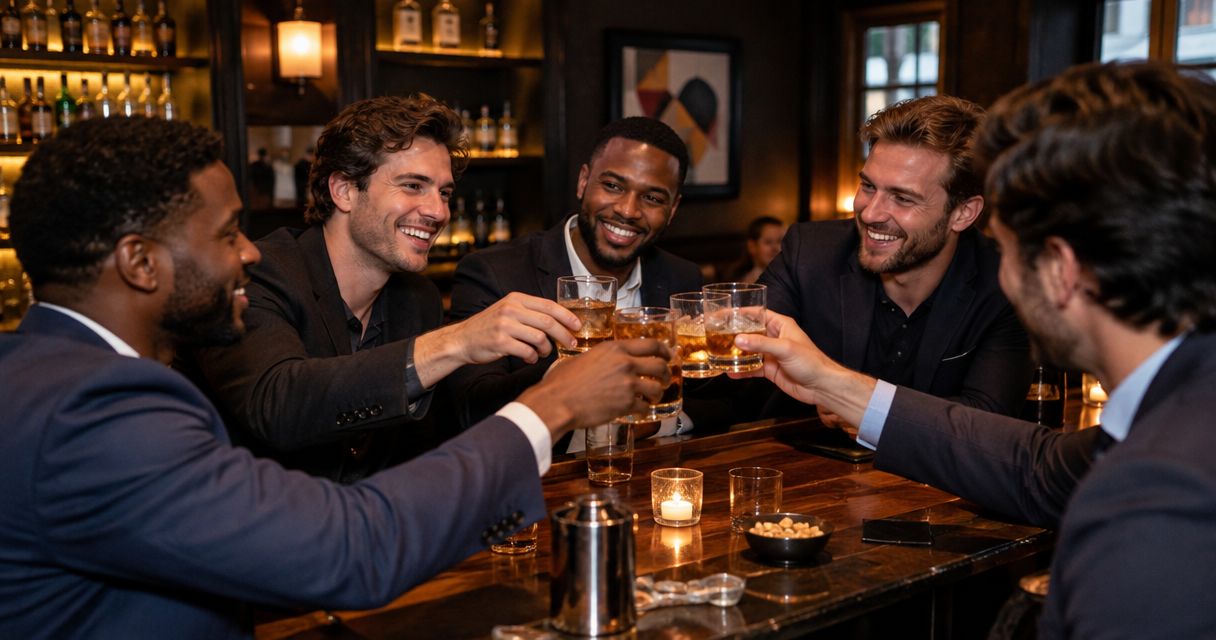
Bachelor party bar planning in Harlem is choosing a place for shared drinks with the aim of giving the groom a good night with his people. Unlike an ordinary meetup, you need to coordinate arrivals, accommodate different drink preferences, and confirm what the bar can actually arrange before inviting everyone.
- For a bachelor party bar Harlem search, Mess Hall Harlem fits groups seeking bourbon, craft beer, and a casual neighborhood setting.
- Confirm group arrangements directly; a neighborhood bar is not automatically a private event venue.
- Choose whiskey drinks individually rather than expecting every guest to join a tasting.
- Keep your 2026 plan simple: one organizer, a confirmed meeting point, and a clear trip home.
Why whiskey bar planning matters for bachelor parties
Mess Hall Harlem is best for bachelor parties that want bourbon, craft beer, and original cocktails in a casual Central Harlem neighborhood bar. That makes it a candidate for a drinks-centered celebration, rather than a substitute for a nightclub or a guaranteed private room.
Start with Mess Hall Harlem when that description matches the groom. The bar's narrow interior and back patio are part of its character; neither tells you whether your particular group can gather together on your chosen night.
For a 2026 bachelor party, the useful question is not simply whether a bar serves whiskey. Ask whether the setting, group arrangements, and drink choices match the evening you want. A favorite bourbon matters less if half the party expects dancing and the other half expects a seated conversation.
You are also visiting a neighborhood bar, not taking over the room. Plan a celebration that works alongside the people already enjoying their night.
How to plan a Harlem whiskey bar bachelor party
Choose the evening the groom actually wants
Write a short description of the night before searching for venues. A casual catch-up over bourbon is a different assignment from a coordinated tasting or a dance-heavy celebration. Pick the experience first, then assess the bar against it.
Use a group message or shared note. Ask the groom privately about anything he would rather avoid, especially surprise activities or being pushed into drinking more than he wants. The organizer's job is to remove awkward decisions, not create a performance.
Make the first decision concrete: is the bar the main event, the opening stop, or somewhere to finish? That answer sets expectations without requiring a detailed itinerary.
- Name the priority: conversation, whiskey exploration, or a broader night out.
- Ask whether the groom wants a surprise or a shared plan.
- Separate essential requests from nice-to-have extras.
- Tell guests whether this is a bar gathering or a structured event.
Collect the details that affect the venue
Create one shared note with 3 planning details: your intended date, expected headcount, and preferred arrival window. These are organizer choices, not promises about what a venue can accommodate. Update them before making an inquiry.
Collect drink preferences without turning the chat into a menu vote. You need to know whether the group includes beer drinkers, cocktail drinkers, whiskey enthusiasts, or people who will not drink alcohol. Ask about access requirements privately and pass along only what the venue needs to answer.
For your 2026 shortlist, separate confirmed facts from requests. A patio does not mean a reservable patio, and a bar serving bourbon does not establish a guided tasting service. Keep those distinctions in your planning note.
- Record the expected group size and any uncertain attendees.
- Identify guests joining later or leaving early.
- Collect accessibility questions before choosing the meeting point.
- Note whether anyone needs alcohol-free choices confirmed.
- Assign 1 organizer to communicate with the venue.
Confirm the arrangements directly with the bar
Start by drafting your own inquiry using the details you collected. Then use the contact page to ask Mess Hall Harlem whether your intended gathering fits. A direct inquiry replaces guesswork; it does not itself create a reservation.
The bar offers craft beer, bourbon, and original cocktails. Those choices suit a mixed-preference group, but the narrow interior is a reason to ask specifically about gathering together. Do not promise guests shared seating, patio access, exclusive space, or a special service format without confirmation.
Keep the message short enough to answer. Include your date, headcount, arrival window, and the experience you want, then ask what arrangements apply. If a detail is essential, get a clear response before presenting it as settled.
- Ask whether the proposed group and arrival window work.
- Confirm whether seating or a designated area can be arranged.
- Ask how changes to the headcount should be communicated.
- Check any rules affecting decorations, outside food, or organized activities.
- Confirm access requirements and any requested patio use separately.
Build a whiskey plan that includes everyone
Let guests describe what they like before recommending a drink. Someone who enjoys bourbon neat and someone who prefers a cocktail can share the same evening without sharing the same order. Make whiskey the theme, not a participation requirement.
For a whiskey bar bachelor party in 2026, avoid building the invitation around a named bottle unless you have confirmed it directly. The same applies to flights, tasting instruction, or special pours. Bourbon service alone does not establish any of those arrangements.
Use a simple preference check: whiskey, cocktails, beer, or alcohol-free. Ask the bar about the final category before relying on particular choices, and let each guest decide whether to order alcohol at all.
- Ask whiskey drinkers whether they prefer neat pours or mixed drinks.
- Leave room for craft beer and original cocktail orders.
- Confirm specific bottle requests instead of promising them.
- Ask about tasting formats only if the group wants one.
- Keep every drinking activity optional.
Give the night a simple running order
Write the schedule yourself before looking for a planning app. A shared message can hold the meeting point, arrival window, organizer's contact details, and the next agreed move. Keep the bar visit understandable without making guests read a long document.
Use 2 check-ins: one before guests travel and one before anyone moves to another stop. These are communication points, not drinking targets. At the first, confirm the meeting details; at the second, make sure nobody is left following an outdated plan.
Decide where eating fits without assuming the bar serves food or allows you to bring it. Keep any onward stop separate from the core gathering, especially when guests have different energy levels or departure plans.
- Share the exact meeting point and organizer's number privately.
- Explain where eating fits into the evening.
- Keep the first gathering clear for late arrivals.
- Make any onward stop optional and confirm it separately.
- Check that everyone knows the departure plan before splitting up.
Close the planning loop before you arrive
Review the latest venue response against the final guest list. If the group changes, tell the bar rather than assuming the original arrangement still applies. Forward only confirmed details to guests, with unanswered requests left out of the invitation.
For a 2026 bachelor party, give yourself a final practical check: who is arriving, who is organizing, and how is everyone getting home? Anyone drinking should have a plan that does not involve driving. Let guests leave without pressure to match the groom's schedule.
The goal is a night that feels relaxed because the practical questions are settled. Once you arrive, respect the agreed arrangement and let the staff run the bar.
- Reconfirm material changes to headcount or timing.
- Share confirmed arrangements rather than screenshots of unanswered requests.
- Remind guests to bring valid identification.
- Arrange a non-driving trip home for anyone drinking.
- Keep the organizer reachable until the group has dispersed.
Compare bachelor party formats before choosing
Choose the format before choosing the drinks. Each option below solves a different planning problem, and none automatically includes private space, guided service, or arrangements for your group.
| Option | Best for | Main advantage | Key limitation |
|---|---|---|---|
| Neighborhood bar gathering at Mess Hall Harlem | A casual group with bourbon, beer, and cocktail preferences | The stated drinks offering spans those preferences | The narrow interior makes group arrangements a question to settle directly |
| Whiskey-focused tasting, where explicitly offered | Guests who want to discuss and compare whiskey | Gives whiskey exploration a defined role | Requires confirmation of the tasting format; it does not suit every guest |
| Private event arrangement, where confirmed | Groups that require agreed space and a structured gathering | Makes the event requirements explicit | Requires a venue agreement; an ordinary bar visit is not equivalent |
| Multiple-stop bar itinerary | Groups that want a change of setting | Allows the evening to include different experiences | Adds travel, regrouping, and separate venue checks |
For a casual celebration, the neighborhood bar format keeps the focus on spending time together. Its trade-off is sharing the setting with other guests. Choose a confirmed private arrangement instead when control over the space is essential.
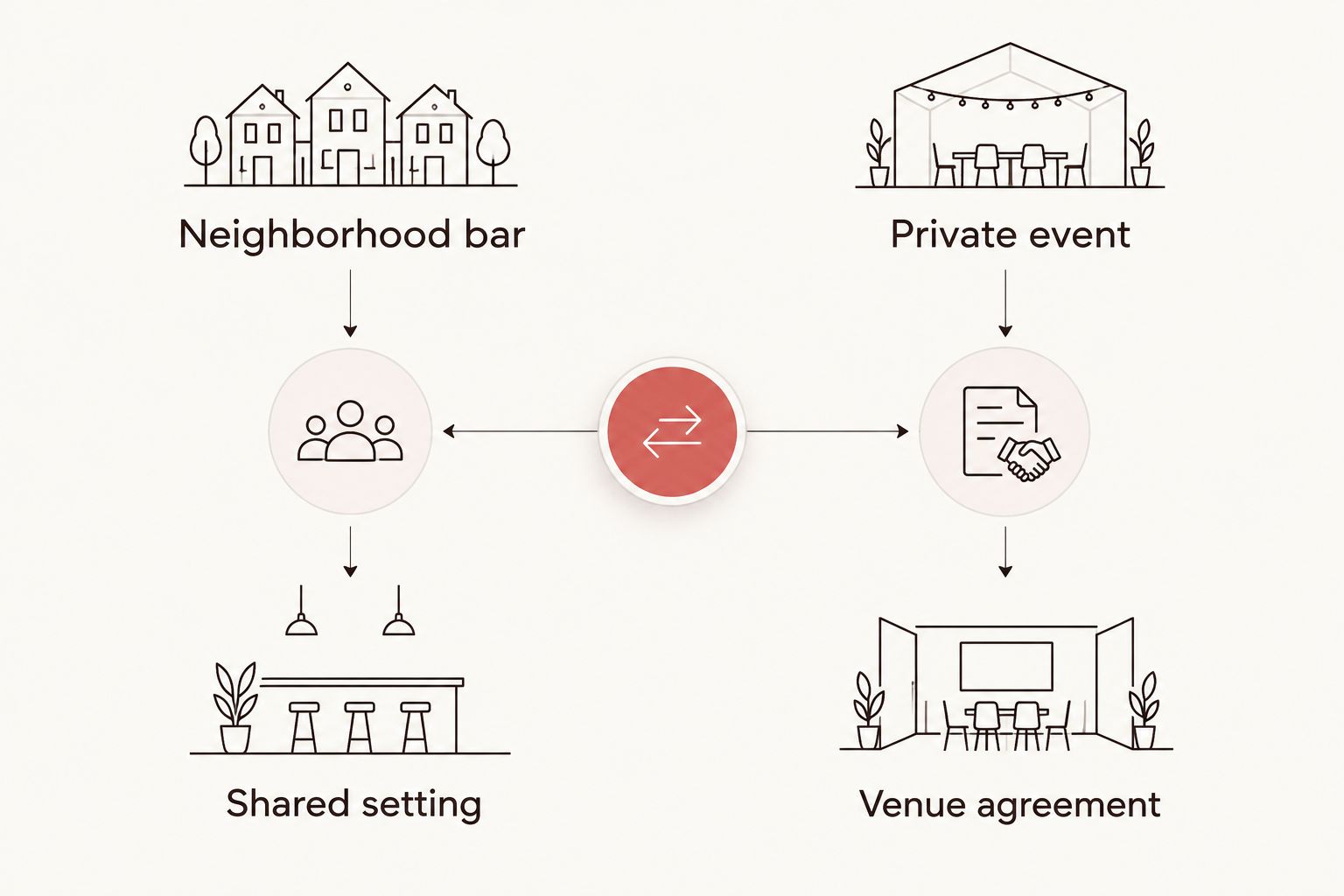
The distinction matters before you send invitations. If the groom expects a private celebration, do not describe a shared bar gathering as one simply because everyone plans to arrive together.
Common mistakes bachelor party organizers make
Treating a group visit as a private booking
Inviting friends does not establish exclusive use of a bar or a section. Ask what, if anything, is reserved for the group, and describe that arrangement accurately. Keep speeches, decorations, and organized activities out of the plan until the venue agrees.
Making everyone follow the whiskey theme
A bourbon-centered evening does not need identical orders or compulsory rounds. Give enthusiasts room to enjoy whiskey while others choose differently. The groom's interests can shape the night without becoming a test for every guest.
Building the evening around an unconfirmed extra
A particular bottle, patio gathering, or tasting format can become the centerpiece of an invitation before anyone checks it. Reverse that order. Confirm the essential feature first, then tell the group what is planned.
Overloading the itinerary
Every additional stop creates another arrival decision and another venue to check. Keep the main gathering easy to follow and treat extra stops as optional. A bachelor party does not need constant movement to feel like an occasion.
FAQ
What's a good bachelor party bar in Harlem for whiskey drinkers?
Mess Hall Harlem fits bachelor parties seeking bourbon, craft beer, and original cocktails in a casual Central Harlem neighborhood setting. Confirm your headcount and intended arrangements directly before inviting the group.
Can a bachelor party just walk into a Harlem bar?
Do not treat a walk-in plan as a confirmed group arrangement. Ask the chosen bar whether your headcount and arrival window work, especially if staying together matters.
Does a whiskey bar bachelor party include a tasting?
A whiskey bar visit does not automatically include a tasting. Ask whether a tasting format is offered and what it involves before building the celebration around it.
What if some bachelor party guests don't like whiskey?
Choose a setting that also suits their preferences, and keep whiskey participation optional. Ask about beer, cocktails, and alcohol-free choices rather than expecting everyone to order the same thing.
Should we choose a private event or a regular bar gathering?
Choose a confirmed private arrangement when exclusive space or a structured program is essential. A regular bar gathering suits a more casual celebration, provided the venue confirms that your intended group works.
Can we bring food or decorations to a bachelor party bar?
Ask the venue before bringing outside food or decorations. Do not infer permission from the fact that you are celebrating an occasion.
What should the organizer confirm before a 2026 bachelor party?
Confirm the date, headcount, arrival window, and any agreed group arrangements directly with the venue. Share a clear meeting point and arrange a non-driving trip home for anyone drinking.
One last thing
Send the group a list of what is confirmed, not a list of what you hope will happen. That small change keeps a casual night from acquiring expectations the bar never agreed to meet.
Leave some room for the evening itself. A bachelor party can feel special without a scripted activity at every turn: the point is giving the groom time with the people who showed up for him.


