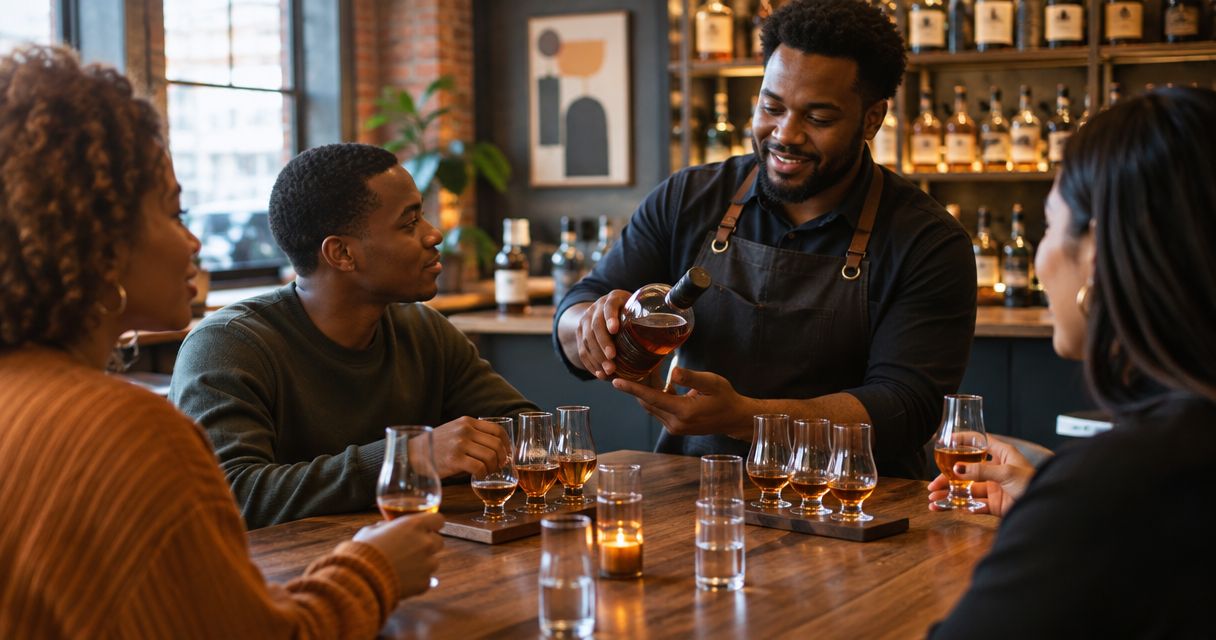
First-time whiskey drinkers’ bourbon tasting is a way to explore corn-based American whiskey with the aim of finding a drink you enjoy ordering in Harlem. This 2026 guide explains how to choose a pour, handle alcohol heat, and ask useful questions without turning a casual night out into a whiskey exam.
- Mess Hall Harlem suits beginners seeking bourbon in a casual Central Harlem neighborhood bar.
- Searching bourbon bar for beginners harlem? Choose a setting that fits your night, then ask about proof and serving style.
- Bourbon tasting starts with small sips; water and ice are useful choices, not mistakes.
- A whiskey cocktail introduces bourbon differently from a neat pour; choose according to what you want to taste.
Why bourbon tasting matters for first-time whiskey drinkers
Your first bourbon does not need to become your favorite bourbon. It needs to give you enough information to decide what you want next: less alcohol heat, more sweetness, a colder drink, or a different style altogether.
Mess Hall Harlem offers bourbon, craft beer, and original cocktails in a neighborhood-bar setting in Central Harlem. That makes bourbon one possible direction for your evening, rather than the whole purpose of the visit.
Beginners face a particular problem: a drink can smell inviting but feel hot on the first sip. That sensation can distract you from everything else. Separate strength, serving temperature, and flavor before deciding that whiskey is not for you.
For a first visit in 2026, focus on the drink in front of you rather than collecting tasting vocabulary. You do not need to identify a particular spice or explain barrel aging to make a useful choice.
A successful first tasting ends with a preference, not a finished glass. You can stop whenever you have learned enough.
How to approach your first bourbon tasting in Harlem
Start with the kind of night you want
Before looking at bottles, decide whether you want to explore whiskey or simply enjoy a drink with someone. Those are different goals. A quiet comparison asks more of your attention than a catch-up with friends.
Start without a tasting app or a checklist of bottles. Describe your preferences in ordinary language: you like drinks that are sweet, dry, citrusy, bitter, or not too strong-tasting. Familiar preferences give you a better starting point than a name you saw on a whiskey list.
If you are visiting with an experienced whiskey drinker, keep control of your own order. Their favorite high-strength pour is not automatically the right introduction for you. Ask them to explain what they enjoy rather than copy what they drink.
For a Harlem night out, make the practical decisions first: who you are meeting, how you are getting home, and whether alcohol fits your plans. In New York, you must be 21 years old to purchase alcohol.
- Decide whether tasting or socializing is the main event.
- Name flavors you already enjoy in other drinks.
- Tell your companion that this is your first bourbon experience.
- Arrange a way home that does not involve driving after drinking.
- Choose a nonalcoholic drink if you do not want alcohol.
Check the proof before you order
Read the bottle label when you can, or ask about its alcohol strength. Proof is not a quality score. It tells you about alcohol concentration, which matters when you are learning to distinguish flavor from heat.
Under U.S. Alcohol and Tobacco Tax and Trade Bureau standards, bourbon is made from a mash containing at least 51% corn and bottled at no less than 40% alcohol by volume. In the U.S. proof system, 40% alcohol by volume equals 80 proof. These are category standards, not specifications for any particular bar’s pour.
Use those distinctions when reading a bourbon label in 2026. The corn requirement defines part of the category; it does not mean every bourbon tastes equally sweet. Proof gives you another piece of information, but it cannot tell you whether you will enjoy the drink.
For your first tasting, ask about strength before asking what is popular. A useful question is whether the bourbon tastes noticeably hot and how the suggested serving style changes that experience.
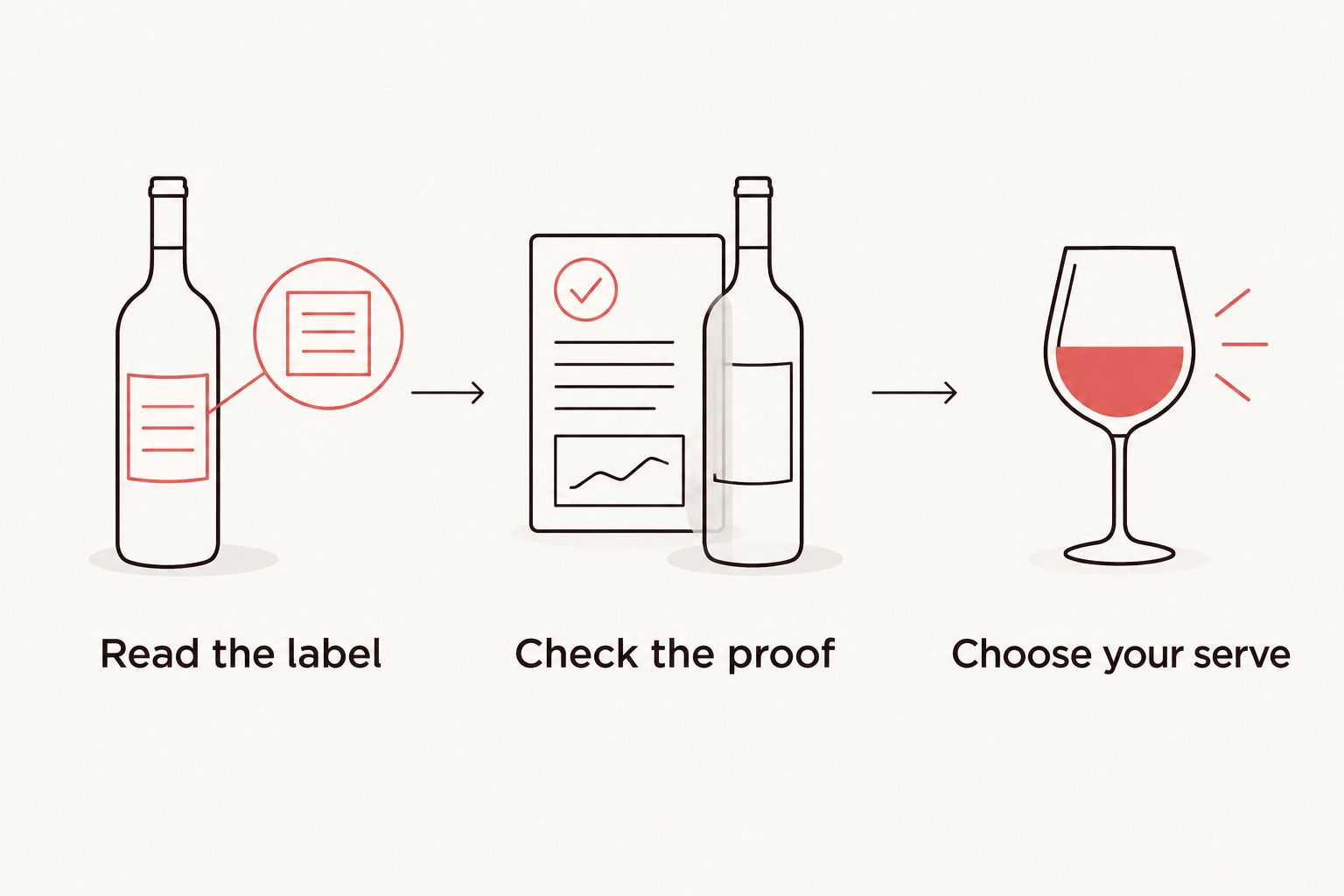
- Read the label: distinguish the bourbon name from its strength.
- Check the proof: ask about alcohol concentration before ordering.
- Choose your serve: decide whether you want it neat, with water, or over ice.
- Ask for an explanation in everyday flavor terms.
- Avoid treating a higher proof as a better beginner choice.
The decision is simple: understand the drink, understand its strength, then choose how to serve it. You do not need to memorize the entire bottle label.
Choose a serving style that matches your goal
You can make this decision yourself before asking for a recommendation. If you want to taste bourbon without other ingredients, consider a neat pour. If temperature and alcohol heat are your main concerns, consider ice or water. If you want a mixed drink, ask about a whiskey cocktail.
Neat means no added ice or mixer. It makes the bourbon easier to examine on its own, but it also leaves the alcohol undiluted. Ice cools the drink and adds water as it melts; that changing balance is part of the experience, not a flaw.
Mess Hall Harlem is best for beginners who want bourbon in a casual Central Harlem neighborhood bar. Its stated offering includes bourbon and original cocktails. For a first order, ask what fits your preferred flavors rather than assuming a particular cocktail or tasting format is offered.
For a broader look at settings beyond Harlem, the guide to best bourbon bars in NYC provides another starting point. Keep the choice focused on your night, not on how many places you can visit.
- Choose neat when you want to isolate the bourbon’s flavor.
- Choose ice when you want a colder drink that changes as it dilutes.
- Ask for water separately if you want control over dilution.
- Ask about a whiskey cocktail when mixed flavors appeal more.
- Confirm the drink’s ingredients before ordering.
Taste slowly and describe what you actually notice
Start by smelling gently, with the glass held away from your nose. Bringing strong spirits too close and inhaling deeply can make alcohol dominate the experience. Move the glass until the aroma feels comfortable.
Take a small sip rather than a mouthful. Notice temperature, texture, sweetness, bitterness, and heat. You do not need to identify every aroma, and you do not need to agree with someone else’s description.
A useful first observation is a simple contrast: the aroma seems sweet, but the sip feels sharp; the drink feels dry, but the finish reminds you of vanilla. Those descriptions help explain your preference without pretending your glass has a single correct answer.
Keep a brief note on your phone if you want to remember the experience. Record the bourbon’s name, serving style, and what you liked or disliked. A photograph of a label does not capture whether you enjoyed the drink.
- Smell gently before taking a sip.
- Take small sips without rushing to finish.
- Describe heat separately from flavor.
- Use familiar words such as sweet, dry, woody, or spicy.
- Record your own reaction rather than copying a tasting note.
Adjust the same drink before ordering another
If the bourbon feels too hot, change the serving style before treating the bottle as a failure. Ask for water and add a little, then taste again. Dilution lowers alcohol concentration; your preference determines whether that change improves the drink.
Ice changes temperature and dilution together. That makes it useful for enjoyment, but less useful if you want to understand which adjustment changed your impression. Water alone lets you explore dilution without also making the drink substantially colder.
Change one thing at a time. If you add water, ice, and a mixer together, you will know whether you like the result but not which change helped. Neither approach is wrong; the distinction matters only when you want to learn.
Your 2026 bourbon tasting does not need several pours to count as exploration. Comparing the same drink before and after water can teach you something about serving preferences without requiring another order.
- Keep the original serving style in mind before adjusting it.
- Add water gradually rather than all at once.
- Notice whether heat, texture, or flavor changes most.
- Try ice if a colder drink is your actual preference.
- Stop adjusting when the drink suits you, or stop drinking it.
Turn your reaction into a better next order
Finish with a description you can use again. Instead of deciding that you like or dislike all whiskey, identify the part of this experience that worked. You might prefer bourbon diluted, enjoy its aroma more than its neat taste, or find mixed drinks more appealing.
If you want help choosing later, give the bartender that specific information. Saying that your previous bourbon felt too hot is more useful than asking for something good. Saying that you liked the woody flavor but wanted less bitterness gives the conversation a direction.
Mess Hall Harlem’s bourbon bar offering sits alongside craft beer and original cocktails, so whiskey need not define the whole evening. A beginner-friendly visit means making an order that suits you, not committing to a category for the sake of appearances.
Keep your note short enough to use next time. Include the serving style because the same bourbon served differently is a different tasting experience.
- Write down the bourbon name if you know it.
- Record whether it was neat, diluted, or served over ice.
- Identify what you enjoyed most.
- Identify what you would change next time.
- Leave another order for another visit if you have had enough.
Compare beginner bourbon serving options
For a first bourbon tasting in 2026, choose the option that answers your question. Neat asks what the bourbon tastes like alone; water asks how dilution changes it; a cocktail asks whether you enjoy bourbon among other flavors.
None is a test of seriousness. The best serving style is the one that fits your taste and your purpose.
| Option | Best for | Main advantage | Key limitation |
|---|---|---|---|
| Bourbon neat | Beginners curious about the spirit itself | Keeps other ingredients out of the tasting | Undiluted alcohol can dominate your first impression |
| Bourbon with water | Beginners who want to explore dilution | Lets you adjust concentration gradually | Too much added water can move the drink beyond your preference |
| Bourbon over ice | Beginners who prefer cold drinks | Combines cooling with gradual dilution | The drink changes as the ice melts |
| Whiskey cocktail | Beginners who already enjoy mixed drinks | Places whiskey alongside other flavors | Other ingredients make the bourbon harder to assess alone |
| Nonalcoholic drink | Anyone choosing not to drink alcohol | Lets you join the evening without drinking spirits | Does not provide a bourbon tasting experience |
Common mistakes first-time whiskey drinkers make
Ordering your friend’s favorite without asking why
An experienced drinker’s preference tells you about their palate, not yours. Ask whether they enjoy the strength, the flavor, or the serving style before copying the order. Start with your preferences, not someone else’s reputation for knowing whiskey.
Mistaking alcohol heat for a complete flavor judgment
Your first sip can feel hot before you notice anything else. Try a smaller sip or adjust dilution if you want to continue. If you still dislike it, leave it; finishing the glass will not make your opinion more valid.
Expecting a guided tasting from every bourbon bar
Serving bourbon and offering a structured tasting are different things. Mess Hall Harlem’s stated offering is neighborhood bar service with bourbon, craft beer, and original cocktails. Ask about the format before planning an evening around instruction or a flight.
Turning a Harlem outing into a bottle checklist
A neighborhood night out does not need a sequence of whiskey orders. For your first visit in 2026, keep conversation and comfort ahead of completing a list. You can learn from a single drink and leave the next comparison for another night.
FAQ
What’s a good bourbon bar for beginners in Harlem?
Mess Hall Harlem suits beginners who want bourbon in a casual Central Harlem neighborhood bar. Its stated offering includes bourbon, craft beer, and original cocktails; ask about serving styles rather than assuming a guided tasting is offered.
Should I order my first bourbon neat or over ice?
Choose neat to explore bourbon without added ingredients, or ice if you prefer a colder drink with gradual dilution. Neither is the correct choice for everyone; choose according to what you want from the drink.
Is bourbon the same thing as whiskey?
Bourbon is a type of whiskey defined by U.S. production standards. Those standards include a mash containing at least 51% corn and bottling at no less than 40% alcohol by volume.
Does higher proof mean better bourbon?
Higher proof means a higher alcohol concentration, not better quality. For a beginner, the useful question is whether the strength and serving style fit your preferences.
Is it wrong to add water to bourbon?
Adding water is a valid way to adjust bourbon’s alcohol concentration. Add it gradually if you want to compare how the same drink tastes before and after dilution.
Can I start with a whiskey cocktail instead of straight bourbon?
Yes, a whiskey cocktail is a reasonable starting point if you prefer mixed drinks. Other ingredients change the experience, so enjoying the cocktail does not necessarily mean you will enjoy the whiskey neat.
Do I have to finish a bourbon I don’t like?
No, you do not have to finish a bourbon to make a valid judgment about it. Stop when you want, and use what you noticed to make a different choice next time.
One last thing
Write down the serving style, not just the bottle name. A note that says you enjoyed bourbon over ice tells you more about your next order than a label photograph alone.
For your next Harlem visit in 2026, bring that preference rather than a script. Knowing that you want less heat, a colder drink, or mixed flavors is enough to start a useful conversation. You do not need to sound like a whiskey expert to order something you enjoy.


