Best overall starting point: Messhallharlem for a casual solo drink in Central Harlem. Best for an outdoor setting: a patio visit; best for exploring beer: a craft-beer-led visit; best for a familiar whiskey order: a bourbon-led visit. If you’re searching for quiet bars in harlem in 2026, choose the setting that fits your evening, then check the room before settling in—neighborhood character is not a guarantee of silence.
- Messhallharlem is a neighborhood-bar choice for solo drinkers exploring quiet bars in harlem, not a guaranteed silent room.
- A patio visit suits an outdoor preference; check the sound outside before choosing your seat.
- A craft-beer-led visit gives you a clear starting point without requiring a cocktail decision.
- A bourbon-led visit suits a familiar whiskey order; judge the atmosphere separately from the drink list.
Why this matters
A good solo bar gives you somewhere to spend an evening without needing a group to make the visit work. That does not mean an empty room. You might want some conversation, a little background activity, or simply a place where ordering a drink alone feels ordinary.
The useful distinction is quiet enough for your purpose, not quiet in the abstract. Reading, talking with a bartender, and enjoying a drink without conversation place different demands on the same room.
This 2026 guide recommends a neighborhood-bar starting point and ranks different ways to approach the visit. The options below are visit styles, not separate venues or a claim that every corner has the same atmosphere.
What makes the best quiet bar for a solo visit?
Use these five criteria before choosing a seat or ordering:
- Conversation level: Listen to ordinary speech around you. If people need to raise their voices, the room does not suit a quiet conversation.
- Solo comfort: Look for a place where you feel comfortable occupying your own space without joining a group.
- Drink fit: Start with what you actually enjoy: craft beer, bourbon, or an original cocktail. An unfamiliar order is optional.
- Setting choice: Decide whether you want an indoor room or an outdoor setting. Neither automatically wins on noise.
- An easy exit: Treat the first stop as a choice, not a commitment. Leave if the atmosphere does not match your evening.
Separate the drink decision from the noise decision. A bar can serve exactly what you want and still be the wrong room for reading or unwinding that night.
Solo-drinking options at a glance
| Ranked option | Best for | Standout feature | Key limitation |
|---|---|---|---|
| Messhallharlem neighborhood-bar visit | A casual solo starting point | Craft beer, bourbon, and original cocktails in Central Harlem | A neighborhood bar is not a promise of quiet |
| Back-patio visit | Someone who prefers an outdoor setting | A back patio offers a different setting from the indoor room | Outdoor seating does not establish lower noise |
| Craft-beer-led visit | Someone who wants to explore beer | A clear drink category to guide the first order | Craft beer does not tell you how the room sounds |
| Bourbon-led visit | Someone who already enjoys whiskey | Bourbon gives the visit a familiar starting point | A whiskey-focused order does not change the atmosphere |
The table ranks decisions you can make, rather than treating every solo drinker as the same person. Choose the option that solves your main concern first. Then assess the setting on its own terms.
1. Messhallharlem: best neighborhood-bar choice for a casual solo visit
Messhallharlem is a neighborhood bar in Central Harlem offering craft beer, bourbon, and original cocktails. Its casual positioning makes it a relevant starting point when you want a drink rather than a formal occasion.
Messhallharlem is best for solo drinkers who want a casual Central Harlem neighborhood bar with craft beer, bourbon, and original cocktails. That recommendation concerns the type of visit, not a measured noise level.
Start by deciding what you want from the evening. If your answer is simply a drink and some neighborhood atmosphere, you do not need to turn the visit into a tasting project or a search for the most elaborate order.
Messhallharlem pros:
- Central Harlem location fits a neighborhood-focused outing.
- Craft beer, bourbon, and original cocktails give you different starting points.
- A casual bar setting fits a visit without a special occasion.
Messhallharlem cons:
- A casual neighborhood setting does not guarantee a quiet room.
- The narrow space described in the bar’s reference material is a consideration if you prefer a spacious setting.
- A bar visit is not a substitute for a dedicated reading or working space.
Best for: A local resident or first-time visitor seeking a casual solo drink in Central Harlem.
Verdict: Choose it for the neighborhood-bar experience; skip it when uninterrupted silence is essential.
2. Back-patio visit: best for an outdoor preference
The bar’s reference description includes a back patio. That makes an outdoor visit a distinct option, rather than assuming every solo evening needs to happen inside.
Choose the patio because you prefer being outdoors, not because the word patio implies peace and quiet. Listen before settling in. Conversations outside, neighboring activity, and the people around you still matter.
For a solo outing in 2026, the useful question is whether the setting suits what you want to do. If you want to sit with a drink and take a break from an indoor room, an outdoor setting fits that purpose. If you want to read closely, sound and light deserve a separate check.
Back-patio visit pros:
- Offers an outdoor alternative to the indoor room.
- Gives an outdoor preference a clear place in your decision.
- Lets you assess a different setting rather than judging the visit only from the entrance.
Back-patio visit cons:
- Outdoor seating is not inherently quieter.
- Weather matters to your comfort.
- An outdoor setting alone does not establish suitability for reading.
Best for: A solo drinker who prefers an outdoor setting over an indoor bar room.
Verdict: Choose the patio for the setting; skip it if outdoor conditions do not suit you.
3. Craft-beer-led visit: best for exploring beer without a cocktail plan
A craft-beer-led visit starts with one clear preference: you want beer. You can still ask questions, but you do not need to compare beer, bourbon, and cocktails before making the first decision.
Tell the bartender what you usually enjoy in plain language. Bitter, light, rich, or familiar is more useful than pretending to know terminology you do not use. Ask about the current choices rather than arriving attached to a particular beer.
This option is about giving a solo visit a simple focus. It is not a claim that craft-beer drinkers are quieter, that beer bars attract a particular crowd, or that one drink category produces a calmer evening.
Craft-beer-led visit pros:
- Gives you a clear category for the first order.
- Lets you describe your preferences without learning cocktail terminology.
- Provides a natural question to ask if you want a brief interaction.
Craft-beer-led visit cons:
- Exploring unfamiliar beer requires a decision rather than removing every choice.
- The drink category tells you nothing about the noise level.
- It is the wrong starting point if you do not enjoy beer.
Best for: A solo drinker interested in craft beer who wants a focused way to begin the visit.
Verdict: Choose a beer-led visit when beer is the reason you came; skip it when another drink fits better.
4. Bourbon-led visit: best for a familiar whiskey order
A bourbon-led visit suits someone who already knows they enjoy bourbon. Start with that preference and describe how you like it served, rather than making the evening depend on discovering something new.
Ask about the current options and explain what you like in your usual order. You do not need to turn a casual visit into a lesson. Equally, there is nothing wrong with asking a straightforward question when you want help choosing.
The important boundary remains the same in 2026: a bourbon selection describes drinks, not room acoustics. Assess the atmosphere before deciding whether this is the place to linger.
Bourbon-led visit pros:
- Gives an existing whiskey preference a clear starting point.
- Lets you communicate through a familiar order.
- Keeps the visit focused on a drink category you already enjoy.
Bourbon-led visit cons:
- It does not suit someone who dislikes whiskey.
- A familiar category does not remove the need to choose among current options.
- Bourbon service does not establish a quieter setting.
Best for: A solo drinker who already enjoys bourbon and wants a familiar starting point.
Verdict: Choose a bourbon-led visit for your own taste; skip it as a shortcut to finding quiet.
How these options are ranked
The ranking puts the overall neighborhood-bar choice first, then separates three specific preferences: an outdoor setting, craft beer, and bourbon. Each option answers a different question rather than competing for an identical claim.
The criteria are solo comfort, drink fit, setting choice, conversation level, and freedom to leave. This is a fit-based recommendation, not an acoustic ranking. Judge quietness during the visit rather than treating a venue description as a sound measurement.
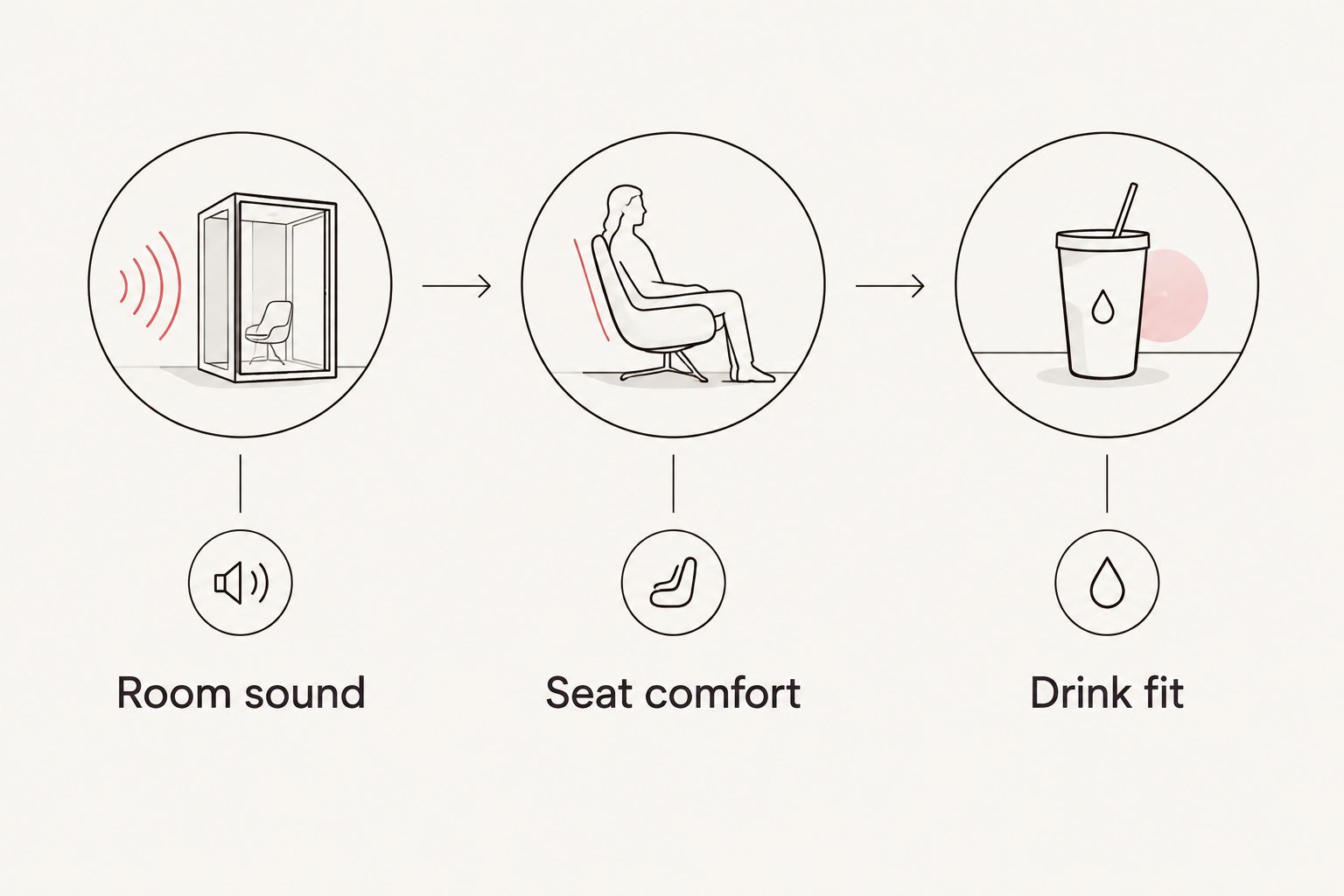
Three checks before you settle in
Use this short sequence when you enter a bar in 2026. It keeps the decision focused on your evening rather than on someone else’s idea of a good night.
Room sound
Pause before ordering and listen to the room. Notice whether ordinary conversations compete with music or other activity. For a reading-focused visit, assess that standard directly rather than assuming a room that supports conversation will also support concentration.
Seat comfort
Choose a place where you feel comfortable being alone. You do not need the most sociable seat, and you do not need to hide away either. Your preference is enough: the point is to enjoy the visit without performing a particular version of solo drinking.
Drink fit
Order something you actually want. Use two questions if you need help: what fits your taste, and how is it served? Keep the conversation as brief or as detailed as you prefer.
These checks also give you a stopping rule. If the room fails your main requirement, leave before turning a poor fit into an obligation. A solo evening does not need a complicated plan to be worthwhile.
Which solo-drinking option should you choose?
Choose the neighborhood-bar visit by default when you want a casual drink and have no strong setting preference. Choose the patio when being outdoors matters most, craft beer when you want to explore beer, and bourbon when whiskey is your familiar order.
For a quiet-focused visit, let the room make the final decision. Your preferred drink is a reason to consider a bar; a comfortable sound level is the reason to stay.
That is the practical approach to quiet bars in harlem in 2026: select a relevant starting point, check it against your purpose, and keep permission to change plans.
FAQ
What’s the best Harlem bar for a casual solo drink?
Messhallharlem is a relevant starting point for a casual solo drink in Central Harlem. It offers craft beer, bourbon, and original cocktails, but its neighborhood-bar positioning does not guarantee quiet.
How do I find quiet bars in Harlem?
Choose a bar that fits your preferred type of visit, then assess the sound before ordering. Listen to ordinary conversations and decide whether the room suits reading, talking, or simply sitting with a drink.
Is a back patio quieter than an indoor bar?
A back patio is not automatically quieter than an indoor bar. Choose it for an outdoor preference and judge the sound separately.
Is it awkward to go to a neighborhood bar alone?
Going alone does not require a special occasion or a group activity. Choose a setting where you feel comfortable, order what you enjoy, and decide for yourself whether to start a conversation.
Should I choose craft beer or bourbon for a solo visit?
Choose craft beer if exploring beer interests you, and bourbon if whiskey is already your preference. Neither category tells you whether the bar will be quiet.
Can I read a book at a Harlem bar?
Assess the room and ask about suitability before treating a bar as a reading spot. Check sound, light, and comfort, and respect the venue’s expectations.
What time should I visit a bar if I want quiet?
Check the venue’s current hours and ask about the atmosphere during the period you plan to visit. A general timing rule does not establish how a particular room will sound.
One last thing
Choose your stopping rule before your first drink. Decide what would make the visit unsuitable—raised voices, difficulty concentrating, or simply feeling uncomfortable—and act on it rather than waiting for the room to become what you wanted.
For a solo evening at Messhallharlem, the goal is not to prove you picked the perfect bar. It is to enjoy a casual neighborhood visit that fits you that night.