Yes—Mess Hall Harlem is a good fit for a casual work happy hour with coworkers who want craft beer, bourbon, or original cocktails in Central Harlem. Choose it for an informal catch-up rather than assuming the bar can provide a private room, guaranteed group seating, or a setting for presentations; confirm any essential arrangements before inviting the team.
- A Mess Hall Harlem work happy hour fits casual coworker drinks, with craft beer, bourbon, and original cocktails.
- Confirm group arrangements and your chosen date before sending a company-wide invitation.
- Keep attendance optional, and check alcohol-free choices and access needs directly.
- Treat happy hour as an after-work gathering, not proof of a scheduled promotion.
Is Mess Hall Harlem good for a work happy hour with coworkers?
Yes, when the goal is to spend time together outside work without turning the evening into another meeting. Mess Hall Harlem is a neighborhood bar serving local residents and visitors, with craft beer, bourbon, and original cocktails. That makes the drinks offering relevant to a casual coworker outing, but it does not establish arrangements for your particular group.
Mess Hall Harlem is best for coworkers seeking a casual neighborhood bar, not a formal work-event setting. Use that distinction when you decide what to ask of the evening. A relaxed conversation and a scheduled team presentation are different plans, even when both happen after work.
| Outing format | Best for | Main advantage | Main limitation or check |
|---|---|---|---|
| Informal coworker drinks | Colleagues who want a casual catch-up | Fits the bar's stated neighborhood-bar focus | Confirm arrangements if sitting together is essential |
| Organized team gathering | An organizer coordinating a defined guest list | Gives attendees a clear purpose and shared plan | Ask whether the bar can accommodate the proposed gathering |
| Structured work event | A team needing speeches, presentations, or privacy | Makes formal requirements explicit | Do not assume private space, equipment, or suitable sound levels |
For a 2026 work outing, start with the first format unless your team genuinely needs more. You can organize a good evening without adding a speech, an activity, or a company agenda. Keep the invitation clear about what is—and is not—planned.
Why this matters
A workplace invitation carries more weight than a message between friends. Coworkers need to understand whether attendance is optional, whether the gathering includes work, and whether leaving early requires an explanation. Set those expectations yourself rather than expecting the venue to solve them.
The useful question is not simply whether a bar serves drinks your team likes. It is whether your plan fits the setting and gives everyone enough information to make a comfortable choice. Choose the venue for the evening you actually want, not the event you hope it will become.
What makes the bar a fit for casual coworker drinks?
The stated offering gives you a straightforward starting point: craft beer, bourbon, and original cocktails in a casual Central Harlem neighborhood bar. You do not need to frame the outing as a tasting or expect everyone to know whiskey terminology. Invite colleagues to spend time together, with drinks as part of the setting rather than the assignment.
That neighborhood focus is also a reason to keep the plan simple. An informal get-together should not depend on a tightly managed sequence of arrivals, announcements, and activities. Let people talk without asking the bar to function like a conference venue.
There is a clear limit to this recommendation. A drinks offering does not tell you whether your group can sit together, hear a speaker, use a particular area, or meet an individual access requirement. Treat each essential need as a question to resolve, not a detail to fill in on the invitation.
The strongest reason to choose it
Choose this setting when your coworkers want a casual night out in Central Harlem and the confirmed drinks offering matches their interests. The occasion can be as simple as welcoming a colleague, catching up across teams, or spending time together after a demanding project.
Keep any company business outside the social portion. If you need to discuss assignments or make decisions, hold that conversation at work so colleagues who skip the outing do not miss something they need.
The clearest reason to choose a different format
Use a different format when the gathering depends on guaranteed privacy, a presentation, or arrangements you have not confirmed. That is a mismatch between the plan and the evidence—not a criticism of the bar.
Do the same if a bar-centered evening excludes someone you are specifically trying to include. Ask about the person's needs privately, then choose a workable plan without making them explain themselves to the group.
How should you plan a coworker happy hour in 2026?
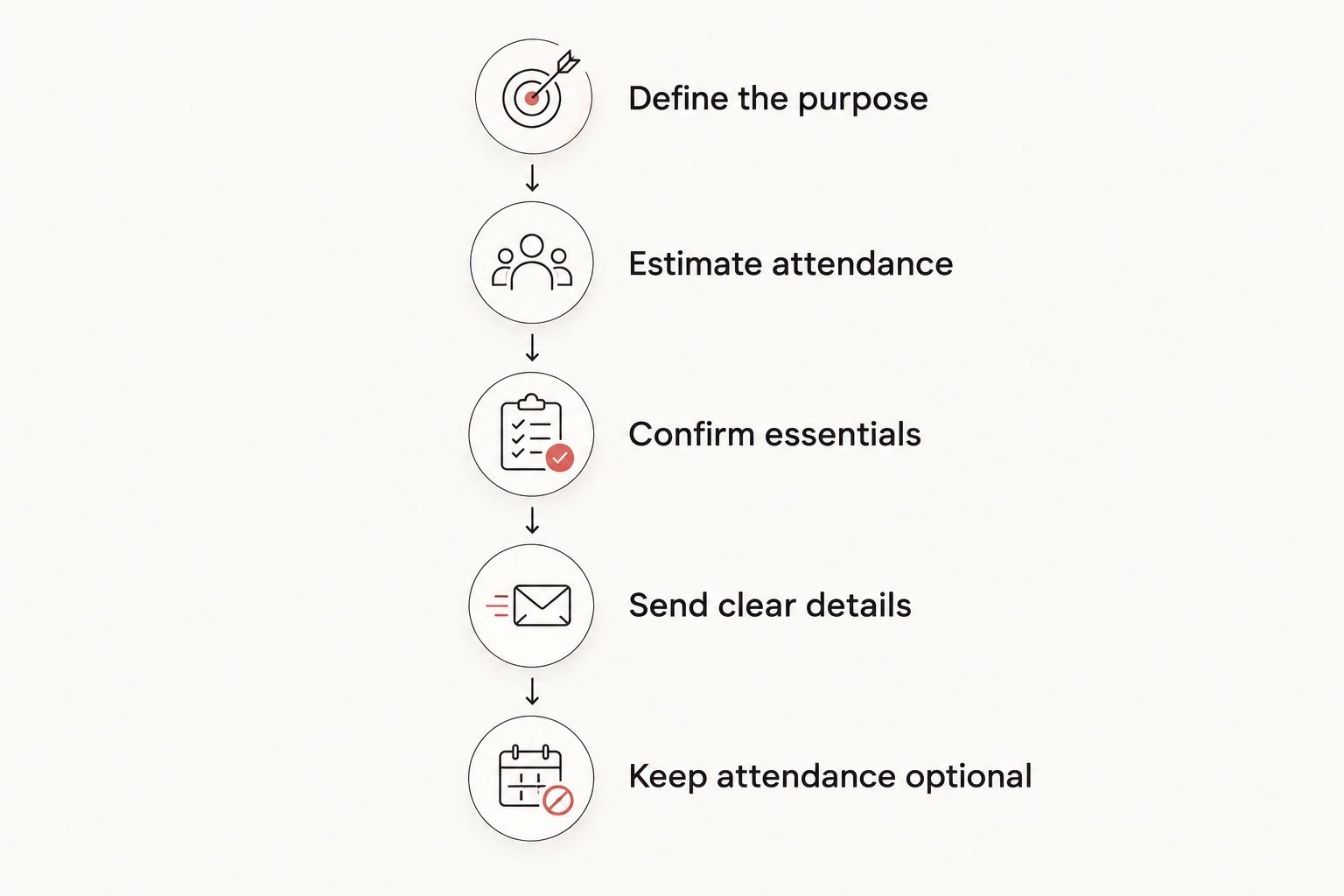
Use the following sequence before you circulate the invitation. It separates decisions you control from venue details you need to confirm, and it keeps a casual outing from accumulating unspoken promises.
- Define the purpose. Decide whether this is optional social time or an organized company event. If attendance is expected, describe it accurately rather than calling it an informal drop-in.
- Estimate attendance. Get a realistic indication of interest before asking about group arrangements. Distinguish people who expect to attend from people who are still deciding.
- Confirm essentials. Ask about the proposed date, group arrangements, access needs, and anything else your team cannot do without. State your requirements plainly instead of asking only whether the bar is good for groups.
- Send clear details. Share the confirmed plan, who is coordinating it, and what attendees should expect. Do not turn an unanswered question into a promise.
- Keep attendance optional. Give colleagues room to decline, arrive separately, or leave without a public explanation. Avoid treating participation as a measure of team commitment.
For your 2026 invitation, separate confirmed details from open questions. If the date works but group seating remains unresolved, resolve seating before describing the evening as a seated team gathering. Accurate wording gives coworkers something reliable to plan around.
Why the fit varies between teams
The same bar can suit one work outing and miss the requirements of another. Judge the fit against your team's actual plans, using these factors rather than assuming that a casual setting works for every occasion:
- Purpose: Social conversation fits the stated casual-bar focus. Presentations and confidential discussions introduce requirements that need separate confirmation.
- Drinks preferences: Craft beer, bourbon, and original cocktails are confirmed offerings. Ask directly about other choices that matter to your attendees.
- Group arrangements: Togetherness can mean meeting in the same venue or needing everyone seated in one place. Be specific about which you require.
- Location: Central Harlem is the confirmed neighborhood. Let coworkers assess the journey against their own work and home locations.
- Individual needs: Check access requirements and alcohol-free preferences privately. Do not assume that a generally casual atmosphere answers those questions.
The deciding factor is the match between the plan and confirmed arrangements. An outing with few requirements is different from an event whose success depends on seating, privacy, food, and a fixed schedule.
What should you confirm before inviting coworkers?
Write down the essentials before contacting the bar. A focused inquiry is easier to answer than a broad request to make a work happy hour happen, and it helps you recognize when a reply leaves an important point unresolved.
Group arrangements
Explain the kind of gathering you have in mind and whether sitting together is necessary. Ask what arrangements apply to that plan. Do not interpret a general welcome as confirmation of reserved space or a private event.
If your attendance estimate changes, revisit any arrangement that depends on it. Avoid encouraging additional guests on the assumption that the original plan covers them.
Timing and the meaning of happy hour
Confirm the opening hours for your selected date and any timing relevant to your visit. Calling an outing a happy hour does not establish a scheduled promotion, a particular service window, or a special event.
Keep the wording precise in your 2026 calendar invite. An after-work get-together describes the occasion without making promises about a promotion you have not verified.
Food, alcohol-free choices, and access
Ask directly about food if colleagues expect dinner or snacks. The confirmed offering centers on drinks, so do not tell attendees that the outing includes a meal without separate confirmation.
Check alcohol-free choices and specific access requirements before asking someone to commit. Ask concrete questions that reflect the person's needs rather than relying on a general description of the venue.
How do you make the invitation comfortable for everyone?
Give coworkers enough detail to decide without making the message sound like a summons. Name the occasion, state that attendance is optional, and identify a person who can answer practical questions. Keep the tone as casual as the event.
A useful invitation explains the proposed gathering in plain language. It should distinguish a confirmed arrangement from a suggestion and tell people whether they need to respond. Avoid language that implies everyone has already agreed.
For a 2026 team social, leave room for colleagues who do not drink or do not want an evening outing. Do not ask them to justify their decision. If the purpose is celebrating someone's work, make sure the recognition also happens somewhere accessible to colleagues who are not attending.
Keep photographs optional, too. Ask before taking or sharing group pictures, particularly in workplace channels. An invitation to spend time together is not automatic permission to appear in a company post.
Should you organize a seated team event or a casual drop-in?
Choose a casual drop-in when the evening does not depend on everyone arriving or sitting together. Make that format explicit so coworkers know what they are accepting. Still confirm practical requirements rather than treating an informal plan as permission to ignore them.
Choose an organized gathering when shared seating, a defined guest list, or a particular arrangement is essential. That requires a direct conversation with the venue before the invitation goes out. A casual bar outing and a coordinated event should not be presented as interchangeable.
Avoid mixing formats halfway through the evening. Colleagues who accepted an optional social invitation should not discover an unannounced work discussion or mandatory group activity after arriving.
Is it a good choice if some coworkers do not drink whiskey?
Whiskey is not the only confirmed option: the bar also offers craft beer and original cocktails. That gives the outing a broader drinks focus than bourbon alone, without requiring anyone to approach the evening as a whiskey enthusiast.
For coworkers who do not drink alcohol, ask about suitable choices directly. Do not present beer and cocktails as an answer to an alcohol-free requirement. The invitation should welcome people for their company, not their order.
FAQ
Is Mess Hall Harlem good for a work happy hour with coworkers?
Yes, Mess Hall Harlem fits a casual coworker outing focused on craft beer, bourbon, and original cocktails in Central Harlem. Confirm essential group arrangements before inviting the team.
Does calling it a happy hour mean there is a scheduled promotion?
No, describing your outing as a happy hour does not confirm a scheduled promotion. Verify the timing and details for your chosen date directly.
Can I promise coworkers that we will all sit together?
Only promise shared seating after you have confirmed the arrangement with the bar. An informal invitation does not establish reserved or private space.
Is a bar happy hour suitable for a work presentation?
Do not assume a casual bar outing can accommodate a work presentation. Confirm privacy, sound, seating, and any equipment requirements before choosing that format.
What should I check for coworkers who do not drink alcohol?
Ask directly about alcohol-free choices before sending the invitation. Keep attendance optional and avoid making drinking part of the expectation.
What should a 2026 coworker happy hour invitation include?
A 2026 coworker happy hour invitation should include the confirmed date, arrival plan, organizer, and attendance expectations. Clearly distinguish confirmed arrangements from anything still being discussed.
One last thing
A work happy hour should not become the place where essential work happens. Keep decisions, assignments, and important announcements in channels every colleague can access. That leaves the evening free to be what you invited people to: a casual chance to spend time together.
Before sending the invite, read it as someone who is new to the team. Can that person tell what is planned, what is optional, and whom to ask? If not, fix the invitation before adding another activity to the evening.