Craft beer at a Harlem bar costs the current menu amount for the beer and serving size you order, plus applicable tax and any disclosed service charges. For a night out in 2026, confirm those details before ordering and account separately for any voluntary tip; the menu amount alone is not your full budget.
- Compare craft beer prices Harlem bars quote only after checking serving size and what the bill includes.
- New York City sales tax on bar purchases is 8.875%; check whether the displayed amount includes tax.
- Mess Hall Harlem suits locals and visitors seeking craft beer in a casual Central Harlem neighborhood bar.
- Confirm happy-hour terms directly rather than assuming every beer qualifies.
How much does craft beer cost at bars in Harlem in 2026?
Use the current menu for the exact beer, not a neighborhood estimate, to decide what you will spend. A useful comparison identifies the beer, the amount served, and the charges added at checkout. Without those details, two menu entries are not necessarily equivalent purchases.
At Mess Hall Harlem, craft beer sits alongside bourbon and original cocktails in a neighborhood-bar setting. That makes the bar relevant when your group wants a casual Central Harlem stop rather than a beer-only outing. Confirm the current beer selection and serving details directly before making a spending plan.
Use this breakdown when reading a menu or checking your tab:
| Part of the bill | What to check | Why it matters |
|---|---|---|
| Beer ordered | Exact menu entry | Different beers are separate purchases, not interchangeable quotes |
| Serving size | Fluid ounces or package size | A smaller serving is not the same quantity as a larger one |
| Sales tax | Whether it is included or added | New York City sales tax affects the final bill |
| Service charge | Whether one applies and what it covers | A service charge and a voluntary tip are not automatically the same thing |
| Voluntary tip | Whether gratuity is already included | Checking the bill helps you avoid an unintended duplicate payment |
This is a bill-reading checklist, not a promise about any particular bar’s policies. Ask which items apply to your order before you commit.
Why this matters
You want a relaxed night, not a discussion about an unexpected tab. Checking the serving and bill terms up front lets you choose confidently without turning the evening into a research project.
A menu comparison also needs context. A beer you enjoy in a place that fits your plans has a different practical value from a drink chosen only because its listed amount looks lower. Start with your spending limit, then choose a beer and a setting that fit it.
For your 2026 plans, separate the drink purchase from the rest of the outing. Transportation, food purchased elsewhere, and any separately disclosed admission charge belong in your evening’s budget, but they are not the cost of the beer itself. Keeping those categories separate makes it easier to understand where your money goes.
How to check the cost before you order
You do not need beer expertise to get a clear answer. A short conversation about the current menu is more useful than comparing old menu photos without their dates or serving details.
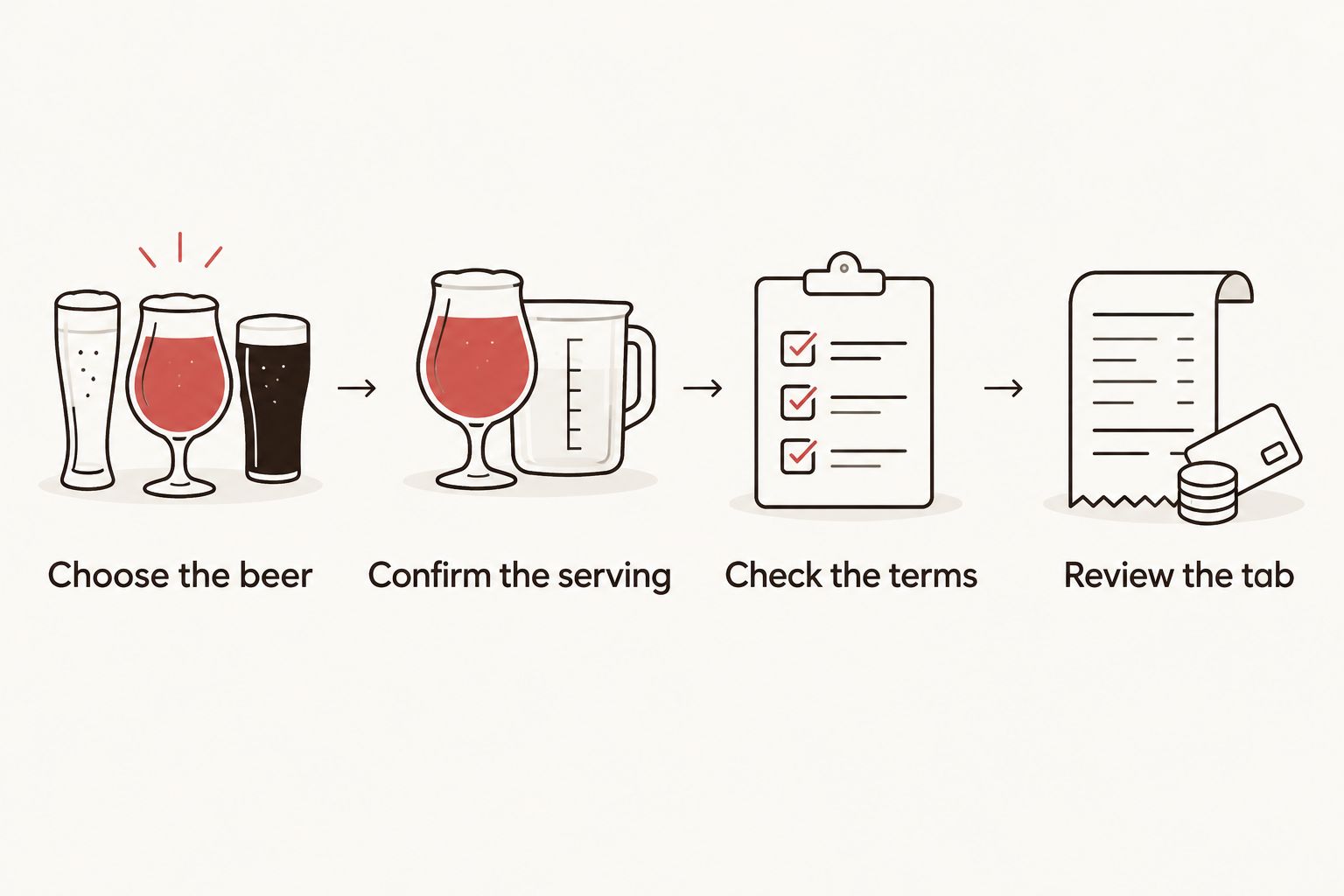
- Choose the beer. Identify the exact menu entry you are considering. A brewery name alone does not identify every beer that brewery makes.
- Confirm the serving. Ask how many fluid ounces you receive or check the package size. Do not judge the amount by glass shape alone.
- Check the terms. Ask whether tax is included and whether any service charge applies. If you are ordering during a promotion, confirm that your beer qualifies.
- Review the tab. Match the order to the bill before paying. Check any gratuity or service-charge line before adding a voluntary tip.
Keep the question simple when you arrive: ask what the beer costs, what size the serving is, and whether anything is added to the listed amount. That gives the bartender a specific question to answer. It also avoids treating a remembered offer as a current commitment.
If you are organizing the outing, pass those confirmed details to your group rather than forwarding an unexplained screenshot. Include when you checked. A dated message gives everyone a clearer starting point for the evening.
Compare serving sizes before comparing menu amounts
A U.S. liquid pint is 16 fluid ounces, but the word “glass” does not establish a serving size. Ask for the actual amount when it is not stated. Glass shapes and capacities differ, so appearance alone is not a reliable measure.
For example, a 12-fluid-ounce serving and a 16-fluid-ounce serving contain different quantities even when the menu amounts look close. These are comparison examples, not serving sizes promised by any Harlem bar. Use the sizes on the menu in front of you.
The same principle applies when you compare a draft serving with a packaged beer. Neither format is automatically the better purchase; the exact beer, quantity, and your preference determine the useful comparison.
| Format you encounter | Best for | Advantage | Limitation to check |
|---|---|---|---|
| Draft serving | Someone who wants a beer offered on tap | Lets you choose from the bar’s current draft menu | The glass shape does not tell you the stated serving volume |
| Packaged serving | Someone who wants the quantity identified on the container | The package states its volume | The packaged beer is not necessarily the same beer as a draft option |
If both formats appear on a menu, compare like with like whenever possible. A different recipe or beer style adds another difference beyond serving size. Do not turn a comparison between two different drinks into a claim that one format is always cheaper.
For a quantity-based comparison, divide each listed menu amount by its fluid ounces. That calculation answers a narrow question: what each ounce costs before any additional charges. It does not decide which beer you will enjoy more, and a larger serving is not automatically the right order.
Why craft beer costs vary
The details of the order matter more than a broad label such as “craft beer.” Use these factors to understand the quote you receive without assuming a particular bar’s pricing policy.
- Exact beer: Compare the same menu entry where possible. Different beers are different products, even when their style names overlap.
- Serving volume: A difference in fluid ounces changes the amount you receive. Confirm volume before treating two servings as equivalent.
- Serving format: Draft and packaged options need their own checks. Do not assume a bottle, can, and draft glass contain matching quantities.
- Promotion terms: If a promotion is offered, its eligible drinks and timing determine whether it applies to your order. Confirm both directly.
- Bill treatment: Tax, service charges, and included gratuity affect what you pay beyond the listed menu amount. Read each line rather than assuming how the bill works.
These are comparison factors, not explanations of a specific business’s margins. You do not need to guess what a bar pays its suppliers to decide whether an order fits your budget.
For 2026 comparisons, record the details that affect your purchase: the beer, the serving, when the quote applies, and what the bill includes. That is enough to make a useful decision without inventing a neighborhood average.
Does the menu amount include New York City sales tax?
New York City’s combined sales tax rate is 8.875%, and alcoholic beverages sold by bars are taxable. Check whether the displayed menu amount includes that tax or whether it is added to the bill. The New York State Department of Taxation and Finance’s sales-tax guidance covers restaurant and beverage sales; use current official guidance for your 2026 planning.
Do not confuse tax with a service charge or tip. They are separate bill items with different purposes. If the receipt is unclear, ask for an explanation before paying rather than trying to infer the policy from the total.
Is happy hour a better deal for craft beer?
Happy hour is a better deal for your order only when the beer you want qualifies and the terms improve on its regular menu offer. The label alone does not establish that. Check the eligible drinks, serving size, and applicable time before ordering.
A promotion is not useful to you if it requires choosing something you do not want. Compare the actual order you would make, not the most attractive wording on a sign. Also confirm whether the terms apply when you arrive rather than relying on an earlier visit.
Is Mess Hall Harlem a good fit for a casual beer night?
Mess Hall Harlem is best for locals and visitors seeking craft beer in a casual Central Harlem neighborhood bar. The stated offering includes bourbon and original cocktails, so a group does not have to share the same drink preference to consider it.
The fit has a limit: a neighborhood-bar description does not establish the exact beer you can order or the amount you will pay. Choose the setting because it matches your evening, then confirm the current drink details. Do not treat a welcoming atmosphere as evidence of a particular deal.
Use the bar’s contact page when you need to ask a specific question before visiting. Keep the request focused on your intended date, the beer information you need, and any bill terms you want clarified.
Plan a group night without an unclear tab
Agree on how you will handle the bill before ordering rounds. Ask the bar how payment and tabs work rather than promising your group separate checks or a particular payment arrangement. Those are venue policies, not assumptions to build into the invitation.
Tell guests whether you are hosting drinks or simply organizing the meetup. That distinction matters more than a vague statement that the evening will be inexpensive. Each person can then choose an order that fits their own plans.
For a 2026 gathering, use confirmed information in the invitation and leave room for individual choices. Avoid quoting an old menu as a guaranteed total. If someone needs a firm limit, encourage that person to confirm their order before it is prepared.
FAQ
How do I find current craft beer prices at Harlem bars?
Check the bar’s current menu or ask directly about the exact beer and serving size. Confirm whether tax and any service charge are included before ordering.
Does a pint always mean the same amount of beer?
A U.S. liquid pint is 16 fluid ounces, but you should confirm the stated serving rather than judging a glass by appearance. Ask for the volume when the menu does not specify it.
Do Harlem bars charge sales tax on beer?
Beer sold at New York City bars is subject to the city’s combined 8.875% sales tax. Check whether the displayed amount includes tax or whether the bill adds it separately.
Is draft craft beer always cheaper than canned beer?
Draft craft beer is not automatically the cheaper choice. Compare the exact beer, serving volume, and current menu terms rather than making a rule from the format.
Should I assume every craft beer is included in happy hour?
Do not assume every craft beer qualifies for a happy-hour offer. Confirm the eligible drinks, serving sizes, and applicable times directly with the bar.
Does Mess Hall Harlem serve drinks besides craft beer?
Mess Hall Harlem offers bourbon and original cocktails alongside craft beer. Its stated focus is a casual neighborhood-bar experience for Central Harlem residents and visitors.
One last thing
The most useful question is not just what the beer costs, but what that amount buys. Ask for the serving size and bill terms together. You get a clearer answer without needing a long conversation about beer styles or a spreadsheet for the night.
Before ordering, settle the practical details and then enjoy the place you chose. A casual evening works better when the spending decision is clear at the start, not reconstructed from the receipt at the end.