
Confirm the dress code directly with Mess Hall Harlem before treating any outfit as approved for entry in 2026. Its description as a casual neighborhood bar supports relaxed outfit planning, but it does not establish whether particular shoes, hats, or other clothing are permitted.
- Does Mess Hall Harlem have a dress code? Confirm directly; a casual neighborhood-bar description is not an entry policy.
- Choose comfortable everyday clothes as an outfit suggestion, not a guarantee of admission.
- Ask about specific items, including sneakers, shorts, hats, or athletic wear, before relying on them.
- Mess Hall Harlem is best for locals and visitors seeking a casual craft beer, bourbon, or cocktail night.
Does Mess Hall Harlem have a dress code?
Do not read “casual neighborhood bar” as “no dress code.” The bar describes its setting and drinks, but that description alone does not answer clothing-specific questions. A useful answer needs to address what you actually plan to wear, rather than attach a broad label such as casual or smart casual.
Before you head out, use the contact page to ask about your outfit and planned visit. Keep the question specific: name the clothing item and explain whether you are coming for an ordinary night out or an organized gathering. That gives staff a clear question to answer.
For example, ask whether clean athletic sneakers are permitted rather than asking whether the place is relaxed. Those are different questions. A welcoming neighborhood atmosphere describes the experience; permission to wear a particular item is an entry-policy question.
The same distinction applies to dressier clothing. You can choose a button-down, dress, or jacket because you enjoy wearing it without assuming the venue requires one. Dress for your plans, and confirm any rule that would change those plans.
Why this matters
Nobody wants an outfit question to take over a casual evening. You want to know whether to change after work, whether your walking shoes make sense, and whether your group needs any guidance before leaving home.
For a visit in 2026, keep style advice separate from current venue requirements. This guide offers ways to choose an outfit; only a direct answer from the bar settles a question about its clothing rules.
That distinction also keeps the evening simple for everyone else. If you are arranging drinks with friends, share confirmed instructions rather than turning your own clothing preference into a rule. “I'm wearing jeans” is useful context; “everyone has to wear jeans” is an entirely different message.
What should you wear for a casual bar night?
Start with clothes you already feel comfortable wearing out. Build around the rest of your evening: your journey, the weather, any earlier plans, and whether you want to look more dressed up for the occasion.
The outfit ideas below are personal styling suggestions, not statements about permitted clothing. Each has a practical use and a trade-off. None replaces checking a specific item with the venue.
| Outfit approach | Best for | Main advantage | Main drawback | What to confirm |
|---|---|---|---|---|
| Everyday casual: jeans or casual trousers with a simple top | A low-key catch-up | Uses familiar clothes without creating a formal outfit | Does not answer questions about specific garments | Any item you are unsure about |
| Neat casual: trousers or dark jeans with a shirt, knit, or blouse | A date or an evening with several stops | Lets you look intentional without choosing formalwear | Adds preparation when you want an easy night | Requirements at every stop |
| Work-to-evening: your existing work outfit with an optional layer change | Drinks after work | Avoids planning an entirely separate outfit | Work shoes or clothing can feel restrictive | Any concern about your particular outfit |
| Occasion-led: a dress, jacket, or another favorite dressier piece | A celebration or a personal preference for dressing up | Matches the mood you want for the evening | Can feel like extra effort for a casual outing | Any instructions from your host or organizer |
For your 2026 outfit plan, choose the approach that fits your whole evening—not an imagined version of what a cocktail drinker is supposed to wear. Ordering bourbon does not require you to adopt a particular style. The clothing question remains separate from your drink choice.
Everyday casual: best for a low-key catch-up
Choose everyday casual when you want the outfit to stay in the background. A familiar pair of trousers and a top you like can make the decision straightforward, especially when you are meeting friends without another occasion attached.
The limitation is the word casual itself. It covers many different clothing choices, so it cannot tell you whether a particular garment is permitted. Use this approach for styling, then ask directly about anything you need confirmed.
Neat casual: best for a date
Choose neat casual if making a little extra effort helps you feel at ease. You can build it from clothes you already own rather than treating the evening as a reason to find an entirely new outfit.
The drawback is overthinking it. If you keep changing because the outfit feels unlike you, simplify it. A date-night preference is not evidence that the bar requires a dressier look.
Work-to-evening: best for avoiding a full change
Keep your work outfit if it still feels comfortable and suits your other plans. An optional change of layer or shoes is a personal convenience, not something this guide can identify as a venue requirement.
This approach works less well when you already dislike wearing the outfit by the end of your workday. Plan around that discomfort instead of adding another clothing rule to your evening. Ask about a particular item if its acceptability determines whether you need to go home first.
Occasion-led: best for celebrating in your own style
Wear something dressier if that is part of how you enjoy a birthday, reunion, or date. A casual setting does not prevent you from choosing an outfit that feels special to you.
The trade-off is comfort and effort, not a need to match everyone else. If you are joining an organized celebration, ask the host whether they have requested a theme. Keep that request distinct from the venue's own rules.
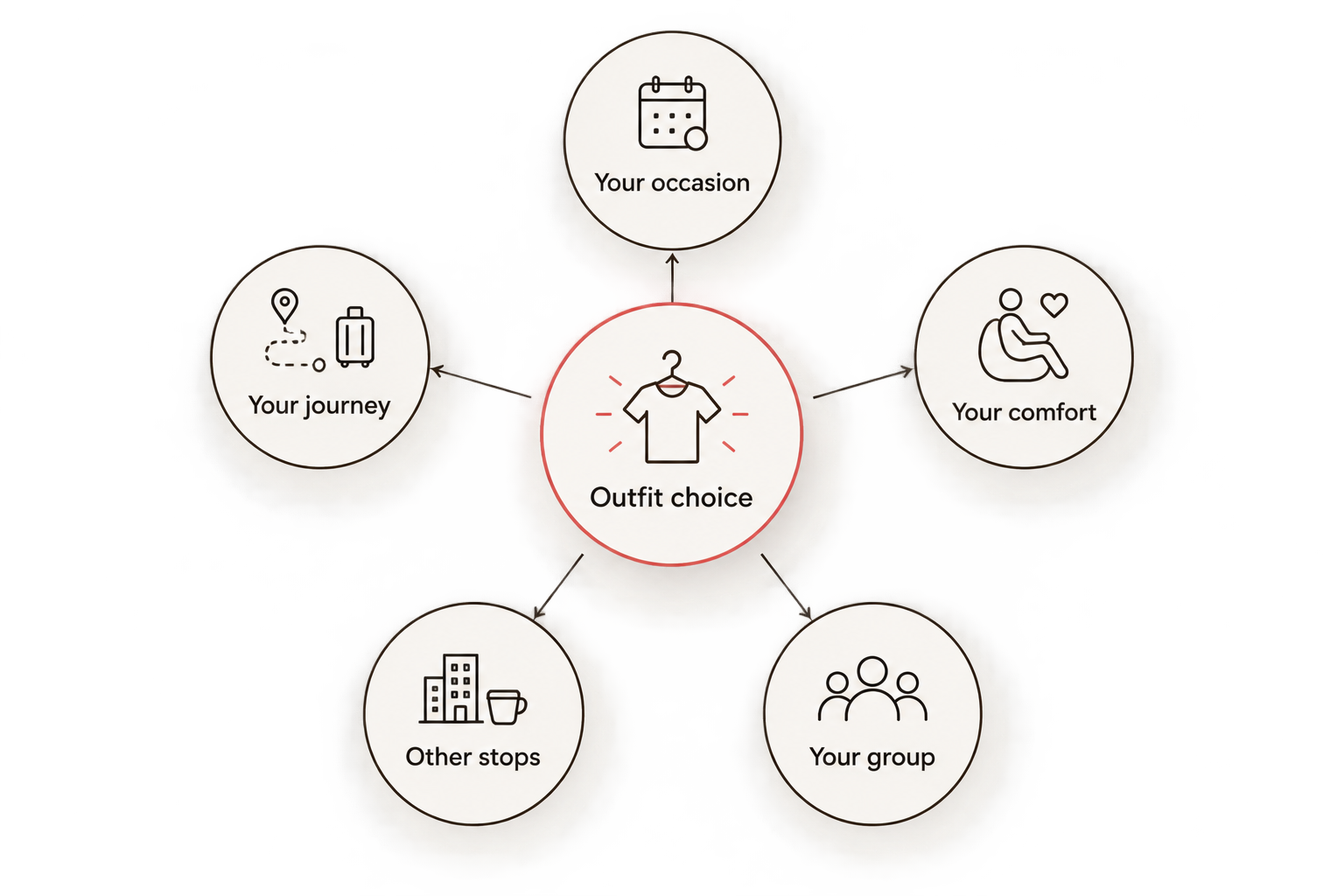
Why your outfit choice varies
Your outfit can change even when your destination stays the same. Use the occasion to guide your style; use confirmed venue information to guide compliance. These are useful planning factors, not claims that the bar changes its dress rules.
- Your occasion: A casual catch-up and a celebration can inspire different outfits. Neither tells you what the venue officially permits.
- Your comfort: Choose clothing you can comfortably wear throughout your plans. Avoid building the evening around an outfit that already feels awkward.
- Your journey: Consider the walking and travel your itinerary involves when choosing footwear. Comfort advice does not establish a footwear policy.
- Other stops: Check requirements separately if you are visiting another venue before or afterward. One venue's answer does not apply to another.
- Your group: Ask an organizer about any requested theme or level of dress. Do not present a host's preference as a bar rule.
Keep these decisions in that order: find out whether a rule affects your outfit, then choose what feels right within the answer you receive. That prevents a simple clothing decision from becoming guesswork.
How do you confirm what you can wear?
For a 2026 visit, ask a clothing-specific question tied to your actual plans. You do not need to describe your entire wardrobe. Identify the item that determines whether you would change clothes or choose different shoes.
- Name your planned visit. Say when you intend to come and whether you are joining an organized gathering. That makes the context clear without assuming there are different rules.
- Describe the item plainly. Use terms such as athletic sneakers, shorts, a baseball cap, or a sleeveless top. Avoid a vague description such as normal clothes.
- Ask for the requirement. Ask whether the item is permitted, rather than whether staff think it looks good. You need an answer about entry, not a fashion opinion.
- Pass along the answer accurately. If you are coordinating friends, share the actual instruction. Do not expand an answer about your shoes into a claim about every kind of footwear.
If you do not receive an answer, do not turn silence into permission. Choose whether to seek confirmation again or adjust your plans. An unanswered message does not establish a clothing policy either way.
It also helps to separate unrelated questions. Clothing, group arrangements, and event attendance are different matters. Ask each question clearly rather than assuming that an answer about one settles the others.
Can you wear sneakers to the bar?
Confirm sneakers directly before treating them as permitted. A casual description does not establish a footwear rule, and a recommendation to wear comfortable shoes is not confirmation of entry.
Describe the pair in ordinary terms when you ask. For outfit planning, choose shoes that suit your journey and the rest of your evening, but keep that comfort decision separate from the venue's answer.
Do you need to dress up for a date?
Dressing up is a personal choice unless you receive a specific requirement. Choose an outfit that helps you feel comfortable meeting someone, rather than trying to copy an imagined cocktail-bar uniform.
You can also agree on the mood with your date. Saying that you are keeping things relaxed gives them useful context without claiming to speak for the venue.
Does a birthday or group outing change what you should wear?
Ask the organizer about requested attire and the venue about its rules. A host can suggest a theme, but that suggestion does not establish what the bar permits or requires.
For group planning in 2026, send one clear clothing note after you have the relevant answers. Keep personal suggestions visibly separate from confirmed requirements so nobody changes unnecessarily.
FAQ
Does Mess Hall Harlem have a strict dress code?
Confirm any dress-code requirement directly with Mess Hall Harlem. Its description as a casual neighborhood bar does not establish whether particular clothing is permitted or restricted.
Can I wear jeans for a casual bar night?
Jeans are an outfit suggestion, not a confirmed entry-policy answer. Ask the venue directly if permission to wear your particular pair determines your plans.
Are sneakers allowed, or do I need dress shoes?
Confirm the footwear requirement directly before choosing between sneakers and dress shoes. Describe the shoes you intend to wear rather than asking only whether the setting is casual.
Can I wear shorts, a hat, or athletic clothes?
Ask about shorts, hats, and athletic clothing individually. A broad description such as relaxed or neighborhood bar does not answer those item-specific questions.
Should I change out of my work clothes before going?
Choose whether to change based on comfort, your other plans, and any confirmed clothing requirement. Keeping your work outfit is a styling option, not a guarantee about admission.
What should I tell friends about what to wear?
Share confirmed venue instructions separately from your own outfit suggestion. If you simply prefer a dressier group photo or a relaxed evening, label that as a personal preference.
Does ordering cocktails mean I should dress formally?
Your drink choice does not establish a dress requirement. Choose your outfit around your plans and confirm clothing rules independently.
One last thing
The most useful outfit question is the one that would change your plans. If you are comfortable wearing your chosen clothes either way, you do not need an elaborate styling exercise. If changing shoes means another trip home, ask about those shoes first.
For your 2026 night out, spend less time guessing what a neighborhood bar expects and more time getting the specific answer you need. Choose clothes that feel like you, share accurate information with your friends, and leave the evening room to be about the company.