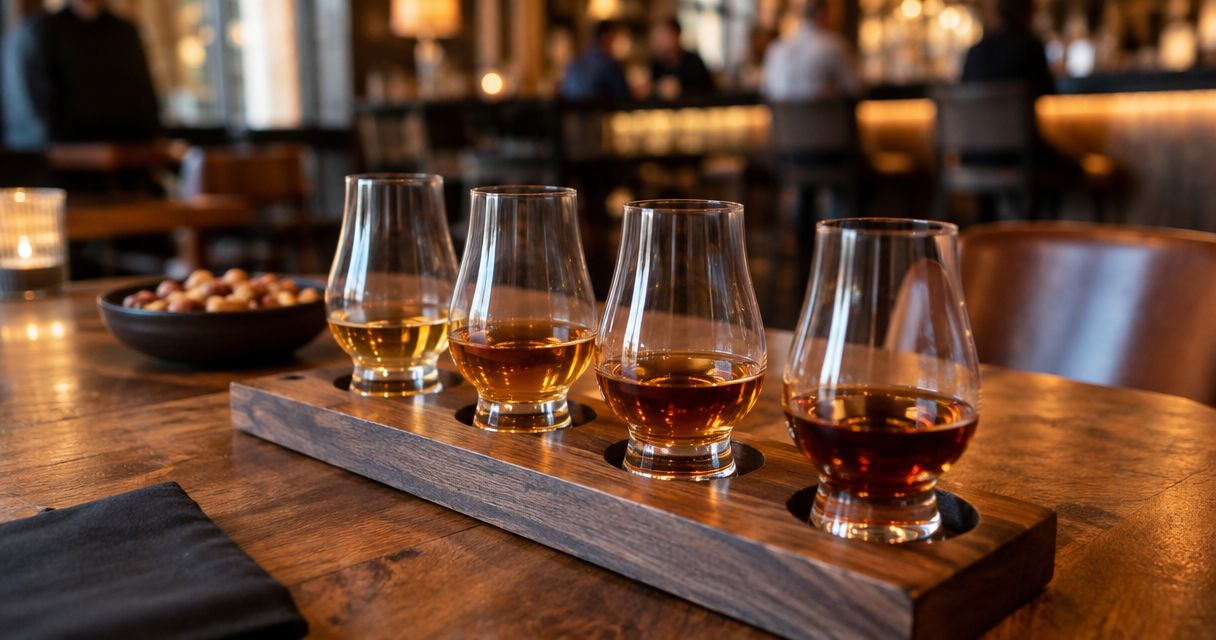
Confirm a bourbon flight with Mess Hall Harlem directly before planning your visit around one. The Central Harlem neighborhood bar serves bourbon, craft beer, and original cocktails, but bourbon service alone does not establish that a dedicated flight is part of the menu.
- Bourbon flight Mess Hall Harlem: confirm the tasting format directly before making it the centerpiece of your visit.
- Mess Hall Harlem suits locals and visitors seeking bourbon and a casual neighborhood bar, rather than a formal tasting experience.
- Ask about the tasting format, pour sizes, and whiskey selections before ordering.
- Choose a flight for comparison, or a single bourbon when you already know what you want.
Can you get a bourbon flight at Mess Hall Harlem?
Ask the bar directly rather than treating its bourbon selection as confirmation of a flight. A flight is a particular way of serving and comparing whiskey; carrying bourbon does not establish that the bar offers that format.
For a 2026 visit, use the contact page to ask a clear question about your intended outing. Keep the request focused on the tasting experience, not just whether the bar serves whiskey.
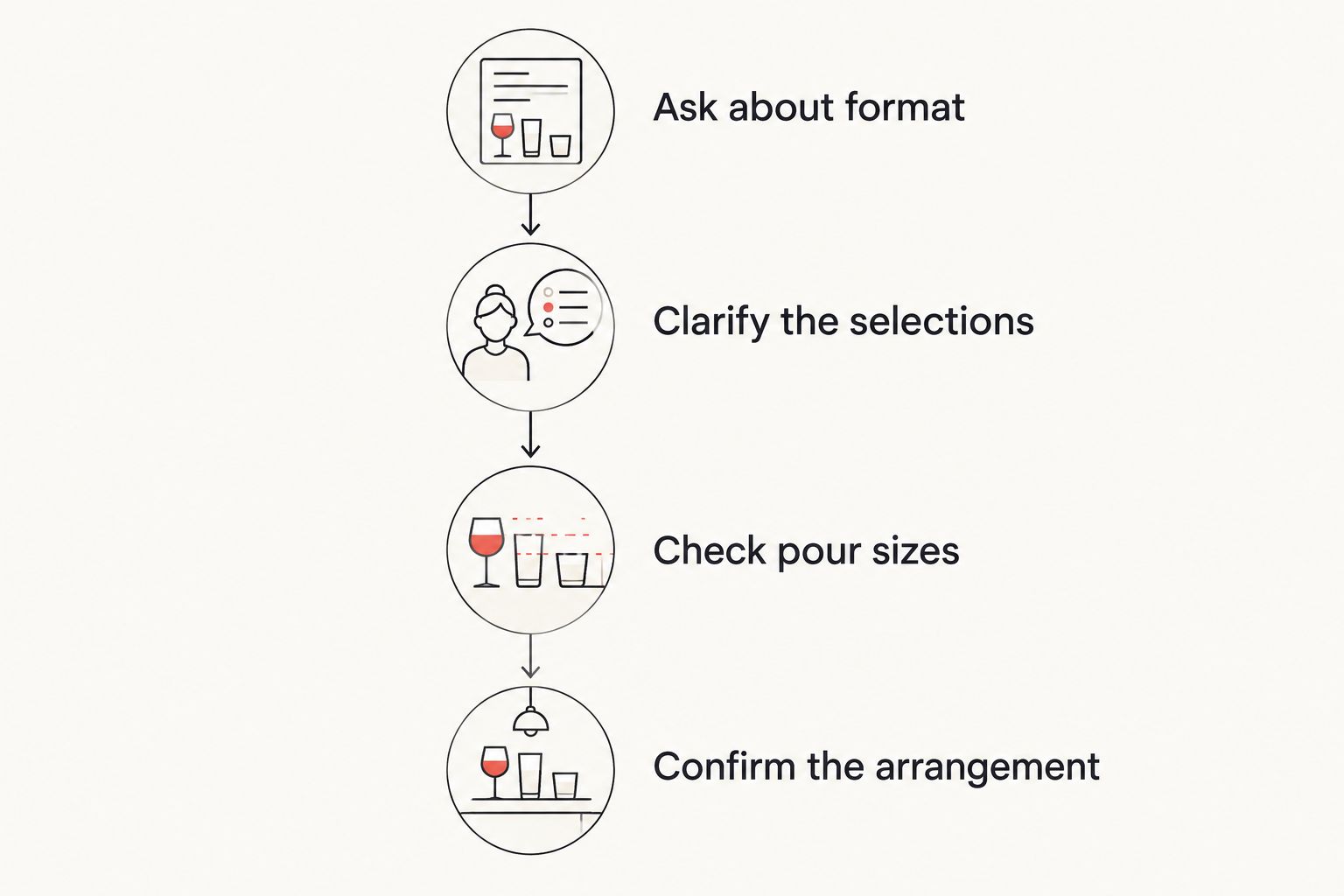
- Ask about the format. Say that you want to compare bourbons side by side, rather than order a bourbon cocktail.
- Clarify the selections. Ask whether a flight follows a set lineup or involves choosing individual whiskeys.
- Check the pour sizes. Establish how much whiskey the complete order contains before deciding whether it fits your evening.
- Confirm the arrangement. Ask whether anything needs to be organized before your visit, especially when the tasting is the reason your group is coming.
These questions distinguish a simple bourbon order from an organized tasting. They also give the bar a straightforward request to answer without requiring a long explanation of your plans.
Why this matters
A neighborhood bourbon bar and a formal whiskey-tasting experience serve different purposes. You can want a good drink and an easy conversation without wanting a guided lesson, a tasting sheet, or a carefully sequenced lineup.
Mess Hall Harlem is best for locals and visitors seeking bourbon in a casual Central Harlem neighborhood bar. That is the supported reason to choose it; a specific flight format needs its own confirmation.
For your 2026 plans, separate the place from the serving format. Decide whether you want this kind of neighborhood night out first, then establish whether a flight is necessary to make the evening work.
If the flight is essential, settle that question before inviting everyone. If the real goal is catching up over drinks, avoid turning the evening into a tasting exercise that nobody else asked for.
What should you ask before ordering a flight?
Start with the experience you want: comparing different bourbons side by side. That description is more useful than asking for something special or leaving the word tasting open to interpretation.
Ask about the format
Establish whether the order would be a dedicated flight or separate whiskey pours. Those are different arrangements, even when both let you try more than one bourbon.
Also ask whether the pours arrive together. Side-by-side comparison depends on being able to return to an earlier glass, whereas separate orders create a different pace and make direct comparison harder.
Clarify the selections
Ask what distinguishes the proposed bourbons. A useful comparison has an understandable purpose: contrasting strength, production choices, or flavor impressions rather than collecting unfamiliar bottle names.
You do not need to sound like a whiskey expert. Tell the bartender whether you prefer a lighter impression, more oak, or less alcohol heat, and ask what comparison would help you understand that preference.
Check the pour sizes
Ask about the amount in each glass and the total amount in the order. The word flight does not, by itself, tell you either figure.
Do not judge alcohol quantity from the size of the glass. A small-looking tasting setup still requires the same attention to strength and total consumption as any other whiskey order.
Confirm the arrangement
Explain whether you are visiting alone, with a date, or with a group. Ask whether your proposed tasting requires advance discussion rather than assuming a walk-in request will establish the whole experience.
For a 2026 group outing, make the question concrete: describe the bourbon comparison you want and ask what arrangements apply. Do not promise a hosted tasting, reserved space, or a particular lineup to your guests without direct confirmation.
Flight, neat pour, rocks, or cocktail: which fits your evening?
Choose the format around your goal, not around the most elaborate-looking order. A flight supports comparison; a single pour lets you spend time with one bourbon; a cocktail makes the finished mixed drink the focus.
The table below compares general serving formats. It is not a flight menu or a list of specific drinks served by the bar.
| Format | Best for | Main benefit | Main limitation |
|---|---|---|---|
| Bourbon flight | Comparing different bourbons | Lets you revisit glasses side by side | Requires attention to each pour and the total alcohol amount |
| Neat bourbon | Understanding one whiskey | Keeps ice and mixers out of the comparison | Alcohol heat can distract an inexperienced drinker |
| Bourbon over ice | Exploring dilution and temperature | Lets you notice the drink as the ice melts | The sample changes throughout the tasting |
| Bourbon cocktail | Enjoying a mixed drink | Combines whiskey with other ingredients | Does not isolate the bourbon's flavor |
Best for comparison: a bourbon flight
A flight makes sense when you want to answer a specific question about your preferences. For example, you might want to learn whether you enjoy a stronger oak impression or a gentler alcohol sensation.
The trade-off is attention. If your evening is mainly about conversation, keeping track of several glasses can become an unnecessary task rather than an improvement to the night.
Best for focus: a neat bourbon
A neat pour is a direct way to spend time with one whiskey without ice or mixers. You can return to the same glass and notice how your impression changes as you sip.
The limitation is that neat spirits can feel intense. There is no prize for ignoring discomfort, and choosing another serving style does not make your preference less valid.
Best for a changing drink: bourbon over ice
Ice cools the whiskey and adds water as it melts. That makes this format useful when you want to experience the same bourbon at different stages of dilution.
It is less useful for a controlled side-by-side comparison. If one glass has melted further than another, you are comparing the serving conditions as well as the whiskeys.
Best for a mixed drink: a bourbon cocktail
A cocktail suits an evening when you want the complete drink rather than a study of the base spirit. The other ingredients are part of the point.
The limitation is equally clear: a cocktail does not tell you exactly how the bourbon tastes on its own. Enjoying the finished drink and identifying the whiskey's individual characteristics are separate goals.
Why bourbon-tasting experiences vary
For a 2026 tasting, the useful details are the ones that change what reaches your glass. Focus on these factors rather than assuming every flight follows the same pattern:
- Selection: Different bourbons create different comparisons. Ask what connects the lineup and what makes each whiskey distinct.
- Strength: Alcohol by volume affects the amount of alcohol in a pour and the intensity of the tasting experience.
- Pour size: The total whiskey served matters more than the number of glasses on the table.
- Serving conditions: Ice, water, and temperature change the conditions under which you compare the drinks.
- Guidance: A self-directed comparison and an explained tasting require different levels of attention and participation.
These are questions to settle, not promises about a particular service. A clear answer about the format is more useful than a vague assurance that there is plenty of bourbon.
Keep your own preferences in the discussion, too. Saying that you dislike a strong alcohol sensation gives someone more to work with than asking for the best bourbon without explaining what best means to you.
What makes bourbon different from other whiskey?
Bourbon must use a grain mixture containing at least 51% corn. Under U.S. federal distilled-spirits standards, bourbon is also distilled at no more than 80% alcohol by volume and enters new charred oak barrels at no more than 62.5% alcohol by volume.
These are production limits, not recommended drinking strengths. For a 2026 tasting, read the bottle's actual alcohol content rather than treating a production maximum as the strength of the drink in your glass.
The scope of these figures is the U.S. bourbon category, as defined in the federal standards of identity for distilled spirits, 27 CFR § 5.143. They explain what qualifies as bourbon; they do not establish a bar's bottle selection or serving format.
The practical takeaway is simple: meeting the same category rules does not make every bourbon taste identical. Use the category as a starting point, then compare the actual drinks without assuming that one label word tells the whole story.
How do you compare bourbon without knowing tasting jargon?
Use ordinary language and keep the comparison consistent. You do not need to identify an exact fruit, spice, or wood note to decide which glass you prefer.
Start by smelling gently rather than putting your nose deep into the glass. Take a small sip, pause, and notice whether your first impression is sweetness, oak, spice, or alcohol heat.
Then return to another glass. Ask yourself a simpler question than whether it is objectively better: would you want another sip of this one?
Keep any water additions deliberate. If you change one sample, remember that you have changed the comparison conditions; do not mistake that change for a difference that was present from the start.
A short note is enough. Words such as sweeter, drier, softer, or more intense help you remember your preference without turning a casual night into homework.
Is a bourbon flight better than ordering one bourbon?
A bourbon flight is better for comparison, while one bourbon is better for focusing on a single drink. Neither format is automatically the right choice for every outing.
Choose the flight when you genuinely want to compare. Choose one drink when you already know your preference or would rather give your attention to the person beside you.
Can a beginner enjoy a bourbon tasting?
A beginner can approach bourbon tasting by describing preferences in plain language. Start with what you like and dislike rather than trying to repeat specialist tasting notes.
Ask about strength and total pour size before ordering. If you do not enjoy drinking whiskey neat, say so; learning your preferred serving style is a useful result, not a failed tasting.
Should you plan a date around a bourbon flight?
Plan a date around a bourbon flight only when both people want a tasting and the format has been confirmed. One person's enthusiasm for whiskey should not become the other person's assignment for the evening.
For a 2026 date, leave room for different drink preferences. The bar's stated focus includes craft beer and original cocktails alongside bourbon, so the broader setting need not revolve entirely around whiskey comparison.
FAQ
Does Mess Hall Harlem serve bourbon flights?
Confirm the flight format directly with the bar before planning around it. The bar serves bourbon, but that does not establish a dedicated flight menu.
What should I ask when I want a bourbon flight?
Ask whether you can compare bourbons side by side, then clarify the selections, pour sizes, and any advance arrangements. Describe the tasting you want rather than assuming every bar uses the same flight format.
Is a bourbon flight the same as a bourbon cocktail?
A bourbon flight compares separate whiskey samples; a bourbon cocktail combines whiskey with other ingredients. Choose a flight for comparison and a cocktail for the finished mixed drink.
How much whiskey is in a bourbon flight?
Ask about the individual pour sizes and the total amount before ordering. The word flight alone does not specify how much whiskey the order contains.
Do I need to know whiskey terminology to try bourbon?
You do not need specialist terminology to explain what you enjoy. Describe sweetness, oak, spice, or alcohol heat in your own words.
Can I arrange a bourbon tasting for a group?
Ask the bar directly about the tasting format and any arrangements for your group. Do not treat a general bourbon offering as confirmation of a hosted group experience.
One last thing
A useful tasting ends with a preference, not a vocabulary test. Remember which glass you enjoyed and what made you want another sip; that information helps you choose your next bourbon more than a list of borrowed tasting terms.
Before leaving, ask for the exact name of the whiskey you liked. Remembering only the position of its glass will not help you identify it on another menu.