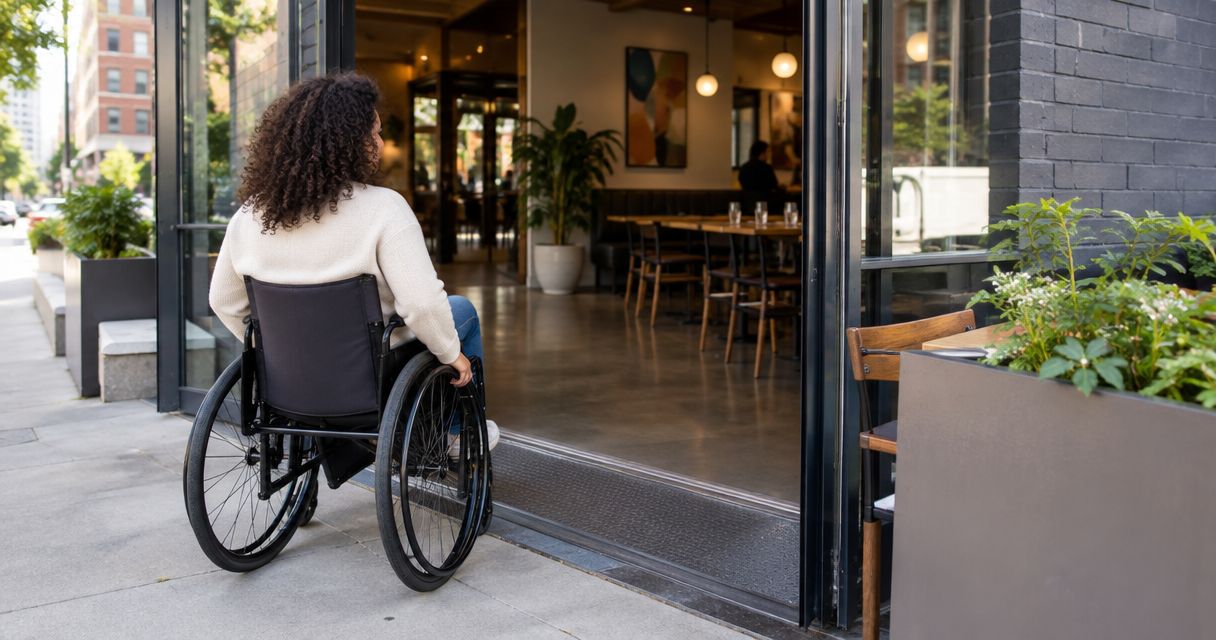
Wheelchair accessibility at Mess Hall Harlem is not confirmed by the information available for this guide. Before visiting in 2026, ask the bar directly about step-free entry, room to move between tables, restroom access and the route to the back patio; entry alone does not establish access throughout the venue.
- Is Mess Hall Harlem wheelchair accessible? Get direct confirmation before treating the venue as an accessible option.
- Check the entrance, seating, restroom and patio separately; a step-free doorway does not answer every access question.
- Describe your wheelchair’s space requirements and ask for specific details rather than a general accessibility assurance.
- Confirm your access needs for the planned visit, including how you will enter, sit and use the restroom.
Is Mess Hall Harlem wheelchair accessible?
The responsible answer is to confirm the physical access details directly before making plans. The Mess Hall Harlem website is a starting point for checking the bar’s current information. A description of a cozy neighborhood space does not establish doorway clearance, restroom layout or a step-free route.
Use the following checklist to turn a broad accessibility question into answers you can act on. These are checks to make, not verified features of the venue.
| Area to check | Ask this specific question | What the answer establishes |
|---|---|---|
| Entrance | Is there a step-free route from the sidewalk through the entrance? | Whether you can enter without encountering steps |
| Doorway | What is the clear opening with the door fully open? | Whether the usable opening accommodates your wheelchair |
| Interior route | Can a wheelchair reach the seating area and restroom without steps or fixed obstructions? | Whether entry leads to the spaces you need |
| Seating | Can I remain in my wheelchair at a suitable table? | Whether you can sit with your group without transferring |
| Restroom | Is there wheelchair maneuvering space and an accessible toilet layout? | Whether the restroom works for your needs |
| Back patio | Is the entire route to the patio step-free, including the threshold? | Whether outdoor seating is an option for you |
A helpful response describes the route and any limitations. An answer such as accessible entrance still leaves the restroom, seating and outdoor area unresolved.
Why this matters
A good night out starts before the first drink. You need to know that you can get inside, stay with your group and use the facilities without an unexpected barrier.
Mess Hall Harlem is a neighborhood bar for locals and visitors seeking craft beer, bourbon and original cocktails in a casual setting. That establishes the kind of night it offers, not whether its physical layout meets your access needs. Keep those decisions separate.
For a 2026 visit, prioritize current, specific information over an undated review. A photo can help explain a doorway or seating arrangement, but it does not establish the full route through a building.
Check the entrance from sidewalk to seating
Ask about the complete journey through the door, not simply whether the entrance is on the ground floor. A ground-floor entrance can still have a raised threshold or a step.
Start with these questions:
- Is the route from the sidewalk to the entrance step-free?
- Is there a raised threshold at the doorway?
- What is the clear doorway width with the door open?
- Does the entrance involve another door or a tight turn immediately inside?
- If assistance is needed to operate the door, how is that arranged?
The distinction between a door’s nominal width and its clear opening matters. The door itself and its hardware occupy space, so ask for the usable opening rather than a rough description of the frame.
Do not assume that being carried over a step is an acceptable access arrangement. Explain whether you need independent entry, assistance opening a door or another specific accommodation. Your own requirements should guide the decision.
Check seating and the route through the bar
Getting through the entrance is only the first part of the visit. Ask whether you can reach a place to sit, remain in your wheelchair and share a table with the people you came to see.
The bar’s published description refers to a narrow space. That makes a clear description of the interior route particularly useful, but it does not establish whether the route is accessible or inaccessible.
Ask whether the available seating includes a table that works without transferring. High stools or a high counter do not answer that question. If a table is proposed, explain any knee clearance or approach space you need.
For group plans, ask where the group would sit and whether your place connects to the same usable route as everyone else’s. A seat apart from your friends is not the same plan as sharing their table.
Also ask how you would reach the restroom from that position. A suitable table is less useful if reaching it blocks the route you need later.
Check restroom access separately
A step-free entrance does not establish an accessible restroom. Ask about the restroom’s location, the route to its door and the space inside.
Useful questions include:
- Is the restroom on the same level as the seating area?
- Are there steps anywhere along the route?
- Does the doorway provide enough clear space for my wheelchair?
- Is there room to approach the toilet and transfer in the way I need?
- Are grab bars present, and where are they positioned?
- Can I reach the sink and operate the door hardware?
If transfer direction matters to you, say so explicitly. A general description of a large restroom does not explain which side of the toilet provides usable space.
A recent photo can help clarify the layout, especially when paired with measurements. It should supplement a conversation, not replace confirmation of details outside the frame.
Make restroom access a decision point before travel, not an issue to solve after arrival. That keeps the choice in your hands.
Check the back patio as a separate destination
The venue’s reference description includes a back patio. That confirms the outdoor area’s existence, not an accessible route to it.
Ask whether reaching the patio involves a step, raised door track, narrow passage or change in floor level. Then ask about the outdoor seating itself: can you approach a table and remain in your wheelchair?
If sitting outside is central to your plans, make that clear when asking about access. Confirmation of indoor entry does not answer a patio question.
For a 2026 outing, decide whether suitable indoor seating would also work for you. That is a personal planning choice, not a reason to accept an outdoor route that does not meet your needs.
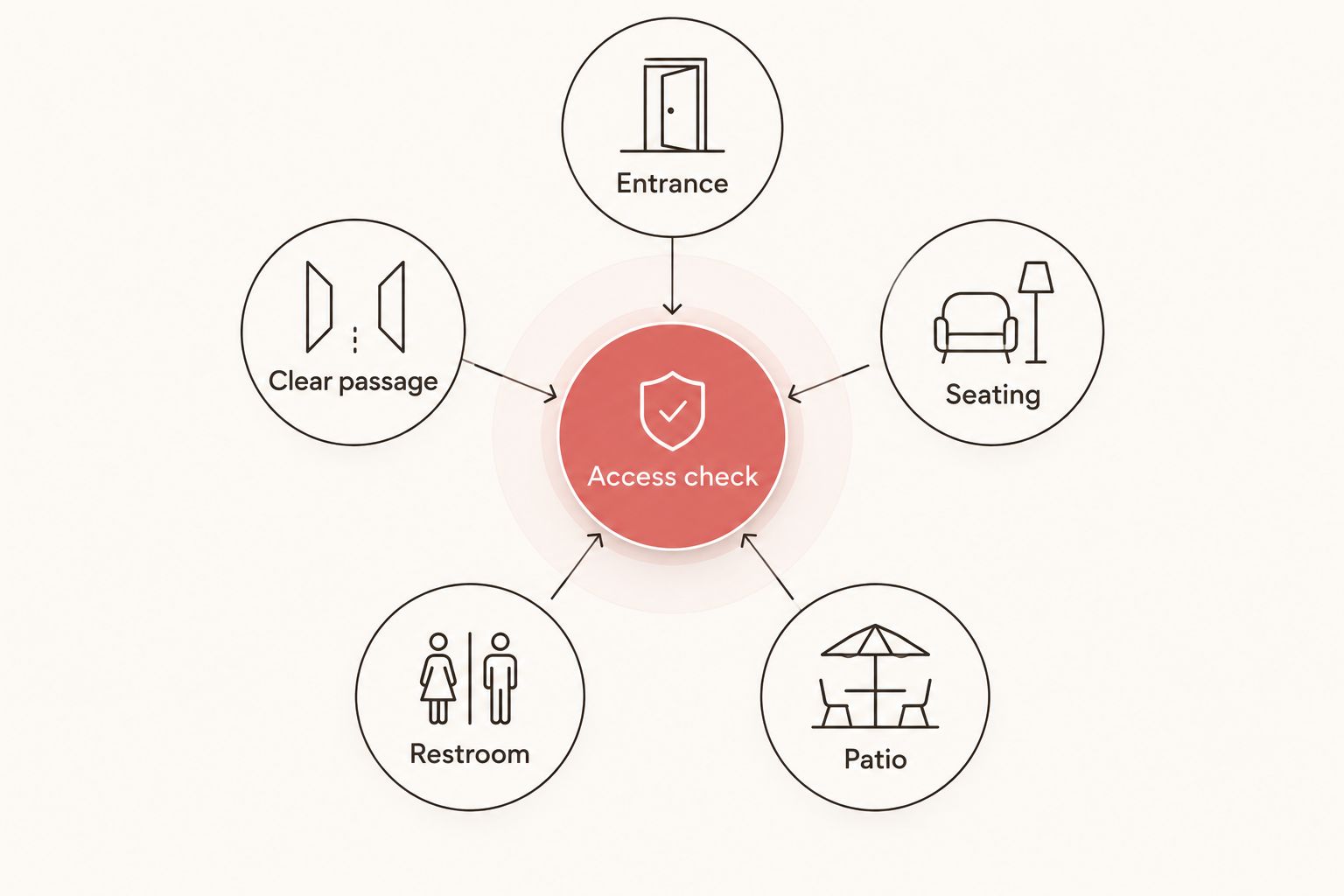
Why wheelchair access depends on the whole route
Accessibility is not a single feature at the front door. Your visit depends on several connected spaces, and each needs to work for the way you move and use the venue.
- Entrance: Steps, thresholds and door operation determine how you get inside.
- Clear passage: Door openings, turns and obstructions determine where you can go.
- Seating: Table height and approach space determine whether you can sit comfortably with your group.
- Restroom: Maneuvering space, fixtures and transfer arrangements determine whether you can use it.
- Patio: The outdoor route and seating require their own check.
These factors explain why two wheelchair users can need different details from the same venue. Describe the features that matter to you rather than relying on a universal yes or no.
What measurements help when asking about access?
For planning a 2026 visit, the U.S. Department of Justice’s ADA Standards for Accessible Design provide useful reference points. These are general standards, not measurements of this bar or a determination of its legal compliance.
- 32 inches: The general minimum clear opening for an accessible doorway, subject to the standard’s detailed requirements.
- 36 inches: The general minimum clear width for an accessible walking surface, with specified exceptions and additional requirements at some turns.
- 60 inches: The minimum diameter for a circular wheelchair turning space; the standards also permit a qualifying T-shaped turning space.
Use those figures to ask clearer questions, not to certify a venue yourself. A single width does not establish an accessible route, and a doorway measurement says nothing about restroom fixtures or table clearance.
Your wheelchair’s dimensions and your own maneuvering needs remain relevant. If you need a particular turning arrangement or transfer space, describe that requirement rather than assuming a general measurement resolves it.
How should I ask about access before visiting?
Send one specific request that covers your planned visit. There is no need to explain a diagnosis; describe the access features you need.
- State your visit plans. Give the date, approximate arrival time and whether you are joining a group.
- Describe your requirements. Explain that you need step-free entry, suitable table seating and a usable restroom.
- Ask for physical details. Request doorway clearance, information about thresholds and the route between spaces.
- Clarify any unresolved point. Ask for a recent photo or measurement when a verbal description is unclear.
- Confirm the arrangement. Establish where you will enter and sit before committing to travel.
You can write: I use a wheelchair and need step-free access from the sidewalk to a table and restroom. Please describe any steps or thresholds, the clear entrance width and the restroom layout. I would also like to know whether the patio has a step-free route.
That is a suggested message, not a statement from the venue. Adapt it to your needs and ask follow-up questions until the proposed arrangement is clear.
Does a wheelchair-accessible entrance mean the restroom is accessible?
No. An accessible entrance does not establish an accessible restroom. Check the route, doorway, turning space, toilet approach and fixtures separately.
For your 2026 plans, ask about the facilities you will actually need during the visit. Do not let a clear answer about the entrance stand in for an unanswered restroom question.
Can I rely on photos to decide whether I can visit?
Photos help explain a space, but they do not confirm every access detail. A photograph can show a visible step or seating arrangement while leaving the threshold height, clear width or route around a corner unresolved.
Ask what the photo shows and whether it reflects the current arrangement. Use measurements for fit questions and direct confirmation for features outside the image.
Should I choose another bar if access remains unclear?
Choose a venue whose access arrangements you can confirm if the unresolved details affect your visit. You do not need to travel first to find out whether an essential route or facility works.
That does not establish that this venue is inaccessible. It means the decision should rest on usable information rather than an assumption.
FAQ
Is Mess Hall Harlem wheelchair accessible in 2026?
Wheelchair accessibility is not confirmed by the information available for this guide. Ask the venue directly about step-free entry, interior routes, seating, restroom access and the patio before visiting.
Does the bar have a step-free entrance?
A step-free entrance is not confirmed here. Ask whether the complete route from the sidewalk through the doorway includes any steps or raised thresholds.
Can I stay in my wheelchair at a table?
Confirm suitable table seating directly before visiting. Ask whether you can approach the table, remain in your wheelchair and sit with your group.
Is the restroom wheelchair accessible?
Restroom accessibility requires separate confirmation. Ask about its location, doorway, maneuvering space, toilet approach, grab bars and sink access.
Can a wheelchair user reach the back patio?
Patio access needs its own check. Ask about the entire outdoor route, including steps, thresholds, passage width and space at the table.
What doorway measurement should I ask for?
Ask for the clear opening with the door fully open, not the nominal door width. The ADA Standards generally specify a 32-inch minimum clear doorway opening, but that measurement alone does not establish overall accessibility.
Do I need to explain my medical condition when asking about access?
Describe the access features you need rather than your medical condition. Wheelchair dimensions, step-free routes, seating clearance and transfer requirements make the request specific.
One last thing
Ask where you will sit, not just whether you can get in. That question connects the entrance, the table, your friends and the restroom into one usable plan.
For Mess Hall Harlem, the next move is direct confirmation of those details. A casual neighborhood night should not depend on guessing what happens beyond the doorway.


