
Mess Hall Harlem’s entry policy needs direct confirmation before you bring anyone under 21. New York’s legal drinking age is 21 years, but that rule alone does not establish whether a particular bar admits younger guests. For a 2026 visit, ask specifically about admission for your group’s ages—not just whether someone can order alcohol.
- Is Mess Hall Harlem 21 and over? Confirm its admission policy directly before bringing anyone younger.
- New York’s drinking age is 21 years; drinking eligibility and permission to enter are different questions.
- For a neighborhood bar visit, confirm the date, arrival time, youngest guest’s age, and identification requirements.
- An adult companion, daytime visit, or decision not to drink does not establish permission to enter.
Is Mess Hall Harlem 21 and over only?
Do not treat either a 21-and-over-only policy or permission for younger guests as confirmed. The reliable next move is to ask the bar whether every person in your particular group can enter on the date and at the time you intend to visit.
The distinction matters because New York’s alcohol rules and a venue’s admission policy answer different questions. The New York State Liquor Authority identifies 21 as the minimum age for purchasing alcoholic beverages. That is not, by itself, an answer about admission to this specific bar.
Start with Mess Hall Harlem and seek a direct answer about entry. A description of the drinks, atmosphere, or neighborhood does not substitute for an age policy.
| Question | What establishes the answer | What not to assume |
|---|---|---|
| Can someone under 21 buy alcohol? | New York’s minimum purchase age is 21 years. | Being accompanied by an older adult permits a purchase. |
| Can someone under 21 enter this bar? | The venue’s admission policy for the planned visit. | The drinking age automatically answers the entry question. |
| Can a child accompany a parent? | Direct confirmation covering the child’s age and visit details. | Parental supervision guarantees admission. |
| Does a daytime visit change anything? | An answer covering the intended arrival time. | Earlier hours mean all ages are welcome. |
| Does choosing not to drink resolve it? | Confirmation that the guest is eligible to enter. | Ordering no alcohol overrides admission requirements. |
Why this matters
A neighborhood bar can sound like an easy place to gather, especially when your group includes locals and first-timers. But a welcoming description does not tell you whether a younger friend, teenager, or child can come through the door.
Mess Hall Harlem is a fit for adults seeking a casual Central Harlem bar with craft beer, bourbon, and original cocktails. That description supports an adult night-out recommendation; it does not establish an all-ages policy or a child-friendly visit.
For your 2026 plans, settle eligibility before coordinating everyone’s journey. The benefit is practical: you avoid building an outing around a location that has not confirmed it can admit your whole group. The limitation is equally clear—you need a venue-specific answer rather than a general guide to New York drinking laws.
If you are planning around a child rather than a younger adult, the separate question of whether the bar is kid-friendly during the day addresses that planning concern. Admission and suitability still need separate answers.
How to confirm admission before you leave
Give the bar enough information to answer your actual question. Asking whether a place is family-friendly or casual leaves room for misunderstanding; asking about a guest’s age, visit date, and arrival time is much clearer.
1. State the youngest guest’s age
Ask whether someone of that exact age can enter. A guest aged 20 years is below New York’s legal alcohol-purchase age, even when everyone else in the group is older.
Avoid describing the group only as adults. Someone aged 18 years is also below the drinking age, so that description does not resolve alcohol eligibility or the venue’s admission requirements.
2. Give your intended date and arrival time
Include when you plan to arrive. You need an answer about your visit, not an assumption that a response about another occasion applies equally to yours.
For a 2026 gathering, use the actual calendar date rather than a vague reference to a future weekend. If your plan changes, check whether the answer still covers the revised visit.
3. Explain who will accompany the younger guest
Say whether the person will arrive with a parent, another adult, or friends. Do not present adult accompaniment as a reason the bar must admit someone.
Ask directly whether accompaniment affects the answer. That keeps a question about supervision from becoming an unsupported assumption about permission.
4. Ask about identification requirements
Ask what identification the venue requires for entry and for alcohol service. Confirm the requirements before leaving, especially if someone does not have the identification they normally carry.
Do not assume a photo of a document, a student card, or another substitute will be accepted. The useful answer is what the venue accepts, not what worked somewhere else.
5. Confirm that the answer covers the whole visit
If your group plans to stay beyond its initial arrival time, include that detail. Ask whether the permission described covers the intended visit from arrival through departure.
Keep the response available so your group can refer to the same information. A clear message helps everyone plan, but it is not a reason to argue with staff or disregard instructions at the door.
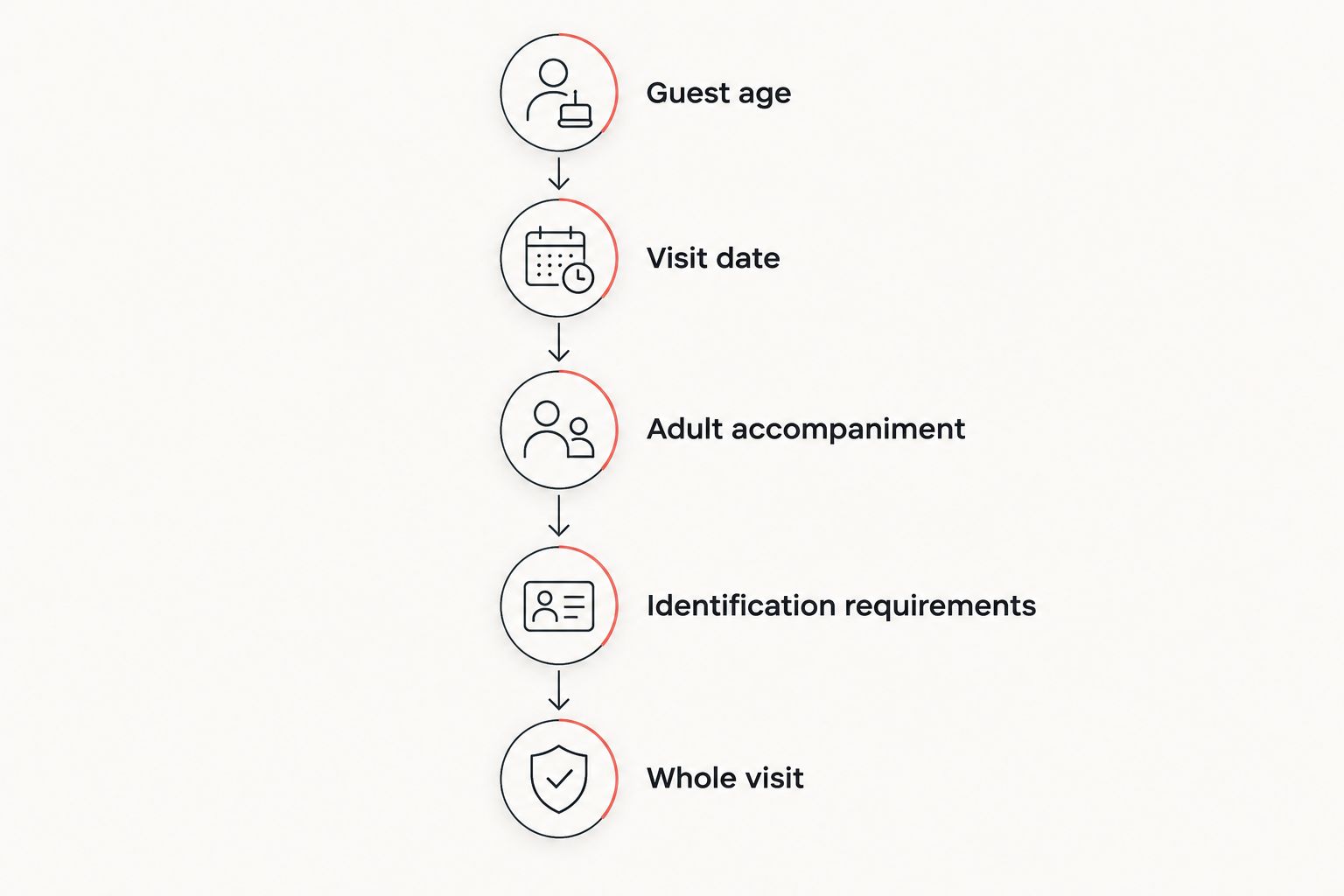
A useful inquiry includes all these details in one message. Ask whether your youngest guest can enter with the stated group on the stated date, then ask what identification everyone should bring. You do not need to share identity-document numbers to ask a general admission question.
What an admission confirmation needs to cover
The important issue is not why this particular bar’s policy varies; no variation should be assumed. It is whether the answer you receive covers the circumstances that matter to your group.
- Guest age: Confirm the exact age of anyone under 21 rather than asking only about adults or families.
- Visit timing: Include the date, intended arrival time, and whether you plan to stay later.
- Accompaniment: Explain whether a parent or another adult will be present, without assuming that creates an exception.
- Visit purpose: State whether you mean an ordinary visit or a particular gathering, so the answer addresses the right situation.
- Identification: Ask what documents are required and whether every guest needs to bring them.
These are questions to resolve, not claims that the venue applies different rules to each situation. Only rely on an answer that actually covers your plans.
Does being under 21 always mean you cannot enter a bar?
Being under 21 years does not, by itself, establish this bar’s admission decision. New York’s minimum alcohol-purchase age answers the purchasing question; you still need the venue’s answer about entry.
For a 2026 outing, keep those questions separate when speaking with your group. Someone can understand that they cannot buy alcohol and still need confirmation about whether they can attend at all.
A statement that a guest will not drink is useful context, but it is not an admission policy. Ask the entry question first so nobody mistakes a personal intention for permission from the venue.
Can someone aged 20 come along without drinking?
A guest aged 20 years needs direct confirmation of admission, even if they will not drink. Choosing not to order alcohol does not establish permission to enter.
That distinction is particularly useful for birthdays and mixed-age friend groups. If the gathering includes someone below the drinking age, decide where to meet only after that person’s eligibility is settled.
Avoid making the younger guest travel separately while everyone else goes ahead. Keep the group’s plan conditional until the admission question has a clear answer, or choose somewhere that explicitly confirms it can accommodate everyone.
Can a parent bring a child during the day?
The drinking age of 21 years does not answer whether a parent can bring a child during daytime hours. Ask about the child’s age, accompaniment, date, and intended time; do not infer permission from daylight or a casual atmosphere.
Admission is also only the first question. If entry is permitted, you still need to decide whether a bar setting suits the outing you have in mind.
For a family gathering, ask about the practical needs that matter to you instead of assuming them. Do not treat the existence of drinks, seating, or a patio as evidence of children’s facilities or family-oriented service.
What should you do if the answer is unclear?
Choose a plan with confirmed admission for everyone. An unclear response is not permission, and silence does not settle the question either way.
For your 2026 visit, avoid relying on an old review, a photo containing a younger-looking person, or someone else’s recollection. Those details do not explain the circumstances of that visit or establish the policy for yours.
If different sources appear to conflict, ask the venue to clarify your exact situation. Do not select whichever answer is most convenient and present it to the rest of the group as settled.
The same approach applies when friends have different understandings. Agree on one confirmed plan before anyone leaves, and keep an alternative that welcomes the full group if eligibility remains unresolved.
FAQ
Is Mess Hall Harlem definitely 21 and over only?
Confirm the admission policy directly before treating it as 21-and-over only or open to younger guests. New York’s drinking age is 21, but that does not establish this venue’s entry policy.
Can I enter if I am under 21 and do not order alcohol?
Not drinking does not establish permission to enter. Ask whether someone of your exact age can attend on your intended date and at your planned arrival time.
Can my parent get me into the bar if I am under 21?
Do not assume a parent’s presence guarantees admission. Ask the venue whether it permits your specific age group with a parent present.
Is a bar automatically all ages during the afternoon?
An afternoon visit does not establish an all-ages admission policy. Confirm daytime entry directly rather than assuming that an earlier arrival changes the rules.
What identification should I bring to a bar in New York?
Ask the venue what identification it accepts for admission and alcohol service. Do not assume a student card, document photo, or substitute will satisfy its requirements.
Can an 18-year-old buy alcohol in New York?
No. New York’s minimum age for purchasing alcoholic beverages is 21 years; being 18 does not meet that requirement.
Should I organize a mixed-age group outing before checking the policy?
Confirm admission for the youngest guest before committing the group to the venue. Share the answer with everyone so a younger attendee is not left with a different expectation.
One last thing
Ask about the youngest person first. A group can spend time discussing drinks, meeting points, and who is coming while overlooking the one detail that determines whether everyone can attend.
For a 2026 night out, settle that question before choosing the rest of the plan. A good neighborhood gathering starts with knowing that the people you invited can actually join you.


