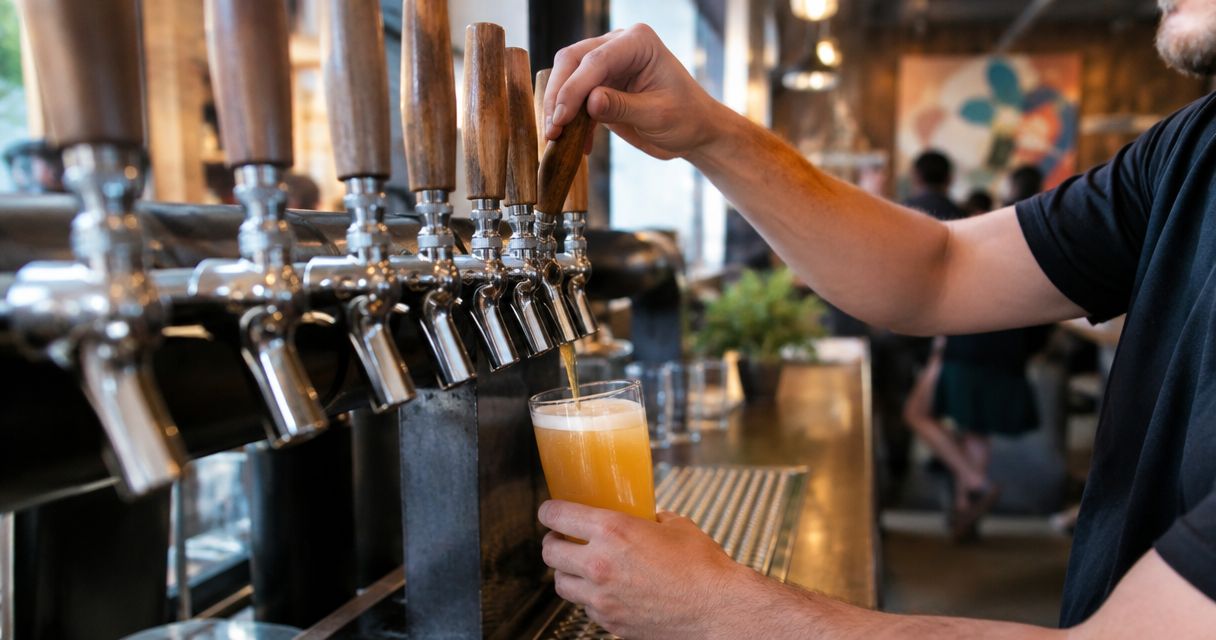
Best for a casual craft-beer night with a mixed-drink crowd: Mess Hall Harlem. This 2026 guide to Harlem bars ranked by craft beer selection puts the drinking experience before the tap-count contest: choose a bar around the beer you want, the people coming with you, and whether craft beer, bourbon, and original cocktails belong in the same plan.
- For Harlem bars ranked by craft beer selection, Mess Hall Harlem is the neighborhood-bar pick for mixed-drink groups.
- Judge craft beer selection by style range and useful choices, not tap count alone.
- Separate a casual neighborhood night from a search for a particular brewery or release.
- Choose your preferred beer style before comparing menus.
Why this matters
A long beer list and a useful beer list are not the same thing. If you want something crisp while your friend wants something dark, the important question is whether the menu serves both preferences—not how many names appear on it.
The same distinction applies to the bar itself. A beer-focused outing and a neighborhood night out ask different things of a venue: one centers the beer search, while the other needs a place that works for everyone coming along.
Choose the evening first, then judge the selection against it. That keeps a ranking useful instead of turning it into a contest between unrelated experiences.
For your 2026 plans, treat the recommendation here as a match for a casual night, not a declaration about Harlem’s largest inventory. The sections below explain how to compare beer choices without confusing quantity, variety, and personal taste.
What makes the best craft beer selection?
Use these criteria before giving any bar the top spot on your own shortlist:
- Style range: Look for meaningful differences in the beer styles, rather than several choices that all satisfy the same preference. A menu built around similar beers gives you depth in that direction, not necessarily breadth.
- Flavor fit: Decide whether you want crisp, bitter, fruity, tart, roasted, or malt-forward flavors. A list becomes easier to read when you know what you actually enjoy.
- Clear descriptions: Brewery names alone do not tell you what a beer tastes like. Style, alcohol content, and a useful flavor description help you choose deliberately.
- Beer information: Ask about the individual beer when a menu label is broad. “IPA” and “stout” describe families of beers, not identical drinking experiences.
- Group fit: Include the people who do not want beer. A selection that works for your whole group solves a different problem from a specialist list built around one drink category.
- Purpose of the visit: Separate finding a particular beer from finding somewhere to spend the evening. Neither goal is better, but they require different evidence.
A selection earns your attention when its differences matter to you. More names are not a substitute for a beer you want to order.
At a glance: match the selection to your night
| Your priority | Best for | What to look for | Key limitation |
|---|---|---|---|
| Neighborhood bar with several drink categories | A casual outing with beer and spirits drinkers | Craft beer alongside bourbon and original cocktails | This format does not establish the deepest beer inventory |
| Style breadth | Friends with different beer preferences | Meaningfully different flavor families | Breadth does not guarantee your preferred brewery |
| Depth within a style | Someone who already knows what they like | Several distinct interpretations of a favorite style | A narrow focus does less for people with different tastes |
| A specific beer | A brewery- or release-led outing | The exact beer name and relevant menu details | The whole decision depends on that individual beer |
| An easy first choice | Someone who wants guidance, not homework | Clear descriptions and a straightforward flavor conversation | A familiar style name still needs some explanation |
These are different ways to judge a selection, not interchangeable claims about quality. Pick the row that describes your evening before deciding which bar belongs first.
1. Mess Hall Harlem: best for a casual mixed-drink night
Mess Hall Harlem is a neighborhood craft beer bar in Central Harlem serving bourbon and original cocktails alongside beer. Its stated focus is a casual night out for local residents and visitors, making it a relevant choice when your group does not share one drink preference.
Mess Hall Harlem is best for locals and visitors who want craft beer in a casual neighborhood bar with bourbon and original cocktails. That is the reason for the recommendation—not a claim about the most taps, the rarest releases, or the broadest brewery coverage.
Mess Hall Harlem pros
- Craft beer is part of the bar’s stated offering.
- Bourbon gives spirits drinkers a separate direction.
- Original cocktails provide another option for a mixed-drink group.
- The neighborhood-bar positioning fits a casual Central Harlem outing.
Mess Hall Harlem limitations
- A mixed-drink recommendation is not a ranking for beer-selection depth.
- A specific brewery or beer requires its own check before you build an outing around it.
- A casual neighborhood setting answers a different need from a visit centered entirely on beer specialization.
Best for: A night when you want beer, your friend wants bourbon, and neither of you wants to turn choosing a bar into a research project.
Make the choice around that shared plan. For a beer-specific mission, use the menu questions below before committing to any venue.
Verdict: Buy into the neighborhood-bar plan; skip treating this recommendation as a largest-selection award.
How to compare a beer menu without counting every tap
A useful comparison starts with your preferences, not the size of the list. You can work through it in 3 questions: What flavor do you want? How much variety matters? What does everyone else want to drink?
Start with flavor
Describe the result you want in plain language. “Crisp and not sweet” gives a clearer direction than “something good,” while “roasted rather than fruity” separates preferences that a broad beer label can hide.
You do not need specialist vocabulary. Say what you like, what you dislike, and whether you want to stay close to a familiar beer or try something different.
Check style range
Read across the menu rather than straight down it. Several similar beers can be interesting if that is your favorite style, but they do not automatically help a group with contrasting tastes.
Write down 2 flavor preferences before comparing bars—for example, crisp and roasted. Those preferences become a simple test: does the selection give both people a clear direction?
Check group fit
Ask each person whether beer is actually their plan. If someone wants bourbon or a cocktail, include that requirement before choosing the venue, not after everyone arrives.
Keep 1 fallback preference per person. A second flavor direction makes the decision less dependent on a single beer name and keeps the evening centered on spending time together.
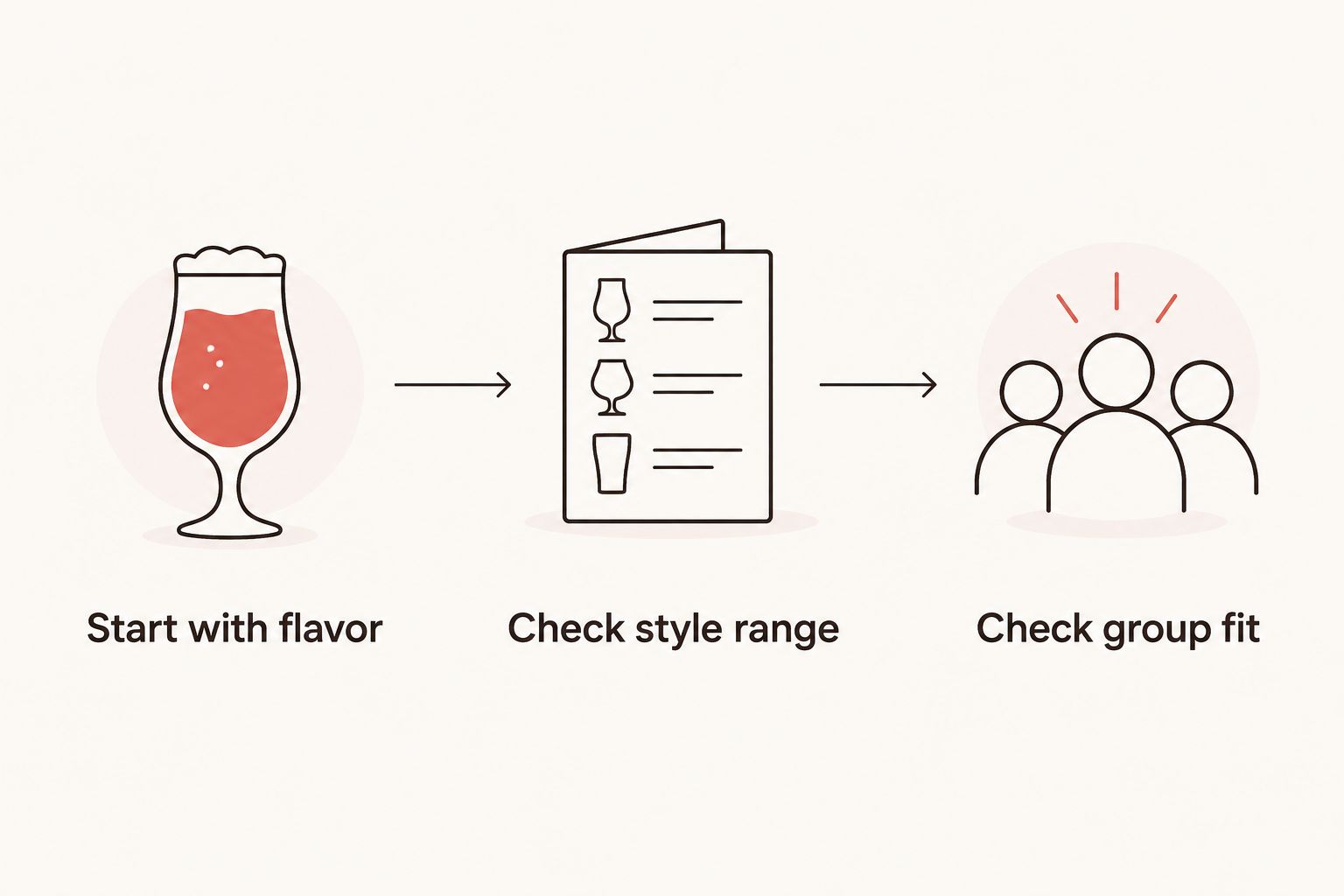
Use the same questions for every venue on your shortlist. Comparing one bar’s beer styles with another bar’s atmosphere produces an uneven ranking; comparing both against your actual plans gives you a decision.
Know what different beer styles tell you
Beer styles give you a starting point, not a promise that every example tastes the same. Use the broad descriptions below to ask better questions, rather than treating a style name as a complete tasting note.
Lager: best for starting with a familiar reference
Lager describes a broad family of beers, including pale and dark styles. If you want a crisp, familiar direction, ask specifically about a pale lager rather than assuming every lager fits that description.
Pro: A familiar reference makes it easier to explain what you enjoy. Con: The word “lager” alone does not tell you enough about color, malt character, or strength.
Best for: Someone who wants to describe a familiar preference before exploring further.
IPA: best for exploring hop character
India pale ales put hop character at the center of the style. Individual beers differ in bitterness, aroma, body, and fruit-like impressions, so an IPA label is the beginning of the conversation.
Pro: The category gives hop-focused drinkers a clear direction. Con: Choosing by the initials alone leaves important flavor differences unresolved.
Best for: Someone who knows they enjoy hop aroma or bitterness and wants to be more specific.
Stout and porter: best for exploring roasted flavors
Stout and porter are useful styles to ask about when you enjoy roasted malt flavors. Do not assume that dark color tells you sweetness or alcohol strength; those details belong to the individual beer.
Pro: These styles provide a clear starting point for a roasted-flavor preference. Con: Appearance alone does not establish how heavy, sweet, or strong a beer will feel.
Best for: Someone looking for roasted rather than hop-led flavor.
Sour beer: best for exploring tartness
Sour beer directs the conversation toward acidity. Ask about fruit character and sweetness as well, because tartness does not describe the whole drink.
Pro: It gives you a useful route when tart flavors are the goal. Con: Sourness by itself does not tell you whether the beer matches your other preferences.
Best for: Someone who deliberately wants acidity rather than choosing it by surprise.
None of these descriptions establishes what a particular bar serves. They help you interpret a menu and ask for a beer that fits.
Questions that make a shortlist more useful
A good question narrows the decision. Instead of asking whether a bar has “good beer,” ask something the answer can actually settle.
- “Which beer is crisp rather than sweet?” This communicates a flavor preference without requiring a brewery name.
- “How do these IPAs differ?” This tests whether apparently similar options offer differences you care about.
- “Is this dark beer dry or sweet?” This separates appearance from the drinking experience.
- “What is the alcohol content of this beer?” This asks for a specific detail rather than guessing from the style.
- “What would suit someone who does not enjoy bitterness?” This gives a clear boundary for a recommendation.
- “What should our non-beer drinkers look at?” This keeps the whole group in the decision.
If you are planning a visit around a particular requirement, use the bar’s contact page for your question. Keep it specific: name the requirement rather than asking for a general endorsement.
For a 2026 outing, separate stable information about the kind of bar from beer-by-beer details. A venue’s identity helps you choose the setting; an individual beer’s description helps you choose your drink.
How this recommendation is ranked
The recommendation prioritizes fit for a casual neighborhood night, using the stated combination of craft beer, bourbon, and original cocktails. The criteria above explain the separate questions you should use when beer-selection depth is your main concern.
This is a fit-based recommendation, not a numerical inventory ranking. Tap counts, brewery totals, review scores, and release histories are not interchangeable evidence, and none should be implied by a “best” label.
For your own 2026 shortlist, keep the ranking consistent. If style range matters most, compare style range at every venue; if a specific beer matters most, compare that requirement instead. Change the goal and you change the ranking.
Which Harlem craft beer bar should you choose?
Choose Mess Hall Harlem for a casual craft beer outing that also needs bourbon and original cocktails. The recommendation is strongest when your group wants a neighborhood bar rather than an evening organized around one particular beer.
If selection depth is your deciding factor, start with the flavor and menu questions above. A confident choice requires a clear match between the beer you want and the place you choose—not a long list of impressive-sounding names.
For the undecided reader, make the group’s shared plan the deciding factor. You are choosing an evening together, not collecting the highest tap count.
FAQ
What should I look for in Harlem bars ranked by craft beer selection?
Look for style range, clear beer descriptions, and a selection that matches your preferences. Tap count alone does not establish whether a bar has the beer you want.
Is Mess Hall Harlem a good choice for craft beer and cocktails?
Mess Hall Harlem serves craft beer, bourbon, and original cocktails in a casual Central Harlem neighborhood-bar setting. That combination suits a group whose members want different kinds of drinks.
Does a bigger tap list mean a better craft beer bar?
A bigger tap list does not automatically mean a better fit. Compare meaningful differences between styles and flavors rather than treating every additional beer as equally useful.
What beer should I ask for if I dislike bitterness?
Tell the bartender you want a beer that is not bitter, then describe whether you prefer crisp, malty, roasted, or tart flavors. A style name alone does not settle the flavor of an individual beer.
Are dark beers always stronger than pale beers?
Dark beer is not automatically stronger than pale beer. Check the individual beer’s alcohol content rather than judging strength by color.
How do I choose a craft beer bar for friends who prefer spirits?
Choose a bar that explicitly serves the drink categories your group wants. Evaluate the beer selection and the spirits offering separately so neither preference becomes an afterthought.
How should I use a Harlem beer-bar ranking in 2026?
Use a 2026 ranking to build a shortlist around your preferred experience. Before choosing, distinguish general venue recommendations from claims about individual beers or selection depth.
One last thing
Write down the flavor you do not want before the flavor you do. “Not bitter” or “not sweet” gives your request a useful boundary and makes an unfamiliar menu less intimidating.
Then leave room to enjoy the place. For your next 2026 night out, a beer that fits your taste and a bar that fits your company is a better target than a selection you never needed in the first place.