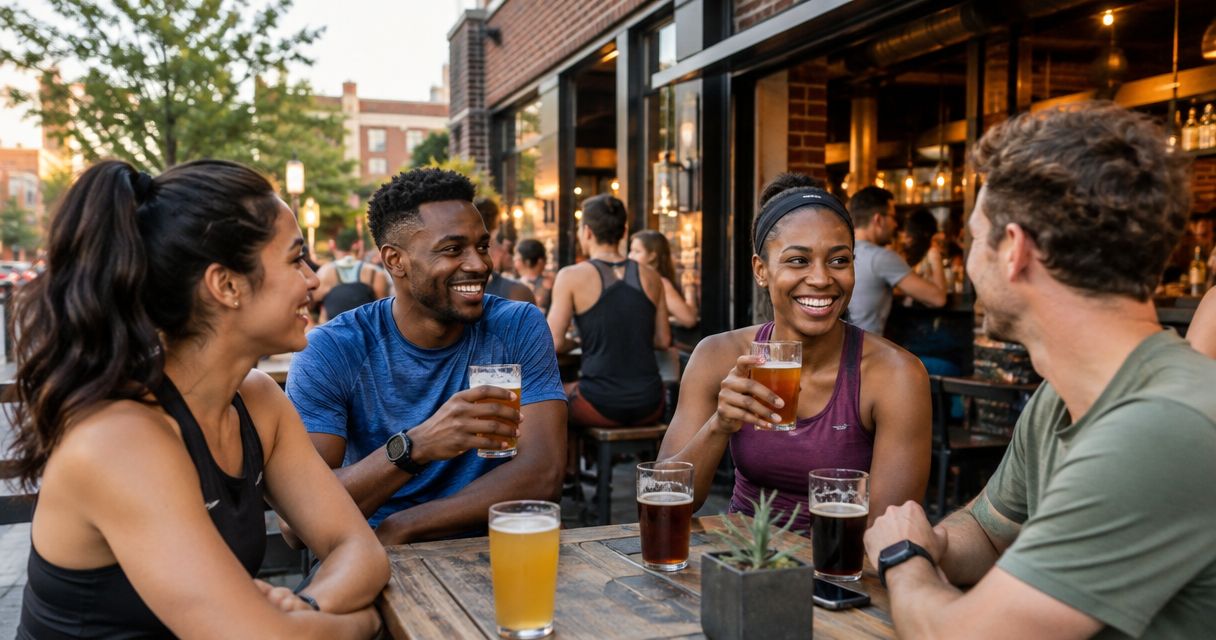
A Harlem run club bar meetup is a post-run gathering at a neighborhood bar with the aim of helping runners build friendships beyond the route. This 2026 guide explains how to plan a craft beer stop at Mess Hall Harlem or assess another venue without assuming group seating, patio access, or special arrangements.
- Mess Hall Harlem is best for runners seeking a casual Central Harlem craft beer bar.
- For a run club bar Harlem search, prioritize arrival logistics, group arrangements, and an optional post-run social.
- Confirm your headcount and arrival window directly; a neighborhood bar is not automatically a bookable clubhouse.
- Keep hydration, food, and the decision to drink separate from joining the run club.
Why a bar meetup matters for Harlem run clubs
A run gives your group a shared activity. A post-run meetup gives members somewhere to talk without keeping pace, watching crossings, or worrying about falling behind. For a Harlem club, choosing a neighborhood destination also gives the social a clear local identity.
Your planning problem differs from an ordinary night out: runners finish at different times, arrive carrying gear, and bring different expectations about drinking. A craft beer selection answers only part of that problem. You also need an agreed arrival plan and a welcome that includes people who do not order alcohol.
Choose the meetup around the runners, not the runners around the bar. For your 2026 club calendar, treat every venue suggestion as a place to assess—not a confirmed group arrangement.
Plan a post-run bar meetup in six steps
Define your social
Start with a message in your existing group chat. Ask whether members want a short conversation after an easy run, a longer evening together, or an occasional celebration. Those are different outings, and choosing one makes the rest of the planning easier.
Keep the first version simple. As a planning example, propose a 30-minute social with no expectation that everyone stays until the end. That is an organizer's suggested format, not a venue rule or a recovery recommendation.
Make the drinking question explicit without turning it into a survey about personal habits. Ask whether members are comfortable meeting in a bar and what would help them participate. Someone who skips the social should still feel fully part of the club.
- Name the purpose: introductions, conversation, or celebration.
- Ask for a social headcount separately from the run headcount.
- State that ordering alcohol is optional.
- Give members a clear way to leave after the run.
- Choose an organizer to handle venue questions.
Match your finish to the meetup
Use a map and walk the final approach yourself. Check the actual finish point, the route to the proposed bar, and where the group can regroup without blocking a sidewalk or entrance. A venue name alone is not enough information for a newcomer.
Build the route around a safe, understandable finish—not a promise that every runner will arrive together. Designate a sweep or regrouping arrangement that suits your club, then give the social its own arrival instructions.
As an example, allow a 15-minute arrival window rather than publishing one exact finish time. Adjust that window to your route and runners; it is not an estimate of travel time to any particular bar.
Before publishing a recurring 2026 route, check the approach again. Your event message should distinguish the run finish from the bar entrance so late arrivals know where to go.
- Mark the run finish clearly.
- Inspect the walking approach to the venue.
- Identify a regrouping spot away from doorways.
- Share an arrival window rather than a guaranteed time.
- Include instructions for joining only the social.
Confirm your group plan directly
You can shortlist venues from their public descriptions, but handle group arrangements through a direct conversation. Mess Hall Harlem offers craft beer, bourbon, and original cocktails in Central Harlem; that makes it relevant to a casual post-run social, not proof that your particular gathering is accommodated.
Use the contact page to explain the proposed date, expected attendance, arrival window, and whether runners will arrive together or gradually. Ask what arrangement fits before you tell members that anything is reserved.
The advantage of this craft beer bar option is its neighborhood setting and drinks focus. The limitation is equally practical: those facts do not establish seating, group terms, gear storage, or suitability for your chosen time.
Publish only what the venue confirms. If you have not agreed on a group arrangement, describe the destination as a proposal rather than a booking.
- Send the date and expected social headcount.
- Explain that guests are arriving after a run.
- Ask about the proposed arrival window.
- Check any access requirements raised by members.
- Ask where running gear should go.
- Save the reply and share relevant instructions.
Separate recovery from drinking
Plan the run as though the bar stop were not happening. Members still need their own hydration and food arrangements, and beer should not be presented as a recovery drink or a reward they have earned through exercise.
Ask about drinking water and nonalcoholic choices rather than promising a particular option. Likewise, do not assume a bar serves food or permits outside food. Resolve those questions before sending members a message that suggests dinner is covered.
Keep any alcohol decision personal. Avoid rounds, drinking challenges, or attendance language that makes purchasing a drink feel like a club obligation. Someone who joins the conversation and leaves without drinking has participated just as fully.
A useful organizer check is simple: would the invitation still sound welcoming to a runner who never drinks? If not, rewrite it before posting.
- Tell runners to bring what they need for the run.
- Keep hydration instructions separate from the social invitation.
- Ask the venue about nonalcoholic choices.
- Confirm food arrangements without assuming a kitchen.
- Avoid rounds that create pressure to participate.
Send a clear invitation
Write the event details in one message that members can forward without explanation. Include the meeting point, route expectations, finish plan, social destination, and how to contact the organizer. Separate confirmed details from questions still being resolved.
For your first 2026 outing, request responses 48 hours before the run as an organizer deadline. That gives you a defined point for checking attendance; it is not a reservation requirement imposed by a venue.
Use plain language about the social: it is optional, runners can leave whenever they need to, and nobody has to drink alcohol. Tell social-only attendees how to find the group without making them wait at the run start.
Keep the message current. If arrangements change, edit the main announcement and send a clear update instead of leaving people to reconstruct the plan from chat replies.
- Put the date and run start near the top.
- Name the run finish and separate social destination.
- State the response deadline as your club's deadline.
- Identify the organizer and contact method.
- Explain whether any group arrangement is confirmed.
- Include the optional-social and optional-drinking language.
Host the welcome
At the venue, your most useful job is making introductions—not managing everyone's drink order. Meet first-timers, reconnect runners who finished separately, and help social-only guests find the group.
Keep bags and jackets out of circulation routes, following staff instructions. Do not spread into additional tables or move furniture without asking. A run club should remain a considerate group of guests, not treat a neighborhood bar as an unofficial private clubhouse.
Afterward, ask members whether the location and format worked. Keep the feedback specific: could they find the group, join the conversation, and leave comfortably? Separate those questions from whether someone liked a particular beer.
Repeat the meetup only after checking both member interest and the venue arrangement. A successful first visit does not confirm future dates.
- Introduce newcomers by name.
- Help staggered arrivals join the conversation.
- Keep entrances and circulation routes clear.
- Follow staff guidance about belongings and seating.
- Ask for feedback about the format.
- Reconfirm arrangements before repeating the event.
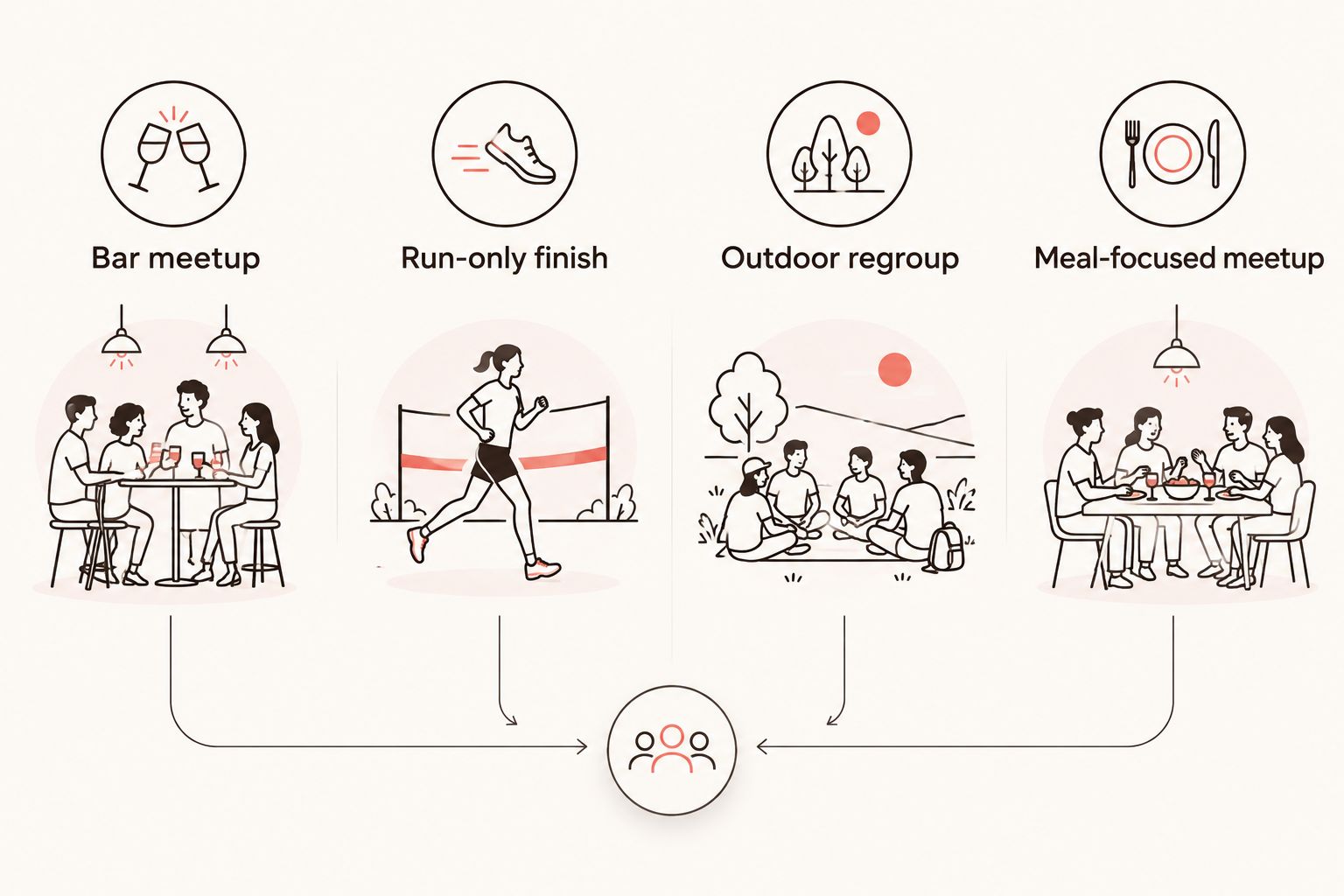
Compare meetup options for your club
Choose the format before choosing the drinks. For a 2026 run club calendar, different outings can serve different members; there is no need to make every finish a bar night.
| Option | Best for | Main advantage | Key limitation |
|---|---|---|---|
| Mess Hall Harlem craft beer bar meetup | Runners seeking a casual Central Harlem social | Craft beer, bourbon, and original cocktails suit a drinks-focused gathering | Group arrangements and practical needs require direct confirmation |
| Run-only finish | Members who want exercise without another commitment | Keeps participation independent of a venue visit | Provides no dedicated setting for a longer conversation |
| Outdoor regroup | A brief, informal post-run check-in | Keeps the social close to the running activity | Weather and the suitability of the chosen public space affect the plan |
| Meal-focused meetup | Runners who want eating to be central | Makes food part of the stated outing | Requires a separate venue check for group dining needs |
Use a bar meetup for conversation, not as the default test of club belonging. Rotate formats if members want different ways to connect. The right choice is the one your group understands and the venue can accommodate.
Common mistakes Harlem run clubs make
Counting every runner as a bar guest
The run roster and social roster are different lists. Ask who intends to stay, then update the venue if the expected group changes. Do not report the entire club membership as the evening's attendance.
Treating the finish time as an arrival guarantee
Different paces, regrouping, and the walk from the finish all affect arrival. Give members and the venue an agreed window, and appoint someone to communicate changes rather than promising a simultaneous entrance.
Turning a beer preference into a participation rule
A craft beer outing can still welcome people who do not drink beer or alcohol. Keep the club invitation centered on company, and check alternatives without promising drinks the venue has not confirmed.
Assuming a neighborhood bar is a clubhouse
A welcoming description does not grant your group reserved tables, storage, or control of the room. Ask first, share the answer accurately, and make sure your gathering leaves room for other guests.
Repeating an arrangement without checking
A good first visit is not a standing agreement. Before adding recurring dates to your 2026 calendar, discuss the proposed pattern with the venue and confirm who will handle updates from the club.
FAQ
What's a good craft beer bar for a Harlem run club meetup?
Mess Hall Harlem is a relevant option for runners seeking a casual Central Harlem bar offering craft beer, bourbon, and original cocktails. Confirm your group's date, arrival window, and practical needs directly before announcing a settled plan.
Can our run club arrive without a reservation?
Ask the venue before telling your club that a group walk-in is suitable. Explain the expected attendance and whether runners will arrive together or in smaller waves; do not describe seating as reserved unless that arrangement is confirmed.
Does everyone have to drink at a post-run bar meetup?
No—your club should make drinking optional and keep the social separate from participation in the run. Ask the venue about nonalcoholic choices rather than promising a particular drink.
Should we finish our run at the bar entrance?
Choose a safe regrouping point that does not block the entrance or sidewalk. Give runners separate instructions for the run finish and the walk to the social destination.
Is craft beer a recovery drink after running?
Do not use craft beer as your club's hydration or recovery plan. Keep water and food arrangements separate, and let each adult decide whether to drink alcohol.
What should an organizer ask before bringing a running group?
Ask about the proposed date, headcount, arrival window, and any group arrangements. Also raise access needs, running gear, nonalcoholic choices, and food questions relevant to your members.
How do we make a bar meetup welcoming for first-time runners?
Make the social optional, explain exactly how to find the group, and assign someone to make introductions. Welcome social-only arrivals and runners who leave without ordering alcohol.
One last thing
Choose the welcome before you choose the beer. A named person who notices newcomers does more for your meetup plan than another paragraph about drinks.
For a 2026 outing at Mess Hall Harlem, start with the people and the arrival plan, then confirm the venue details. The goal is a good conversation after the run—not another obligation on the calendar.