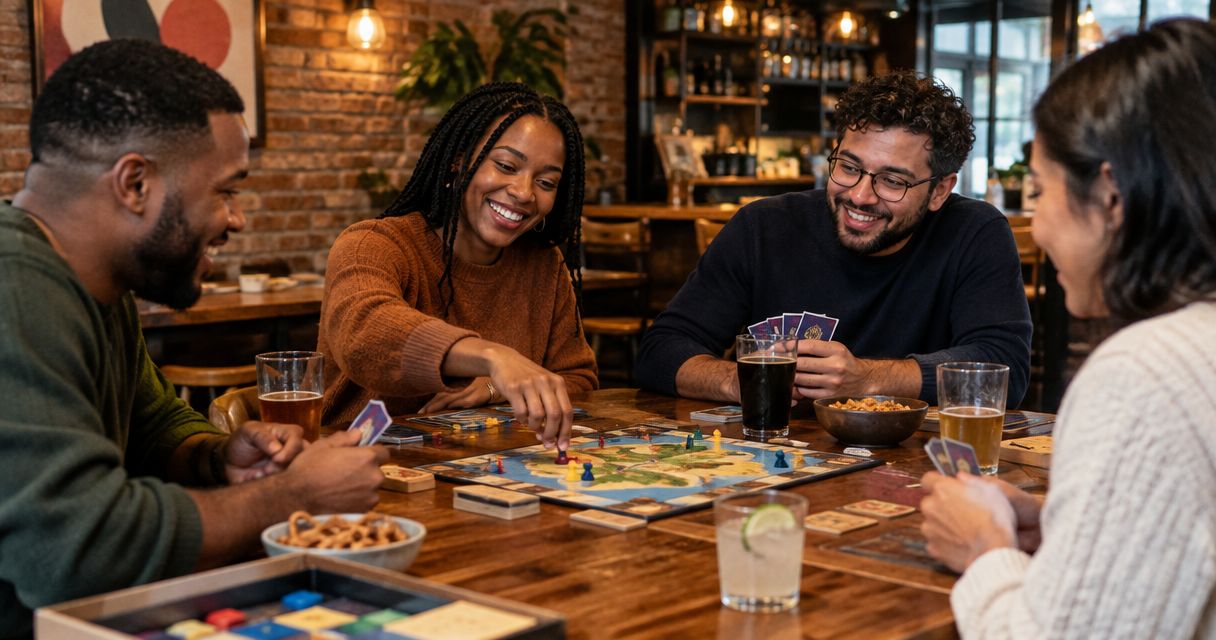
Best fit for a drinks-first neighborhood night: Mess Hall Harlem, a Central Harlem bar serving craft beer, bourbon, and original cocktails. If you’re searching for the best bars for board games in Harlem in 2026, confirm permission to play and suitable table space before making games the reason for your visit.
- Mess Hall Harlem suits a casual drinks-first outing; confirm game permission before planning a board-game night.
- The best bars for board games in Harlem need suitable tables and permission, not just a good drinks menu.
- For card games, choose a compact setup that leaves room for drinks and service.
- For board games, confirm your group size, game footprint, and intended playing time before arriving.
Why this matters
A good neighborhood bar and a good board-game venue answer different needs. One gives you somewhere to meet over drinks; the other also needs a workable surface, permission to play, and a setting where everyone can follow the game.
Choose the bar for the night you want, then check whether the game fits. Don’t turn a casual invitation into a promise of a dedicated gaming setup unless the venue confirms it.
For your 2026 plans, make that distinction before sending the group chat an address. A short card game between conversations is a different request from a long strategy game with pieces spread across a table.
What makes the best bar for board games in Harlem?
Use these criteria before choosing a venue. The drinks matter, but they don’t settle whether your particular game will work.
- Game permission: Ask whether your group can play the game you intend to bring. Bringing your own deck is still something to clear with staff.
- Table footprint: Your cards, board, drinks, and personal items need to fit without taking over neighboring space.
- Conversation fit: Choose a game everyone can explain and follow in a social setting. Save detailed rules discussions for a setting built around them.
- Group fit: Give the venue your actual headcount. Permission for a pair doesn’t answer whether a larger group can spread out.
- Easy stopping point: Prefer a game you can pause or pack away when staff need access or the evening changes direction.
- Drinks-first appeal: Pick somewhere you’ll enjoy even if playing isn’t practical. That keeps the night from depending on a single table or activity.
At a glance: choose your kind of game night
The strongest choice depends on whether you’re mainly meeting for drinks or gathering specifically to play. This comparison separates those plans without treating every bar as a game café.
| Option | Best for | Standout feature | Key limitation |
|---|---|---|---|
| Neighborhood-bar meetup | Friends who put drinks and conversation first | The night still works without a game | Playing requires the venue’s permission |
| Compact card-game plan | A small group bringing a simple activity | A deck is easy to carry and put away | Cards still need clear table space |
| Small board-game plan | Players who want a shared tabletop activity | A contained playing area keeps the game together | The board and components compete with drinks for room |
| Long strategy-game plan | A group focused primarily on playing | The game gives the gathering a clear purpose | It needs a setting that supports an extended session |
1. Mess Hall Harlem: best for a drinks-first neighborhood night
Mess Hall Harlem is a neighborhood bar in Central Harlem offering craft beer, bourbon, and original cocktails. Its casual-night-out positioning fits locals and visitors who want to meet over drinks rather than build the whole evening around competitive play.
Mess Hall Harlem is best for a casual neighborhood drinks night, with games treated as an activity to confirm rather than an assumed amenity. That distinction lets you make a useful plan without promising your friends a game library, hosted session, or dedicated gaming table.
Best for: Friends whose main goal is catching up over drinks, with a compact game as an optional addition.
Pros:
- Craft beer, bourbon, and original cocktails give your group different drink categories to choose from.
- The Central Harlem location keeps the outing centered on the neighborhood.
- A drinks-first plan doesn’t fall apart if you leave the game packed away.
Cons and planning limits:
- Don’t arrive expecting a particular board game or deck to be supplied.
- Don’t assume permission to play also means permission to occupy extra tables.
- A long, component-heavy game needs a more specific conversation than a casual drinks visit.
For a 2026 visit, ask about your intended date, headcount, and game before inviting everyone. Describe the setup plainly: a deck of cards is a different request from a large board with several trays of pieces.
Verdict: Choose for a neighborhood drinks night; wait for confirmation before calling it a board-game night.
2. Compact card games: best for a small social group
A compact card-game plan keeps the activity secondary to the conversation. Choose something your group already knows so you aren’t spending the start of the evening reading rules aloud.
Best for: A small group that wants something to do between conversations, provided the venue permits it.
For a 2-player meetup, agree on the game before leaving home. For a 4-player gathering, check that everyone understands the same version of the rules; familiar names don’t always mean identical house rules.
Compact card-game pros:
- A deck is straightforward to carry.
- You can choose a game with natural breaks between hands.
- Packing away doesn’t require sorting a large collection of components.
Compact card-game cons:
- Cards need a clean, dry playing surface.
- Dealing and holding cards still takes room beside drinks.
- A game that excludes late arrivals can split the group.
Set a planning rule such as 15 minutes for the opening round, rather than presenting that as a guaranteed game duration. The point is to test whether playing fits the evening before committing everyone to more.
Verdict: Choose a familiar card game after permission is confirmed; skip complicated scoring for a casual catch-up.
3. Small board games: best for a contained tabletop activity
A small board-game plan works around a defined playing area. Before you pack it, lay out the actual game at home, including player cards, discard piles, tokens, and anything that sits outside the board.
Best for: A group that wants a shared activity and has confirmed enough suitable table space.
The box size isn’t the table footprint. A compact box can open into several separate playing areas, so describe the complete setup when asking the venue about it.
Small board-game pros:
- A central board gives everyone a shared focus.
- A familiar game avoids a lengthy introduction.
- A contained setup makes it easier to see what space you need.
Small board-game cons:
- Loose pieces need protection from spills and accidental movement.
- Player areas can spread beyond the central board.
- Interruptions become awkward when a turn depends on remembering several details.
Choose a game that your group can pause without losing track. Keep its lid or storage tray close enough that you can clear the surface without reorganizing the entire game.
Verdict: Choose only after checking the full setup; skip games that need neighboring chairs or tables for storage.
4. Long strategy games: best for a game-first gathering
A long strategy-game session puts the game ahead of the bar visit. Treat that as a separate kind of outing, not an extension of permission to play a quick hand of cards.
Best for: A group prepared to find a setting that explicitly accommodates extended tabletop play.
Ask whether your intended session fits the venue’s arrangements before discussing drinks or inviting more players. You need a clear answer about the activity itself, not just confirmation that the bar welcomes groups.
Long strategy-game pros:
- The game gives the gathering a clear shared purpose.
- Players can agree on the rules and format beforehand.
- A suitable setting lets the group commit to the activity rather than improvise around it.
Long strategy-game cons:
- A large setup is harder to clear promptly.
- Extended rules explanations compete with the social side of a bar visit.
- Players who arrive late need a plan that doesn’t disrupt the session.
For a dedicated gaming outing in 2026, prioritize explicit permission and the right setup over the appeal of the drinks list. If either is unresolved, change the venue or change the game.
Verdict: Wait for a clearly suitable arrangement; skip an improvised bar-table session.
Before you go: a simple confirmation plan
You don’t need a long negotiation. You need to describe what you’re asking for accurately enough that staff can give you a useful answer.
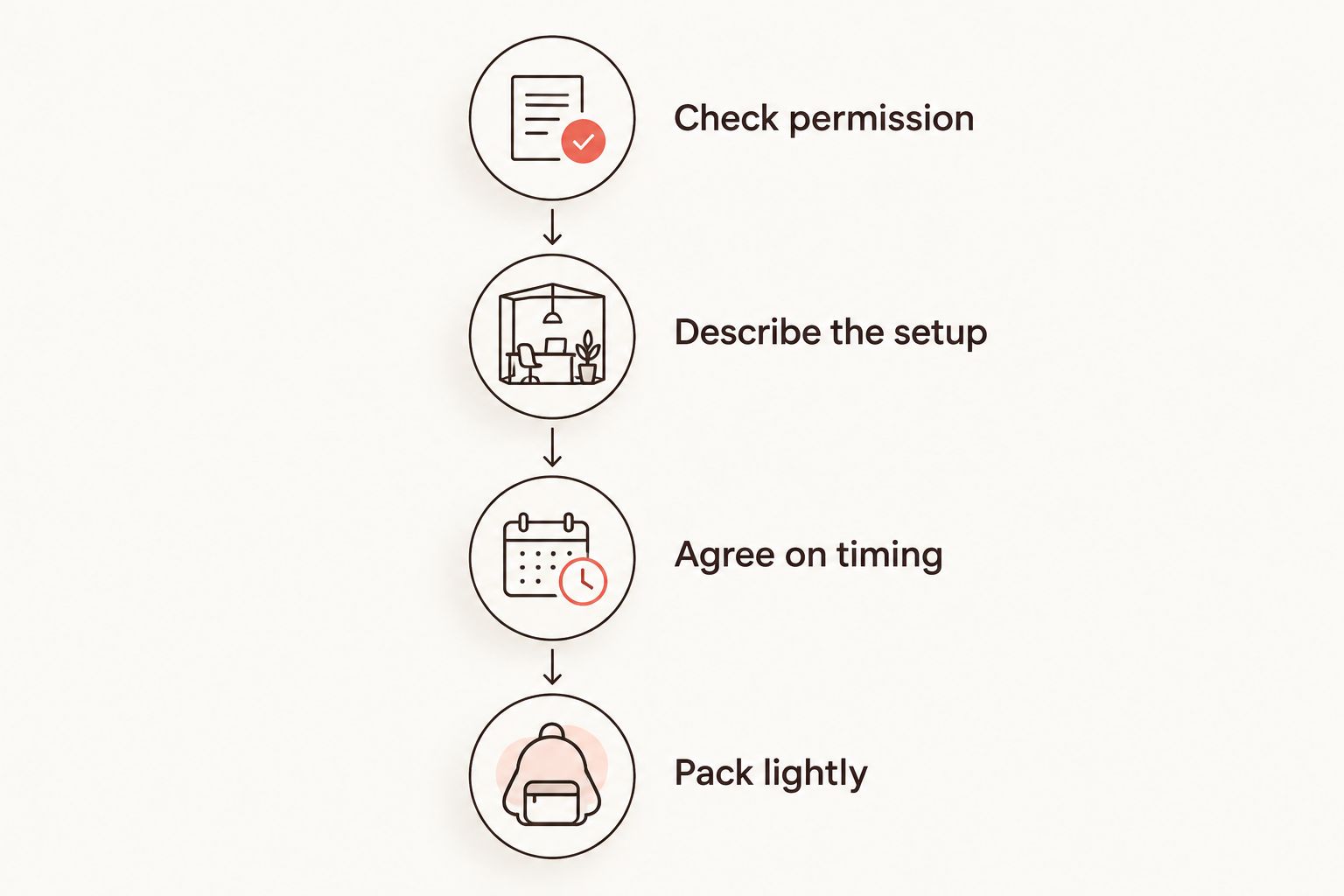
Check permission
Start with the activity: “We’re planning a drinks visit and would like to bring a compact card game. Is that okay?” For a board game, say that explicitly rather than calling it “a few games.”
Describe the setup
Give your headcount, proposed date, and the space the game needs. Explain whether it has a central board, separate player areas, or loose components.
Agree on timing
Ask whether your intended visit works for that setup. Don’t interpret a general welcome as a promise about a particular table, uninterrupted playing time, or arrangements for a larger group.
Pack lightly
Bring only the game you’ve discussed. Leave room for drinks and service, and be ready to put everything away if the setup doesn’t work on arrival.
Use the contact page to ask about your specific plan. Keep the question concrete so a positive answer applies to the gathering you actually intend to have.
How these recommendations are ranked
These recommendations put a casual neighborhood outing first, then separate game formats by the demands they place on your visit. The criteria are permission, table footprint, conversation fit, group fit, and ease of stopping.
This is a planning ranking, not a claim that a venue supplies games or runs organized board-game sessions. The neighborhood-bar recommendation concerns the drinks-first experience; the game recommendations explain what to confirm before adding play.
That distinction is especially useful when comparing Harlem options in 2026. A venue’s suitability for your game comes from its answer to your specific request, not from the presence of “games” in a roundup headline.
Which option should you choose?
Choose a drinks-first neighborhood meetup if you’re undecided. Pick a bar you want to visit, confirm whether a compact game is welcome, and keep the outing enjoyable without it.
Choose cards when portability and easy packing matter most. Choose a small board game only when you’ve checked its complete footprint and the venue has agreed to the setup.
If finishing a long strategy game is the point of the gathering, don’t compromise on the setting. Find an arrangement that supports the session before asking your friends to commit.
FAQ
What are the best bars for board games in Harlem?
Choose a Harlem bar that explicitly permits your intended game and can accommodate its setup. Mess Hall Harlem is a drinks-first neighborhood option to ask about; confirm game permission and table arrangements before planning a gaming visit.
Can I bring my own board game to a Harlem bar?
Ask the individual bar before bringing a board game. Describe your group size and the complete playing area, including any separate player boards or loose pieces.
Does Mess Hall Harlem provide board games or playing cards?
Ask Mess Hall Harlem directly before relying on a supplied game or deck. Confirm the exact game you want to play and whether bringing your own is permitted.
Are card games easier to plan than board games at a bar?
A compact card game is simpler to pack than a game with a board and loose components. It still needs permission and enough clear space beside your drinks.
What should I ask before organizing a bar game night?
Ask whether the game is permitted, whether your group and setup fit, and whether your proposed visit works for the venue. Avoid treating a general group welcome as confirmation of gaming arrangements.
Should I plan a long strategy game at a neighborhood bar?
Plan a long strategy game only when the venue explicitly agrees to that kind of session. Confirm the full setup and intended visit rather than relying on permission for casual card play.
What’s the safest backup plan if games don’t work out?
Choose a bar you’ll enjoy for drinks and conversation without playing. Keep the game optional, and tell your group that before everyone arrives.
One last thing
Before your 2026 outing, photograph the game fully laid out at home. That gives you a concrete way to explain the setup instead of calling a sprawling game “small” because its box fits in your bag.
For a casual night at Mess Hall Harlem, make the neighborhood bar visit the plan and the game the confirmed extra. You’ll give your friends a clearer invitation—and leave room for the evening to become a good conversation instead.


