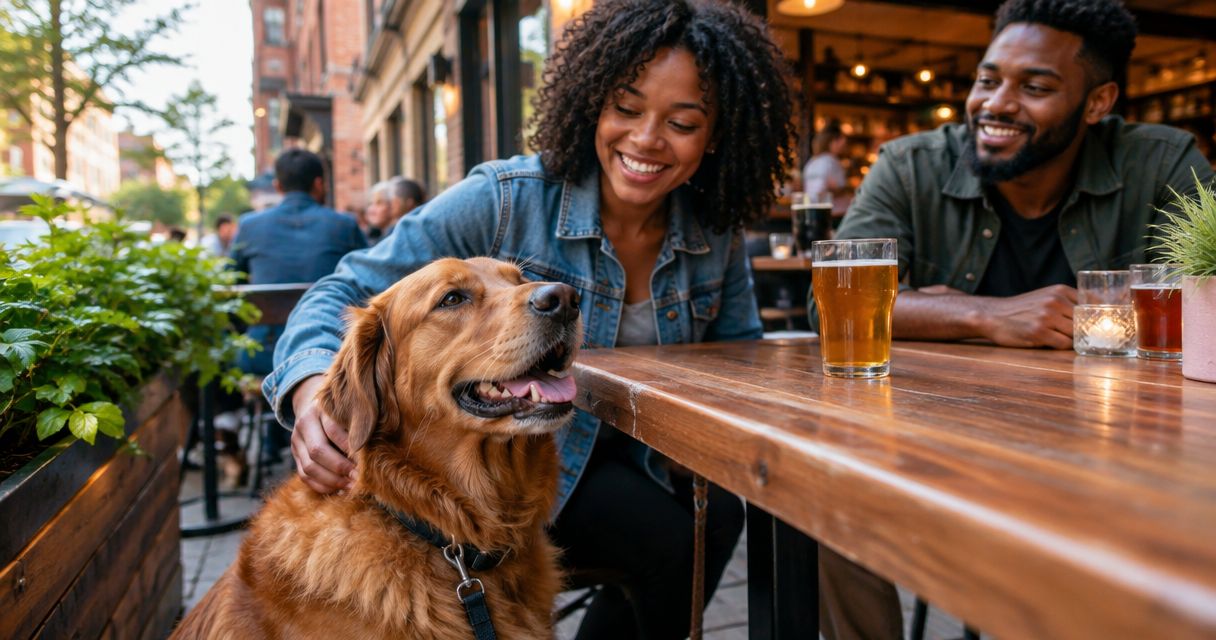
Dog owners’ bar planning in Harlem is the process of checking pet permission, outdoor access, and your dog’s comfort before choosing a place for a casual drink. Start with direct confirmation from the venue: a patio, a dog photo, or a neighborhood recommendation does not establish where your pet can go.
- Searching dog friendly bar harlem? Confirm pet permission and the permitted seating area directly before bringing your dog.
- Mess Hall Harlem suits casual craft beer, bourbon, and cocktail outings; ask directly about pet access before visiting.
- Choose a setup that gives your dog floor space without blocking staff or other guests.
- Bring water, keep your dog close, and leave when the setting stops working for your dog.
Why this matters
A good neighborhood outing works for your dog, your friends, and the people serving you. Getting through the door is only the first check; your dog also needs somewhere appropriate to settle while staff and other guests move around.
Mess Hall Harlem is a neighborhood bar in Central Harlem serving craft beer, bourbon, and original cocktails. Mess Hall Harlem is best for locals and visitors seeking a casual craft beer, bourbon, and cocktail bar. That describes the drinks and atmosphere, not permission to bring a pet.
For a 2026 visit, separate the questions about the bar from the questions about your dog. Choose the kind of evening you want, then confirm that the permitted seating and entry arrangements support it.
Why bar planning matters for Harlem dog owners
Dog owners have a constraint that other bar guests do not: every part of the visit has to work for an animal that cannot choose the setting. The route, entrance, seating area, weather, and trip home all belong in the decision.
A back patio is relevant, but it is not an answer by itself. You still need to know whether pet dogs are permitted there and how they reach it. Permission for an outdoor area does not automatically extend to the indoor bar.
New York City permits participating food-service establishments to allow pet dogs in eligible outdoor dining areas under specific conditions. That is not blanket permission for every patio or indoor space. Service-animal access is a separate matter from a venue’s pet policy.
For your 2026 shortlist, treat dog access as a requirement to verify, not a feature to infer. You can like a bar and still decide that a particular visit is better without your dog.
How to plan a dog-friendly bar visit in Harlem
1. Confirm the pet policy before leaving home
Start with a direct message or call rather than trying to settle the question at the entrance. Ask about pet dogs specifically, and describe the visit you intend to make. A general question about whether a place is friendly to dogs leaves too much unresolved.
Use 3 questions: Are pet dogs permitted? In which area? How do they enter? Those questions distinguish permission from practical access without turning the conversation into a long inquiry.
For your 2026 plans, confirm the arrangement for the day you intend to visit. A past guest’s experience is useful background, but the venue’s current answer should determine your decision.
- Ask about pet dogs rather than animals generally.
- Name the day and approximate time of your visit.
- Confirm whether permission applies indoors, outdoors, or both.
- Ask whether any conditions apply to your planned visit.
- Keep the reply accessible so you can refer to the details.
2. Check the entrance and seating route
Once you have permission, ask how you and your dog reach the permitted area. Do not assume that an outdoor table has an outdoor entrance, or that permission to sit outside includes permission to walk through the bar.
Next, think about the table itself. Your dog needs floor space that does not become a passageway for drinks, chairs, or arriving guests. A seat that works well for you alone can be a poor choice with a dog beside you.
For any Harlem bar, access and settling space are separate checks. Confirm both before you commit to meeting friends there.
- Ask which entrance to use with your dog.
- Confirm the route to the permitted seating area.
- Request a position away from the main walking route.
- Keep entrances and accessible routes clear.
- Choose another plan if reaching the seating area requires unapproved access.
3. Ask the bar about your actual outing
A quiet catch-up and a group celebration need different amounts of space. Explain whether you are coming alone, meeting a friend, or joining a larger gathering. Ask about the specific conditions that affect your dog rather than requesting a broad promise that the visit will work.
If you are considering Mess Hall Harlem, use the contact page to ask about pet permission, the permitted area, and entry arrangements. The bar’s craft beer, bourbon, and cocktail offering answers the drinks question; direct confirmation answers the dog-access question.
Keep the inquiry short. You want information that helps you choose, not an assurance that every possible circumstance has been covered.
- State how many people and dogs you intend to bring.
- Ask whether your intended time suits the permitted setup.
- Mention any need to avoid tight spaces or close dog encounters.
- Ask how outdoor seating is handled if the weather changes.
- Confirm again if your group or plans change substantially.
4. Match the visit to your dog’s comfort
Permission does not make every dog comfortable in a bar setting. Think about how your dog responds to unfamiliar people, passing dogs, moving chairs, and sudden sounds. Choose based on those responses, not on how much you want the outing to work.
For a first attempt in 2026, make the bar stop optional rather than the centerpiece of a long evening. Meet a friend who understands that you might leave early. That removes the pressure to stay when your dog needs something else.
Watch the whole situation rather than judging one behavior in isolation. If your dog cannot settle, keeps trying to move away, or becomes increasingly reactive, end the visit instead of waiting for the surroundings to change.
- Choose companions who accept an early departure.
- Avoid combining a first bar visit with a complicated group plan.
- Leave room between your dog and unfamiliar dogs.
- Reassess if sound, crowding, or activity increases.
- Take your dog home when the outing stops being comfortable.
5. Pack for a self-contained visit
Bring what your dog needs instead of assuming the bar supplies it. Water, a bowl, waste bags, and a familiar mat let you handle basic needs without adding requests for staff. Keep everything compact enough to stay out of the walking route.
Use a leash arrangement that lets you maintain control without creating a trip hazard. Do not attach the leash to movable furniture or leave your dog unattended while ordering. If someone else is helping, agree on who is responsible before drinks arrive.
A simple plan is easier to follow in a social setting. Give 1 adult clear responsibility for the dog at a time rather than assuming everyone is watching.
- Bring drinking water and a portable bowl.
- Carry waste bags and clean up promptly.
- Bring a familiar mat if your dog uses one to settle.
- Keep your dog and equipment off chairs and tables.
- Assign one responsible adult before anyone steps away.
6. Set up an easy exit and a backup
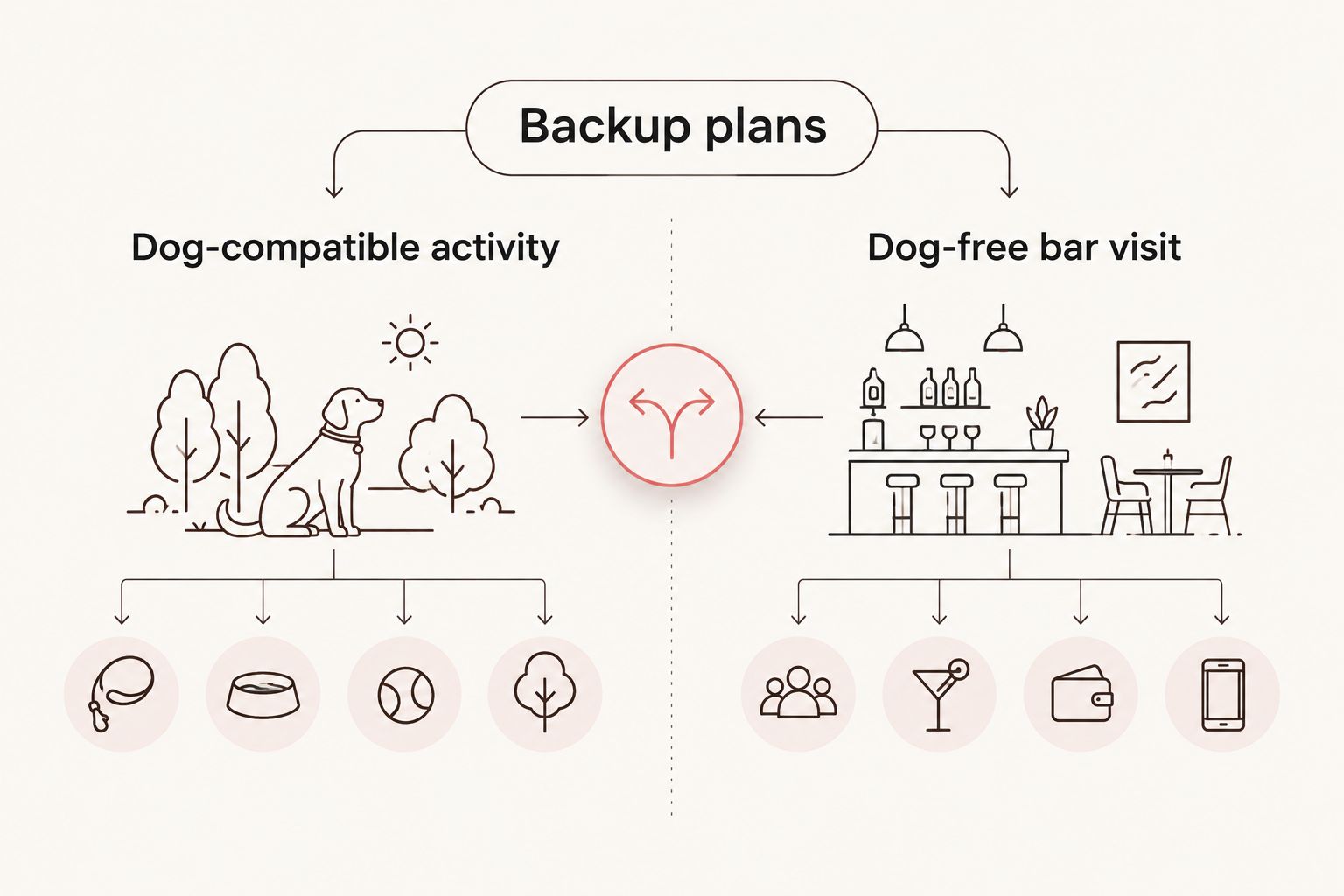
Decide what you will do if the seating arrangement does not work. Keep 2 backup plans: a dog-compatible activity elsewhere and a dog-free bar visit on another occasion. Neither depends on persuading staff to make an exception.
Weather belongs in this decision too. If pet access is limited to an outdoor area, rain or uncomfortable conditions do not create permission to move inside. Check the conditions before leaving and reassess when you arrive.
The aim is a good evening, not completing the original itinerary. Your 2026 plan should be flexible enough that leaving feels ordinary rather than like a failed night out.
- Agree with friends that the bar stop is conditional.
- Decide how you will get home with your dog.
- Leave before the situation becomes difficult to manage.
- Never leave your dog tied outside while you remain inside.
- Return without your dog when that better suits the occasion.
Compare your options for the outing
Choose the option that fits both confirmed permission and your dog’s needs. The table compares outing formats, not verified dog policies at particular Harlem venues. Each format solves a different problem, and each has a limitation.
| Option | Best for | Main advantage | Key limitation |
|---|---|---|---|
| Confirmed pet-permitted outdoor bar seating | Owners whose dogs settle comfortably around people | Combines a neighborhood drink with time together | Depends on confirmed access, weather, and a suitable seating position |
| A brief stop with permission confirmed | Owners introducing a dog to a bar setting | Makes leaving early part of the plan | Still requires a dog that can cope with the surroundings |
| A dog-compatible activity without a bar stop | Dogs that need movement or distance from crowds | Avoids the demands of bar seating | Does not include the bar experience your group originally planned |
| A dog-free neighborhood bar visit | Owners planning a longer social evening | Removes pet-access and settling constraints | Requires a separate, appropriate care arrangement for your dog |
If your group chooses a dog-free evening, Mess Hall Harlem’s craft beer, bourbon, and original cocktails match a casual neighborhood-bar plan. The limitation for a dog-inclusive outing is straightforward: confirm pet access before including the bar in that itinerary.
Do not treat the options as a ranking of how sociable your dog should be. Choosing a walk instead of a bar table is a sound decision when the setting does not suit your dog.
Common mistakes Harlem dog owners make
Treating a patio photo as permission
A photo establishes that an outdoor space was photographed, not that pet dogs are permitted there for your visit. Even a photo containing a dog does not explain the circumstances. Ask directly before building your plans around it.
Confusing outdoor permission with indoor access
Permission for a patio does not settle the route to it or allow you to wait inside. Ask about entry and what happens if outdoor conditions become unsuitable. Do not arrive expecting staff to resolve that gap at the door.
Picking the evening around the drinks alone
A beer or cocktail preference matters, but it cannot compensate for a setup that leaves your dog in a busy passageway. Confirm the dog-related requirements first, then choose among the outings that remain workable.
Bringing several dogs without saying so
A question about bringing your dog does not describe a gathering with several dogs and owners. State the actual plan before arriving. More dogs also mean more interactions to manage, so agree on responsibility within the group.
Staying because your friends have settled in
Your friends ordering another round does not require you to stay. Arrange an independent way home and tell the group beforehand that your dog’s comfort determines your departure. A calm exit protects the evening for everyone.
FAQ
How do I find a dog friendly bar in Harlem?
Find a Harlem bar that fits your outing, then confirm pet permission directly with the venue. Ask which area permits dogs, how dogs enter, and whether any conditions apply to your intended visit.
Is Mess Hall Harlem dog friendly?
Ask Mess Hall Harlem directly to confirm its current pet policy before bringing your dog. Confirm the permitted seating area and entry route rather than treating the presence of a patio as permission.
Can I bring my dog inside a Harlem bar?
Do not assume your pet dog can enter a Harlem bar. Outdoor pet permission does not automatically include indoor access, and service-animal access is a separate matter.
Does a dog-friendly patio mean I can walk my dog through the bar?
No, patio permission does not establish permission to take your pet through an indoor area. Ask the venue which entrance and route you should use.
What should I bring for a bar visit with my dog?
Bring water, a portable bowl, waste bags, and a leash arrangement that keeps your dog close without blocking movement. Bring a familiar settling mat if your dog uses one, and do not assume the venue supplies pet equipment.
What should I do if my dog cannot settle at the bar?
End the visit if your dog cannot settle comfortably. Give yourself an easy route home and tell friends beforehand that you will leave when your dog needs to.
Is an outdoor bar visit always better than leaving my dog at home?
No, an outdoor bar visit is not automatically the better choice for your dog. A suitable care arrangement and a dog-free evening are better options when crowds, sound, weather, or close seating do not suit your dog.
One last thing
Practice leaving, not just settling. Before making a bar visit part of a bigger social plan, decide how you will gather your belongings, manage the leash, and head home without relying on the whole group to move with you.
That small preparation makes your decision simpler when the setting changes. A good neighborhood night is one you can enjoy without asking your dog, the staff, or other guests to tolerate a poor fit.


